Wild West End London, How Urban Design can help Pollinators.
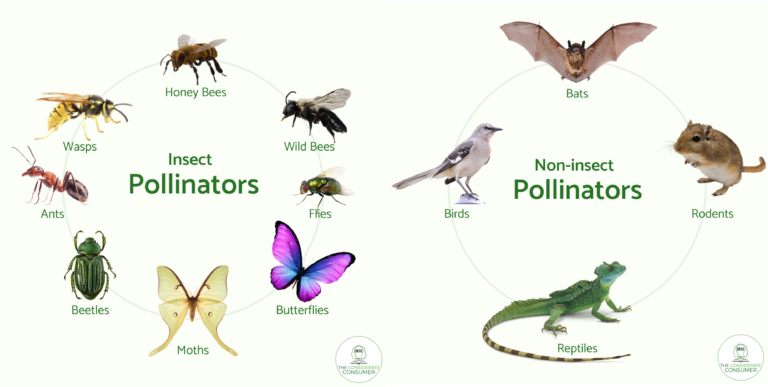
In today’s rapidly urbanising world, cities are growing faster than ever before. Developers focusing on creating more infrastructure often forget about the little creatures that are so vital to our environment: pollinators. From bees, butterflies and even birds, pollinators are key to our ecosystems and agriculture. Thankfully, we can support these creatures and promote biodiversity through urban design.
Figure 1: What are Pollinators? (Source: The Considerate Consumer, 2014)
But why should we care?
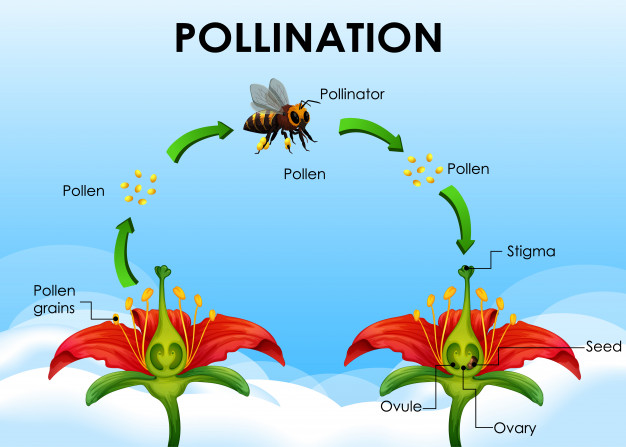
Figure 2: Role of Pollinators (Source: Albert, 2020)
Nature is crucial for our cities ecosystems from storing carbon, reducing temperatures and mitigating storm water. There is a growing need to explore strategies in which we can incorporate nature in our cities to help the pollinator population thrive. Social scientists have pointed out the significant relationship with good wellbeing to access to fresh air and encountering the natural world (Derby Lewis et al., 2019).
Without pollinators, 85% of flowering plants would not be able to reproduce critically decreasing our exposure to nature. Furthermore pollinators are crucial in producing food for many animals species including our own.
Bees and Syrphids are the most important pollinators in our urban environment. Floral abundance and plant diversity has been known to have a positive effect on these species (Hennig and Ghazoul, 2011). Low number of plants sustain fewer pollinators and inversely, fewer pollinators lead to less plants and plant diversity. This means, as urban designers, we must find a way of preventing this from spiralling out of control. Dearborn and Kark (2010) write about “Create Stepping Stones or Corridors for Natural Populations”. This is done by creating small green areas between larger green spaces to be used as a stop for pollinators to rest as they can become fatigues and stranded in urban settings lacking green space.
Wild West End London
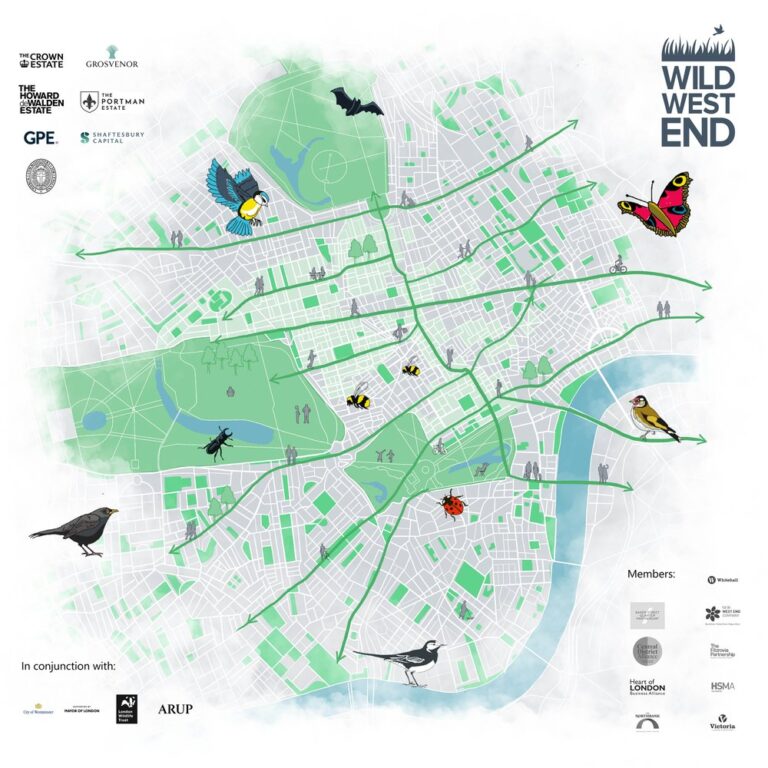
Figure 3: Wild West London Map (Source: Wild West End London, 2014)
According to The British Beekeepers Association (no date) its possible for bees to fly up to three miles for food. This is why it is important for urban greening to be present throughout an urban environment to create rest stops at least every three miles.
Wild West End in London is a collaboration of London’s largest property owners who are aiming to encourage pollinators back into the city in response to their concerning drop in numbers.
The are using the stepping stone idea present in Dearborn and Kark’s (2010) research. These stepping stones are in the from of green roofs and walls, planters and flower boxes, street trees and pop-up spaces (Wild West End London, 2014). This should create habitats for pollinators.
Not only does this project aim to raise the number of pollinators in the city it also encourage the public to spend more time in green spaces as this will result in lower stress levels and higher levels of wellbeing and satisfaction creating a better environment for people to live, work, play, and visit. (Wild West End London, 2014).
References:
Albert, R. (2020). The Importance of Pollinators | Albert Land Management. [online] Albert Land Management. Available at: https://www.albertlandmanagement.com/2020/06/17/the-importance-of-pollinators/ [Accessed 21 Mar. 2025].
Dearborn, D.C. and Kark, S. (2010). Motivations for Conserving Urban Biodiversity. Conservation Biology, [online] 24(2), pp.432–440. doi:https://doi.org/10.1111/j.1523-1739.2009.01328.x.
Derby Lewis, A., Bouman, M.J., Winter, A.M., Hasle, E.A., Stotz, D.F., Johnston, M.K., Klinger, K.R., Rosenthal, A. and Czarnecki, C.A. (2019). Does Nature Need Cities? Pollinators Reveal a Role for Cities in Wildlife Conservation. Frontiers in Ecology and Evolution, [online] 7. doi:https://doi.org/10.3389/fevo.2019.00220.
Hennig, E.I. and Ghazoul, J. (2011). Pollinating animals in the urban environment. Urban Ecosystems, 15(1), pp.149–166. doi:https://doi.org/10.1007/s11252-011-0202-7.
Mikko H (2021). From Grey to Green: The Pollinator Highway of Tallinn as an Innovative Concept for Bringing Nature Back to the City – Tallinn Euroopa roheline pealinn. [online] Tallinn Euroopa roheline pealinn. Available at: https://greentallinn.eu/en/from-grey-to-green-the-pollinator-highway-of-tallinn-as-an-innovative-concept-for-bringing-nature-back-to-the-city/ [Accessed 15 Mar. 2025].
Schueller, S.K., Li, Z., Bliss, Z., Roake, R. and Weiler, B. (2023). How Informed Design Can Make a Difference: Supporting Insect Pollinators in Cities. ProQuest, [online] p.1289. doi:https://doi.org/10.3390/land12071289.
The British Beekeepers Association (n.d.). Bee Facts. [online] British Beekeepers Association. Available at: https://www.bbka.org.uk/pages/faqs/category/bee-facts.
Wild West End London (2014). Wild West End. [online] Wild West End. Available at: https://www.wildwestend.london/vision.
Figure 1: What are Pollinators? (Source: The Considerate Consumer, 2014)
Figure 2: Role of Pollinators (Source: Albert, 2020)
Figure 3: Wild West London Map (Source: Wild West End London, 2014)
One response to “Wild West End London, How Urban Design can help Pollinators.”
The article reminded me of bee hotels — small wooden structures with bamboo tubes — which I’ve seen widely across cities in Germany and Denmark. However, most of these were uninhabited, even when placed in areas with diverse flora. Only in a botanical garden did I notice active use by bees or wasps. So, it made me think whether bee hotels truly work and help save pollinators?
While often praised for raising awareness and offering nesting sites for some cavity-nesting bees, bee hotels have limited conservation impact. Most wild bees (~75–85%) nest in soil, and only a small fraction — around 14% in Germany (the number varies in different studies) — naturally use cavities like those found in bee hotels (Garrido C., 2020). Studies show that in urban areas, occupancy is generally low and often dominated by generalist or invasive species. In a study of 71 insect hotels in Marseille, 40% of emerging bees were Megachile sculpturalis, a non-native species that can displace native bees by occupying larger cavities and exhibiting aggressive behavior (Geslin B., Gachet S…, 2020). The suggested solution is to design cavities of 4–8 mm diameter to favour the native fauna.
Poor design, such as frayed edges or oversized cavities, can harm native fauna or promote invasives. Without proper maintenance, bee hotels risk becoming ecological traps—spreading disease, attracting parasites, and displacing natives. While they may play a limited role in pollinator conservation, their use must be carefully managed and supported with quality native plants and well-designed nesting structures.
Geslin B., Gachet S., Deschamps-Cottin M., Flacher F., Ignace B., Knoploch C., Meineri É., Robles C, Ropars L., Schurr L., Le Féon V. (2020) Bee hotels host a high abundance of exotic bees in an urban context. Available at: https://www.sciencedirect.com/science/article/pii/S1146609X20300485?via%3Dihub (Accessed 16/05/2025)
The article reminded me of bee hotels — small wooden structures with bamboo tubes — which I’ve seen widely across cities in Germany and Denmark. However, most of these were uninhabited, even when placed in areas with diverse flora. Only in a botanical garden did I notice active use by bees or wasps. So, it made me think whether bee hotels truly work and help save pollinators?
While often praised for raising awareness and offering nesting sites for some cavity-nesting bees, bee hotels have limited conservation impact. Most wild bees (~75–85%) nest in soil, and only a small fraction — around 14% in Germany (the number varies in different studies) — naturally use cavities like those found in bee hotels (Garrido C., 2020). Studies show that in urban areas, occupancy is generally low and often dominated by generalist or invasive species. In a study of 71 insect hotels in Marseille, 40% of emerging bees were Megachile sculpturalis, a non-native species that can displace native bees by occupying larger cavities and exhibiting aggressive behavior (Geslin B., Gachet S…, 2020). The suggested solution is to design cavities of 4–8 mm diameter to favour the native fauna.
Poor design, such as frayed edges or oversized cavities, can harm native fauna or promote invasives. Without proper maintenance, bee hotels risk becoming ecological traps—spreading disease, attracting parasites, and displacing natives. While they may play a limited role in pollinator conservation, their use must be carefully managed and supported with quality native plants and well-designed nesting structures.
Geslin B., Gachet S., Deschamps-Cottin M., Flacher F., Ignace B., Knoploch C., Meineri É., Robles C, Ropars L., Schurr L., Le Féon V. (2020) Bee hotels host a high abundance of exotic bees in an urban context. Available at: https://www.sciencedirect.com/science/article/pii/S1146609X20300485?via%3Dihub (Accessed 16/05/2025)



The article reminded me of bee hotels — small wooden structures with bamboo tubes — which I’ve seen widely across cities in Germany and Denmark. However, most of these were uninhabited, even when placed in areas with diverse flora. Only in a botanical garden did I notice active use by bees or wasps. So, it made me think whether bee hotels truly work and help save pollinators?
While often praised for raising awareness and offering nesting sites for some cavity-nesting bees, bee hotels have limited conservation impact. Most wild bees (~75–85%) nest in soil, and only a small fraction — around 14% in Germany (the number varies in different studies) — naturally use cavities like those found in bee hotels (Garrido C., 2020). Studies show that in urban areas, occupancy is generally low and often dominated by generalist or invasive species. In a study of 71 insect hotels in Marseille, 40% of emerging bees were Megachile sculpturalis, a non-native species that can displace native bees by occupying larger cavities and exhibiting aggressive behavior (Geslin B., Gachet S…, 2020). The suggested solution is to design cavities of 4–8 mm diameter to favour the native fauna.
Poor design, such as frayed edges or oversized cavities, can harm native fauna or promote invasives. Without proper maintenance, bee hotels risk becoming ecological traps—spreading disease, attracting parasites, and displacing natives. While they may play a limited role in pollinator conservation, their use must be carefully managed and supported with quality native plants and well-designed nesting structures.
References
Garrido C. (2020) Bee hotels – the good, the bad, and the ugly. Available at: https://bee-safe.eu/articles/miscellaneous/bee-hotels-the-good-the-bad-and-the-ugly/ (Accessed 16/05/2025)
Geslin B., Gachet S., Deschamps-Cottin M., Flacher F., Ignace B., Knoploch C., Meineri É., Robles C, Ropars L., Schurr L., Le Féon V. (2020) Bee hotels host a high abundance of exotic bees in an urban context. Available at: https://www.sciencedirect.com/science/article/pii/S1146609X20300485?via%3Dihub (Accessed 16/05/2025)