

Brownfield Governance and Urban Farms in Urban Design
Post-industrial waterfront cities are facing the common issue of how to transform legacy heavy industrial brownfield sites into public spaces for well-being. Compared with traditional commercial property redevelopment, the ‘farm first, build later’ urban farm strategy can achieve multiple benefits of ecological restoration, community empowerment and economic testing in the time gap between governance and reuse.
Techniques such as plant hyperaccumulation have been shown to reduce heavy metal activity without deep excavation and disturbance, allowing a buffer period for complete decontamination and construction (Gorgolewski, Komisar & Nasr 2011). More importantly, agricultural activities provide a low-threshold channel for public participation, bringing in community volunteers and social enterprises to build a sense of security and place identity before the site is completely “cleaned up”. This not only enhances residents’ sense of community involvement, but also provides employment opportunities for neighbourhood residents. A decade of practice at Hantz Woodlands in Detroit has shown that large-scale tree planting and orchard operations not only significantly reduce vacancy rates, but also simultaneously improve neighbourhood security, validating the viability of farms as a dual-function model of “transition-permanence” (Gallagher 2020). The farm’s viability as a “transitional-permanent” dual-function model has been demonstrated (Gallagher 2020). Meanwhile, Meanwood Valley Urban Farm in Leeds has demonstrated the resilience of the “small-scale, slow-growth” pathway by evolving a disused quarry into a composite platform of recycled composting, rain gardens, and healing agriculture through more than thirty years of community co-management (Pearson, Pearson & Pearson 2010). Pearson & Pearson 2010).
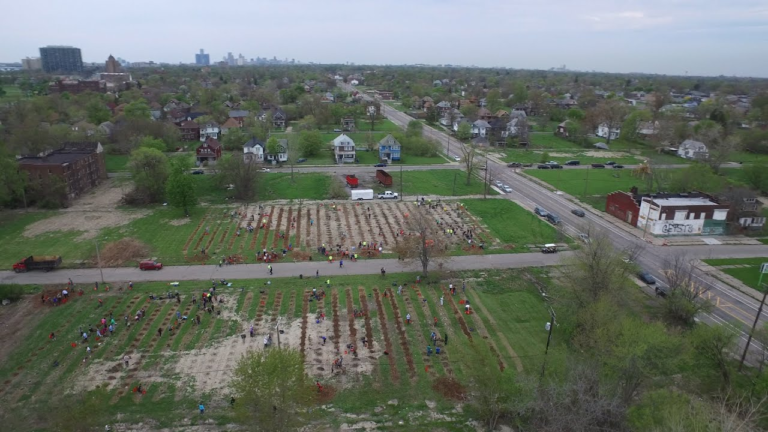
Fig1. Hantz Woodlands (https://www.youtube.com/watch?v=iTvwGBi3V4k)
However, urban farms are not a panacea. In the absence of continuous monitoring and risk communication, it may be reduced to a ‘green visualisation’ project; and once the value of the land has increased as a result of the farm’s operation, capital acquisition may lead to ‘green relocation’. Therefore, governance technologies, property rights mechanisms and community governance need to be integrated into the same design framework to avoid the imbalance between ecological restoration and social justice.
Back to our project, the Lemington brownfield site on the Newburn River to the west of Newcastle provides a representative testing ground for this strategy. The site began its industrial history as the Lemington Ironworks in the 19th century, and was transformed into a brickworks and thermal power station in the early 20th century (1903-1976), creating a complex riparian pollution environment with long term deposits of fly ash and sediment pond residues. The existing open wetland of approximately 25 hectares, although not suitable for immediate heavy construction, has significant landscape potential due to its close proximity to the River Tyne. As a staged intervention, a modular urban farm could be used to introduce hyper-accumulative plants such as sunflowers and chicory on top of a mulched substrate and removable planting boxes for batch remediation, with an open field trial area for the university’s research team to test soil and groundwater indicators in real time to ensure transparency of the treatment. In conjunction with the Tyne Arts and Leisure Network, the site can cultivate herbs, edible flowers and local beer ingredients to provide a short chain of supply for independent catering and craft brewing brands in neighbouring towns and cities, as well as coupling the farming experience with cultural recreation through weekend markets and riverside walks. As shown in Figure 2, the urban farm on the site is equipped with greenhouses, processing plants, kitchens, exhibition halls, and other functional buildings, with the aim of creating a primary, secondary, and tertiary industury area that integrates ‘planting, production, processing, selling, visiting, and teaching’.
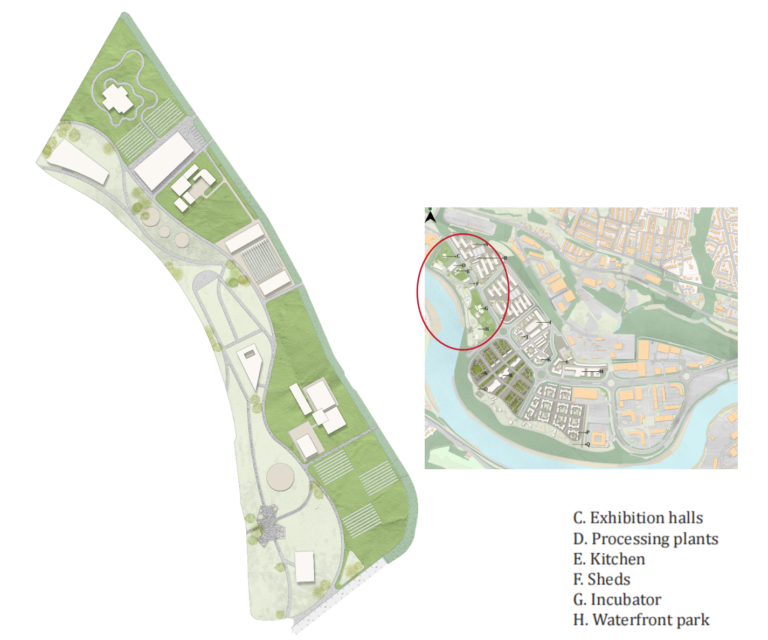
Fig2. Urban Farm Zone in my Project (made by author)
By moving from “grey” to “green” to “colour”, the Newburn riverbank is expected to build up biodiversity before any real architectural intervention takes place, social capital and regional branding before the arrival of real architectural intervention, laying the ecological and cultural foundations for the overall regeneration of the north bank of the River Tyne.
Reference List:
Gorgolewski, M., Komisar, J. & Nasr, J. (2011). Carrot City: Creating Places for Urban Agriculture. Monacelli Press. Available at: https://doi.org/10.1080/17549175.2012.692572 (Accessed: 28 April 2025)
Gallagher, J. (2020). Reimagining Detroit: Opportunities for Redefining an American City. Wayne State University Press. Available at: https://archive.org/details/reimaginingdetro0000unse (Accessed: 28 April 2025)
L. J.(2010). Sustainable urban agriculture: stocktake and opportunities. International Journal of Agricultural Sustainability, 8(1-2), 7-19. Available at: https://doi.org/10.3763/ijas.2009.0468 (Accessed: 28 April 2025)
Fig1. Hantz Woodlands. Available at: https://www.youtube.com/watch?v=iTvwGBi3V4k (Accessed: 28 April 2025)
