

Ice Break: From Urban Alleys to the Exploration of Spatial Equity
Introduction and Professional Choice
After reading the brief and attending the introductory session, I am highly enthusiastic about commencing the Master of Urban Design program at Newcastle. My undergraduate training in interior design has instilled in me a consistent focus on ergonomics, material comfort, and real-world usage patterns. I now aspire to extend this observational approach from “interiors and buildings” to “streets and neighborhoods,” ensuring that design decisions benefit a broader population more equitably. I am particularly interested in how nature-based design, transportation systems, and public space governance can be synergized to mitigate everyday inequalities.
From Interior Design to Urban Design: The Spatial Regrets I Saw in Qingguo Lane
When discussing spatial justice, I often reflect upon Qingguo Lane in my hometown of Changzhou, Jiangsu. This historic district, nestled along the Beijing-Hangzhou Grand Canal, has been meticulously restored and transformed into a cultural landmark. However, beneath its polished exterior, subtle yet persistent spatial frictions remain: large blocks and enclosed boundaries around the historic core force detours for daily errands; key pedestrian routes, though aesthetically pleasing, lack universal accessibility—steps, undulating stone pavements, and bottleneck segments hinder movement for wheelchair users, strollers, and delivery carts; benches, though neatly arranged, are insufficient in number and often lack shade, discouraging elderly residents from lingering.
A more nuanced issue concerns who gets to stay. During the renewal process, some long-term residents reportedly faced non-renewed leases or rising rents, as residential units were converted into cafés, boutique shops, or short-term rentals. As high-yield commercial activities cluster along main streets, everyday service outlets in back alleys have dwindled. A pattern common to heritage districts resurfaces here: the benefits of beautification are widely shared, yet the burdens—limited accessibility, thermal discomfort, and displacement risks—disproportionately fall on those with fewer alternatives. Spatial injustice manifests not only in the absence of ramps or shade but also in the erosion of affordable housing and community networks, gradually shifting the neighborhood from a “lived-in community” to a “consumable stage.”
Now I am studying urban design in Newcastle. Every time I walk along the old streets of Grainger Town, I think of Qingguo Lane. The old districts of Newcastle also have a history of over a hundred years. However, they have left gentle blind paths beside the cobblestone roads, added invisible barrier-free elevators in old buildings, and even left wooden benches for people to sit on at street corners. They did not sacrifice people’s needs for the sake of “preserving history”, but instead made the historical space more “usable”.
Future Expectations
Interior design creates comfort within a home, whereas urban design ensures that a lane or a city can accommodate the lives of all its inhabitants. In the future, I aspire to bring the knowledge I gained in Newcastle back to Qingguo Lane, not by demolishing old houses, but perhaps by slightly widening sidewalks, adding a few movable seating areas, and installing subtle ramps beneath thresholds. Instead of altering the traditional white walls and dark-tiled roofs, it may suffice to enhance street lighting and designate temporary stroller parking zones at the lane’s entrance.
For me, urban design entails not only enhancing the aesthetic appeal of a place but also fostering its capacity to retain inhabitants, ensuring safety and equity while preserving the intricate fabric of urban life.
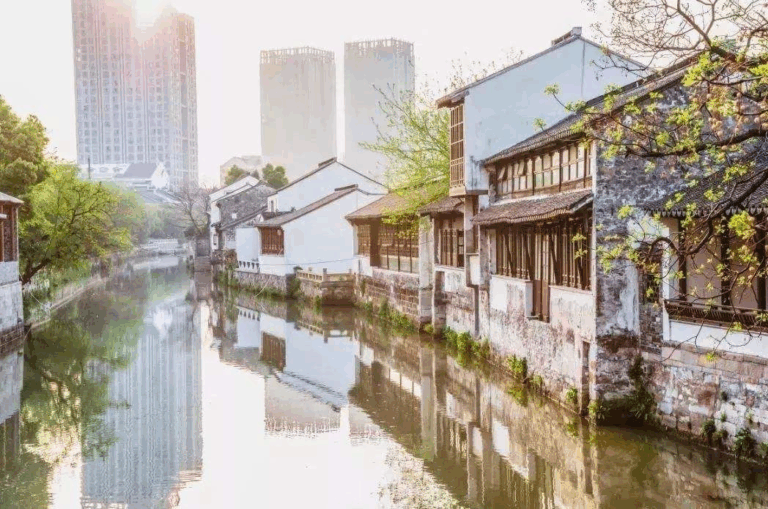
Source:Changzhou Daily
