

Thank you for sharing your story, Rhiannon. I really admire your motivation to tackle spatial injustice and improve the quality of urban life in your hometown. I hope Sunderland continues to progress and becomes a vibrant, high quality and attractive city for both its residents and future visitors. Your professional experience in planning policy and design is truly inspiring, and I look forward to learning more from your perspective.
Introducing me – From Sunderland to Urban Design
A bit about me…
Hello! My name is Rhiannon Laverick and I am currently studying for my masters in Urban Design. I am doing this part time whilst I work as a planning policy officer at South Tyneside Council. My role there largely centres around working as part of the team to write the local plan and the evidence base which sits behind it. I have done this for 2 years now and thoroughly enjoy being a part of the team there. Due to my background in design, I also undertake a lot of this work for South Tyneside Council. I am responsible for both the design policies and climate change policies within the plan and am also working on a masterplan for one of the major sites that is to be allocated. This has allowed me to work closely with consultants and colleagues in urban design, heritage, transport, ecology and more.
Prior to this I studied Architecture at Northumbria University and graduated in 2022. Here I developed my design skills greatly, learned to use a variety of software packages, and the technical skills to shape places. I am particularly interested in the work of Frei Otto on gridshells and based my final project design of a community centre for Jesmond Dene on this.
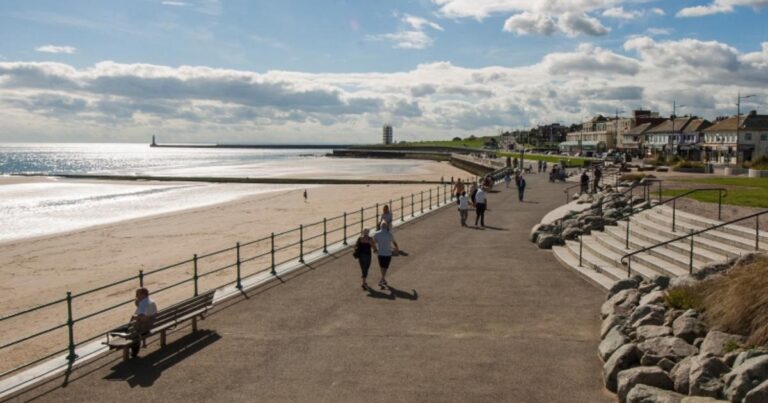
I come from Sunderland, a city not so far away from Newcastle. There is however a lot of deprivation in Sunderland as well as high crime rates and it does unfortunately get a bit of a bad reputation. This deprivation has tended to form in clusters around the city. These zones have greater health inequalities, fewer access to better paying jobs, they also lack good quality civic infrastructure and schools in the area perform worse than the average. It is apparent that the former industrial zones are commonly those that are more deprived, areas with a history of coalmining and shipbuilding. Thankfully, over recent years Sunderland has received a large amount of investment and is improving. The city centre specifically is undergoing a large transformation following the Riverside Sunderland masterplan and producing a low carbon, mixed use quarter for the city. Sunderland does however have some of the most beautiful beaches I have ever visited and I am lucky to call them part of my home.
Coming from an area like this is why I have chosen to pursue urban design with the hopes that one day I could help to improve areas like my home town and decrease the level of spatial injustice that occurs in many areas around the North East of England.
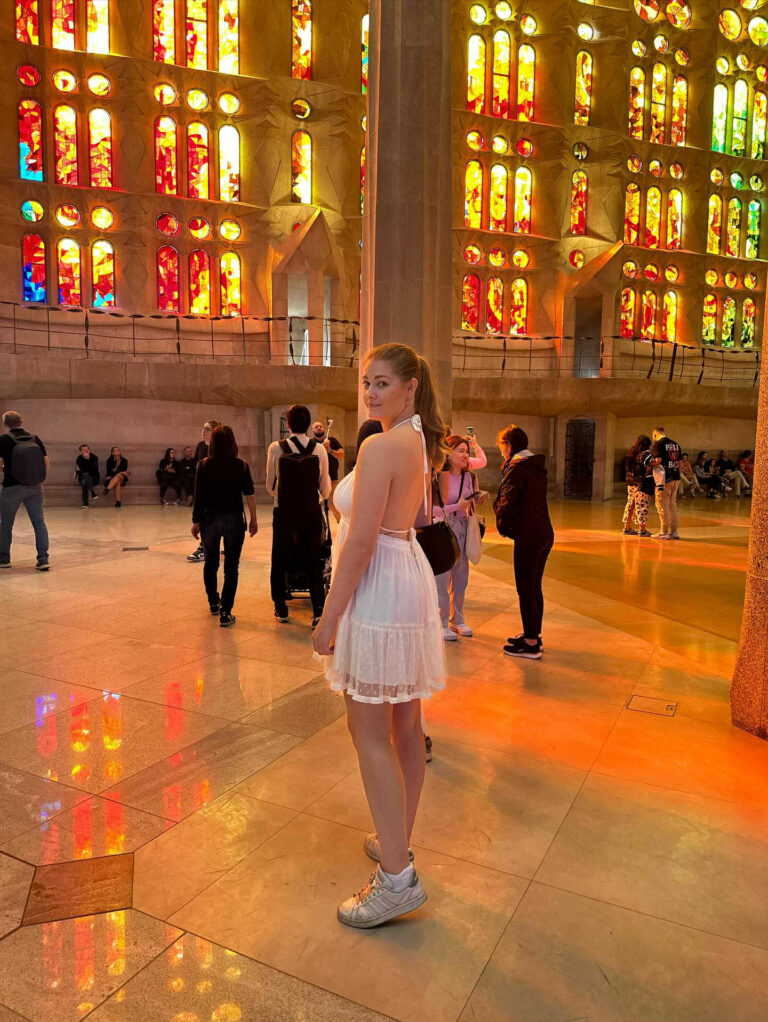
In my spare time I also love to travel, having visited a variety of countries around the world. My favourite city I have visited has been Barcelona, particularly because of the architecture style there. I found it inspiring to see Gaudis work in person and be able to appreciate the true scale of his works such as the Sagrada Familia. I feel that travelling around cities is an excellent way to truly appreciate the impact of urban design on an environment and turn the theories I have learned into lived experience.
I have also included a short video showcasing some of my hobbies outside of Urban Design and Architecture. Thank you for reading!

Thank you for sharing your story, Rhiannon. I really admire your motivation to tackle spatial injustice and improve the quality of urban life in your hometown. I hope Sunderland continues to progress and becomes a vibrant, high quality and attractive city for both its residents and future visitors. Your professional experience in planning policy and design is truly inspiring, and I look forward to learning more from your perspective.