Co-housing as a Pathway to Housing Justice: Reflections on Marmalade Lane
Housing is often talked about in economic terms, as price increase, investment value, and/or market value. Dr. Camila Cociña contested that framing in her talk “Housing Justice: Towards an Action-Research Agenda.” She emphasized that housing should be understood as a human right, not a commodity, and I think that lens of thinking about the future of housing is worth considering. Dr. Cociña also mentioned how the housing crisis is a global human rights crisis, with the people most negatively affected (i.e., a couple of examples she noted were Black and indigenous populations) being those who have been disproportionately harmed due to structural inequities and injustices. That insight changed the way I thought about housing being an issue solely of supply/affordability to significantly more of a conversation of justice, dignity, and collective well-being.
Dr. Camila stated that contemporary housing systems exclude, extract, exploit, and enclose most of the world’s population, while favouring exchange value over use value. This surprised me, as it echoed my experience of living in a city where profit seems to run the show over human need. The lecture explained that housing justice is about alternate forms of provision from the standpoints of radical democracy and care, not simply “more units built more quickly.” It made me think, what would housing look like if the primary design principle were to increase social support rather than a financial return? Perhaps it might look like co-housing.
Vestbro (2010) explains co-housing as a spatial and social design model in which families maintain private units in combination with shared community assets, such as kitchens, gardens, and workshops. Instead of doubling down on an isolated form of domesticity, co-housing redistributes everyday life that relies on amenities, creating care, participation, and accountability. Jarvis (2015) suggests that co-housing can promote interdependence by counteracting some disconnection inherent in modern cities by promoting engagement through daily interaction. Co-housing fits into two of Cociña’s recommended transformation pathways: radically democratic housing production and housing as an infrastructure of care for fairer cities.
Cambridge co-housing project completed in 2019 with TOWN and Mole Architects, Marmalade Lane is an example of these principles in action. The 42 homes surround various shared facilities, including a common house, guest rooms, gardens, laundry, and workshops. Importantly, residents were engaged in major design decisions and today are engaged in the governance of the neighbourhood, transferring power from the traditional developer-led delivery. Care is also embedded in everyday life through shared meals, shared childcare, tool libraries, and care from neighbours. Marmalade Lane operates as social infrastructure rather than just shelter.
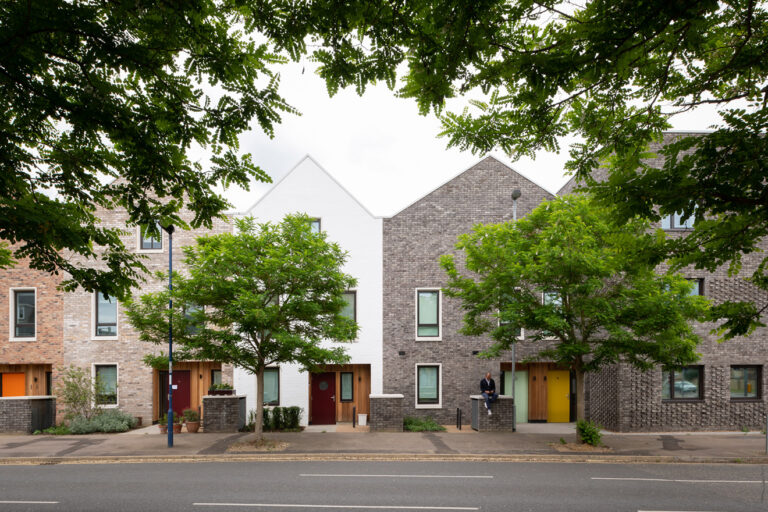
Figure 1. Marmalade Lane Co-housing, Cambridge, UK. Photograph © Mole Architects / TOWN. Used for educational purposes only.
At the same time, the project also casts some limitations consistent with the lecturer’s point that different types of housing will not in themselves address structural injustice. While Marmalade Lane allows for low-carbon, community-centered living, many buyers of market-rate homes still had to remortgage in order to raise a deposit that would still be high relative to median income in Cambridge. This demonstrates that socioeconomic barriers do persist. Democratic design and governance also require time to participate, as well as cultural confidence and resources that families do not equally have available. In this way, Marmalade Lane can promote housing justice by providing for agency, democratic governance, and care, but it cannot address the deeper inequities that Cociña identified.
Reflecting on both the lecture and the case study has transformed the way I think about co-housing. I am now thinking about housing justice as a redistribution of power that should normalize collective decision-making and care instead of housing being perceived as a personal investment in one’s individual wealth. Co-housing is not the idealized ‘solution’ but rather a mode of life that relies upon larger political contexts to enable more equitable and affordable living. Co-housing may be able to substantiate environmental or social justice, but only as one part of a structural commitment to social justice.
I truly feel this lecture has changed the way I think about perspectives. It reframed housing as a nexus where power, inequality, culture, and well-being intersect, a space that can hold new forms of care and solidarity. Marmalade Lane has indicated to me that housing alternatives are already in motion and how possible they are. However, it has also reminded me that justice or fairness does not just happen because of architectural form. And in fact, justice is based on an intentional redistribution of access, rights, and resources towards people. Housing Justice cannot simply happen by developing a new spatial model around housing, such as co-housing. There must be structural fairness around land, policy, and participation.
References:
Chatterton, P. (2019) Low Impact Living: A Field Guide to Radical Housing. London: Routledge.
Cociña, C. (2025) Housing Justice: Towards an Action-Research Agenda. Lecture presented at Newcastle University, 2025.
Jarvis, H. (2015) ‘Towards a deeper understanding of the social architecture of co-housing communities’, Urban Studies, 52(3), pp. 193–205.
Vestbro, D. (2010) Living Together—Cohousing Ideas and Realities Around the World. Stockholm: Royal Institute of Technology.
List of figures:
Mole Architects & TOWN (2019) Marmalade Lane Co-housing development, Cambridge. Photograph. Available at: https://www.molearchitects.co.uk/projects/marmalade-lane (Accessed: 18 November 2025).



Before I ever heard the term co-housing, I realised I had already lived it. Growing up in India, shared living was simply how everyday life worked. Homes extended beyond walls, grandparents, neighbours, and cousins forming networks of care where childcare, meals, and emotional support flowed through shared courtyards and streets. Housing was not an isolated commodity but a collective process, shaped by social relations and mutual dependence (Chatterjee, 2004).
Arriving in the UK, this sense of belonging felt noticeably absent. In cities like Newcastle and London, housing often feels fragmented and transactional. Rising rents, limited supply, and highly individualised living have turned homes into financial assets rather than social infrastructure (Madden and Marcuse, 2016). While shared housing exists, it frequently takes precarious forms such as HMOs or short-term rentals, offering density without community. This contrast made co-housing stand out to me—not as a niche lifestyle choice, but as a spatial response to housing injustice.
Co-housing deliberately combines private dwellings with shared kitchens, gardens, and common spaces, all collectively managed by residents. What feels most significant is the redistribution of control: decision-making, costs, and care are shared rather than outsourced or market-driven (Jarvis, 2015). From a spatial justice perspective, this challenges housing systems that routinely marginalise students, migrants, older people, and low-income households (Soja, 2010).
Projects such as Lilac Co-housing in Leeds demonstrate how non-speculative, community-led models can maintain long-term affordability while fostering strong social ties (Tummers, 2016). For me, co-housing feels less like a radical innovation and more like a return to familiar values—reframing housing as shared infrastructure that supports care, resilience, and dignity in an unequal housing landscape.
I enjoyed reading your blog because it connects Cociña’s idea of “housing as a right” to a real example, instead of keeping housing justice as a slogan. Your view on Marmalade Lane works like social infrastructure feels convincing: shared meals, tool sharing and common spaces can create everyday support and reduce isolation, so housing becomes more about use value than exchange value (Sanguinetti, 2014). I also like you recognize co-housing is not a complete solution, because wider markets and policies still shape who benefits.
Moreover, I think the question is whether democratic governance can become a new barrier. Co-housing often needs meetings, volunteering and confidence to speak up, which not everyone has equally. Arnstein’s “ladder of participation” reminds us that participation can still be unequal even when a project looks inclusive (Arnstein, 1969). Also, research suggests many self-managed or collaborative housing projects in Europe attract people with more education and social capital, which can limit access for lower-income groups (Tummers, 2016). So I’m left wondering, how could co-housing reduce both the financial entry costs and the “time or participation” costs, so it supports housing justice not only inside the community but also at the point of entry?
References:
1 Arnstein, S.R. (1969) ‘A ladder of citizen participation’, Journal of the American Institute of Planners, 35(4), pp. 216–224.
2 Sanguinetti, A. (2014) ‘Transformational practices in cohousing: Enhancing residents’ connection to community and nature’, Journal of Environmental Psychology, 40, pp. 86–96.
3 Tummers, L. (2016) ‘The re-emergence of self-managed co-housing in Europe: A critical review’, Urban Studies, 53(10), pp. 2023–2040.
This article is well-organized and interesting. It reconsiders the idea of human rights to justice and care in housing, rather than just regarding housing as a commodity. This viewpoint has enabled me to consider housing not as a simple “supply and demand” problem, but it is a more thorough social justice matter. I was also impressed with the case of Marmalade Lane, which the case demonstrates co-housing as a routine infrastructure of care, participation and responsibility. The author also acknowledges the limits of Democratic governance, including the financial constraints and the demands on time and skill. Such a moderate perspective is reflected in the studies: Hudson et al. (2021) discovered that co-housing provides a mutual support, while Arbell (2021) reports that such communities often attract mostly middle-income neighbors. In brief, co-housing can foster agency and care, but by itself it cannot address bigger inequalities.
Having lived in Shanghai for over twenty years. I could relate with this article deeply. Housing in Shanghai is greatly financialized: property is perceived as an investment and status symbol rather than as a community space. Although the residential density is high, there is minimal daily interaction among the residents. For this reason, the model of co-housing discussed in the article makes me reflect on what is lacking in the housing system in Shanghai. The example of Marmalade Lane might be challenging to apply in this context, but it emphasizes the importance of shared space, residential involvement, and viewing housing as a care infrastructure. In the end, the article helped me understand that a single design would not help to attain housing justice, but through the redistribution of power, responsibility, and care.
Reference
Arbell, Y. (2021). ‘A place that is different from the usual capitalist world’: the potential of Community-led housing as safe and just spaces. [online] Available at: https://www.jssj.org/wp-content/uploads/2021/07/JSSJ_16_Arbell_EN.pdf [Accessed 5 Jan. 2026].
Hudson, J., Scanlon, K., Udagawa, C., Arrigoitia, M.F., Ferreri, M. and West, K. (2021). ‘A Slow Build-Up of a History of Kindness’: Exploring the Potential of Community-Led Housing in Alleviating Loneliness. Sustainability, 13(20), p.11323. doi:https://doi.org/10.3390/su132011323.