Heritage as a Living Framework
When I moved from India to the UK to study urban design, I expected contrast. What I discovered instead was continuity. In both contexts, heritage does not resist change — it shapes it. Academic discourse supports this view: heritage is increasingly understood not as static preservation, but as an active component of the urban realm that influences identity, governance, and spatial form (Pendlebury, 2013).
Growing up in India, heritage was inseparable from everyday life. In cities like Jaipur and Varanasi, historic streets are economic and social ecosystems. Urban morphology evolved in response to climate, culture, and trade. Ashworth (2011) argues that present communities continually reinterpret heritage in such contexts, and I have seen this firsthand in bazaars, courtyards, and adaptive reuse of havelis. The built environment is not frozen; it absorbs modern pressures while retaining identity. This creates a layered urban realm where memory and movement coexist.
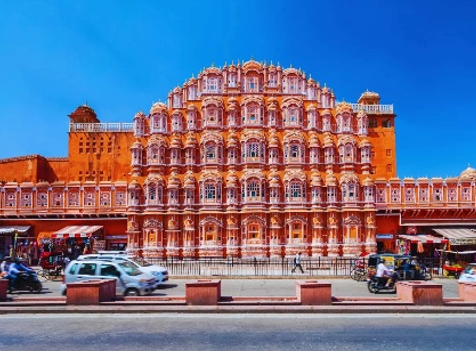
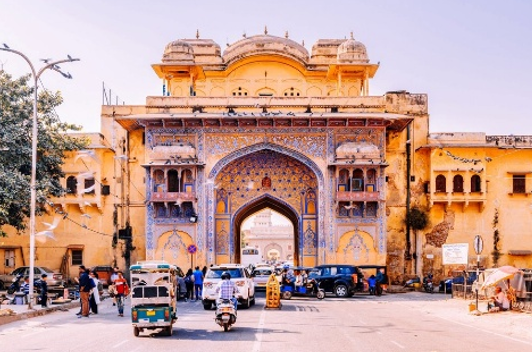
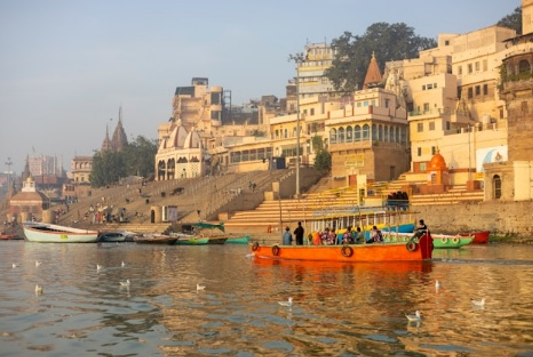
Image 1: A historic view of the Walled City of Jaipur — a UNESCO World Heritage urban settlement in India shaped by traditional planning and craftsmanship.
Image 2: Street-level heritage fabric from Jaipur’s urban core, showing how ancient streets shape human activity.
Image 3: The historic riverfront and ghats of Varanasi, where built heritage and social life are inseparable.
In the UK, particularly in Edinburgh and York, I observed a more policy-led but equally optimistic model. Conservation areas, listed buildings, and structured planning frameworks guide development. Yet this guidance does not limit creativity — it strengthens contextual responsiveness. Pendlebury (2013) notes that contemporary conservation operates through negotiation and consensus, allowing historic character to inform regeneration. Walking along York’s medieval walls, I experienced how heritage infrastructure can frame views, structure pedestrian networks, and enhance place identity.
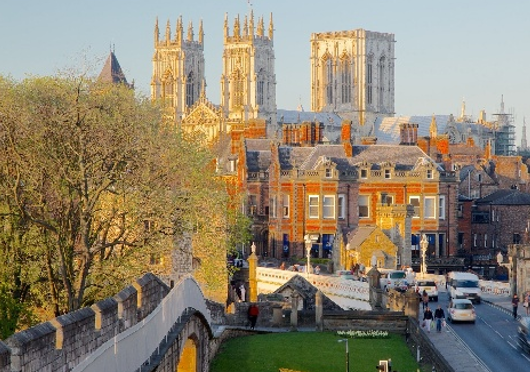
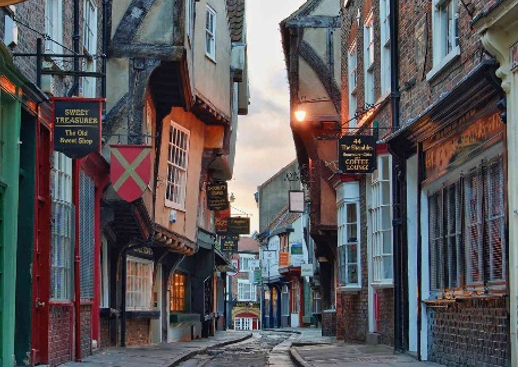
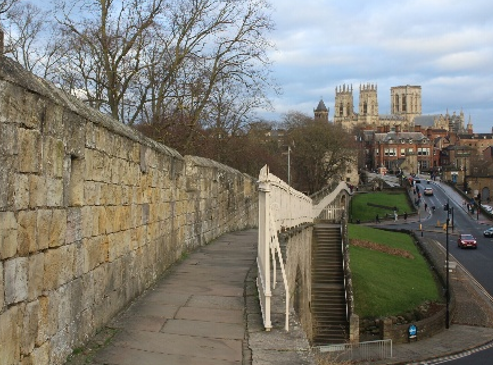
Image 4: York’s City Walls overlooking historic streets — a defining urban heritage feature that still shapes movement and views through the city centre.
Image 5: A street in York’s medieval core, showing narrow, timber-framed buildings and human-scaled urban fabric.
Image 6: Another section of York’s walls illustrates how heritage infrastructure integrates with contemporary circulation patterns.
Across both countries, three insights became clear:
- Heritage shapes urban form — influencing street hierarchy, scale, and materiality.
- Adaptive reuse supports sustainability — aligning with conservation principles outlined by Jokilehto (1999), which emphasise continuity over replacement.
- Heritage strengthens belonging — reinforcing collective memory within the public realm.
My transition between India and the UK has shown me that heritage is not nostalgia — it is strategy. Whether organically embedded in daily life or carefully stewarded through policy, it provides cities with resilience, identity, and depth. In both contexts, heritage becomes a design partner — guiding urban futures while honouring layered pasts.
References
Ashworth, G.J. (2011) Preservation, Conservation and Heritage: Approaches to the Past in the Present through the Built Environment. Farnham: Ashgate. Available at: https://www.routledge.com/Preservation-Conservation-and-Heritage-Approaches-to-the-Past-in-the-Present-through-the-Built-Environment/Ashworth/p/book/9780754678502 (Accessed: 18 April 2026).
Jokilehto, J. (1999) A History of Architectural Conservation. Oxford: Butterworth-Heinemann. Available at: https://www.iccrom.org/publication/history-architectural-conservation (Accessed: 18 April 2026).
Pendlebury, J. (2013) Conservation in the Age of Consensus. London: Routledge. Available at: https://www.routledge.com/Conservation-in-the-Age-of-Consensus/Pendlebury/p/book/9780415527613 (Accessed: 18 April 2026).
Images
Image 1,2,3: https://www.cntraveller.in/story/jaipur-wins-unesco-world-heritage-status-heres-means (Accessed: 18 April 2026).
Image 4,5,6: https://www.visitscotland.com (Accessed: 18 April 2026).
Featured Image: https://unesco.org.uk/our-sites/world-heritage-sites/old-and-new-towns-of-edinburgh (Accessed: 18 April 2026).



I found this blog very insightful, especially the parallels which you found between the two very different approaches to heritage in India and the UK.
It was interesting to learn how historic buildings and areas in Indian cities are continuously repurposed – they absorb new meanings, being adapted to suit changing needs. Meanwhile, in the UK, heritage leads regeneration, shaping the uses around it due to constraints placed upon heritage assets.
It would be worth comparing some case studies, especially how buildings in India have been adapted for new needs; your explanation of the Indian approach to heritage responding to everyday life aligns well with the concept of Vernacular Adaptive Reuse described by Plevoets & Sowińska-Heim (2018), though they explore this through only European examples, so it would be interesting to explore how this applies in non-European contexts.
Whilst I agree with your observation that heritage constraints in the UK can lead to interesting developments with rich historic identity, it would also be worth exploring the implications of a default ‘conservation’ approach with limited flexibility, particularly in areas lacking the vitality and capital of cities like Edinburgh and York.
References:
Plevoets, B. and Sowińska-Heim, J. (2018). ‘Community initiatives as a catalyst for regeneration of heritage sites’: Vernacular transformation and its influence on the formal adaptive reuse practice. Cities, 78, pp.128–139