

Reflective Summary: Overcoming ‘Designer’s Block’: The return to Urban Design Following a placement year
Reflecting on my experience on the Urban Design Masters, it is clear how much my design skills have developed.
I started this year off with a lot of anxieties surrounding design, especially losing the momentum of the previous 3 years. With working part time through my studies, I was sure the quality of my work would take a dip.
But, with a new year comes new opportunities, and being proactive was the only option. I have learnt a lot about myself during this year and finding love for my work – both process and outcome – has been my biggest achievement.
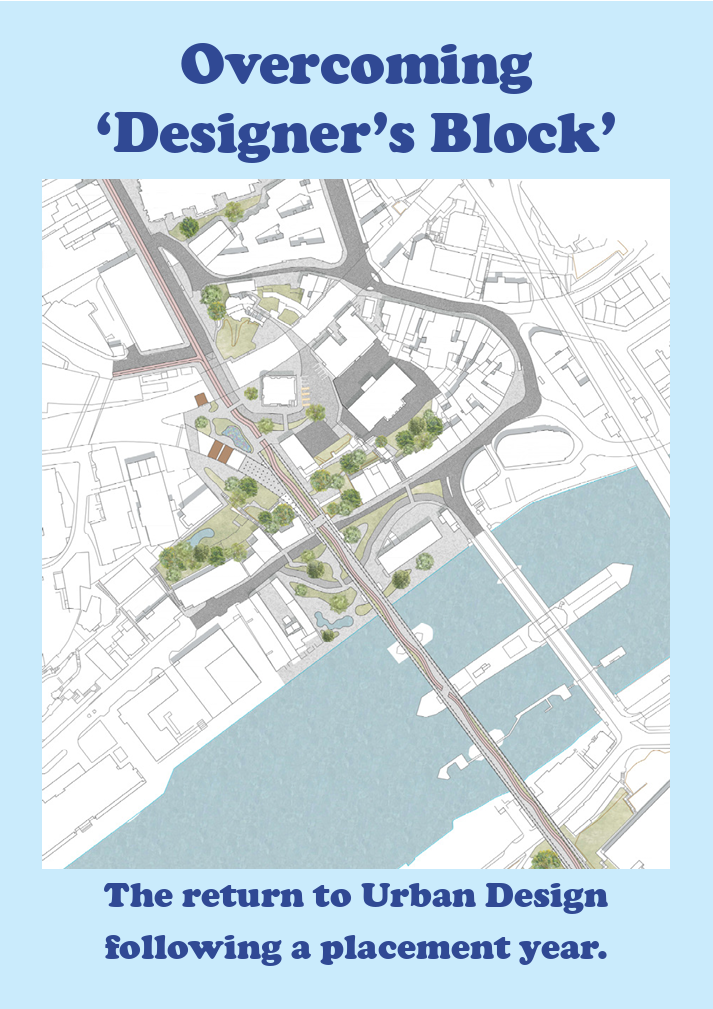
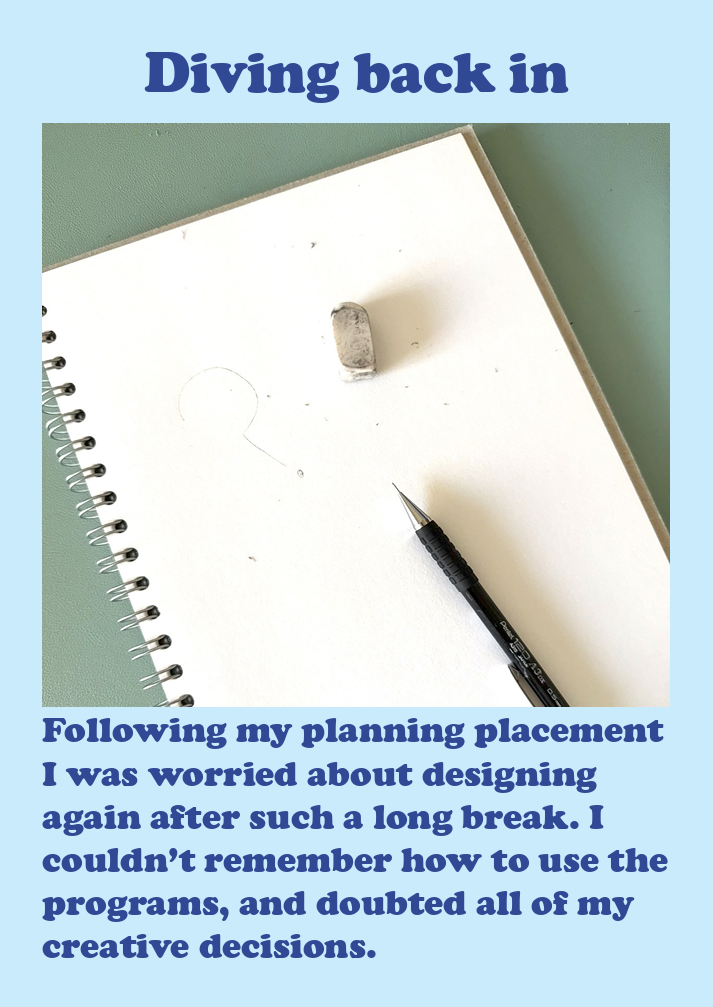
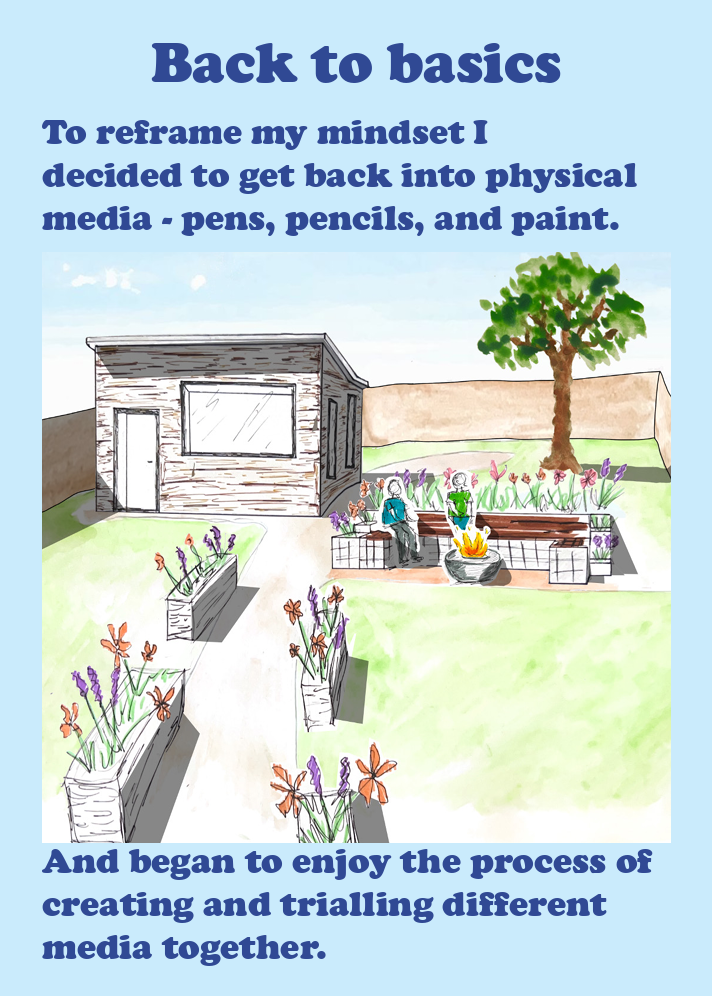
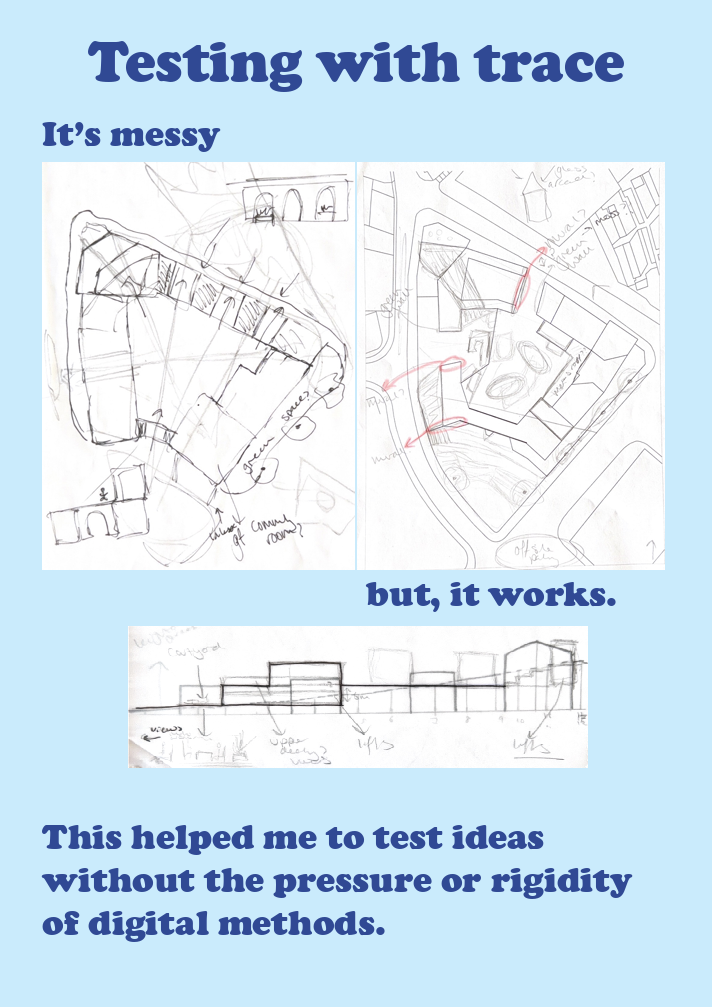
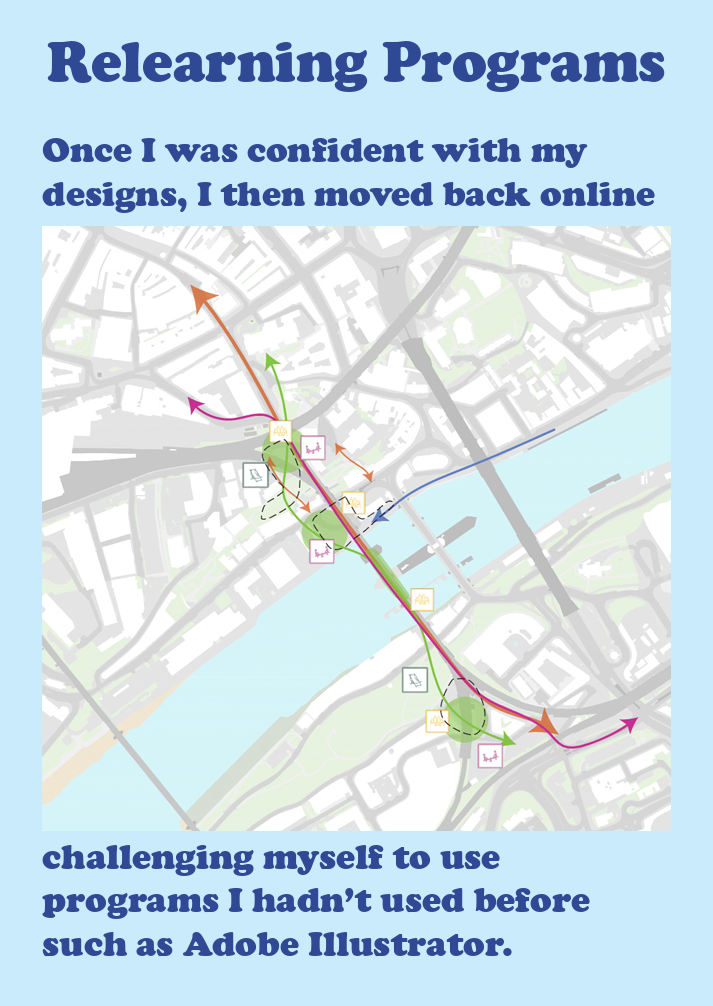
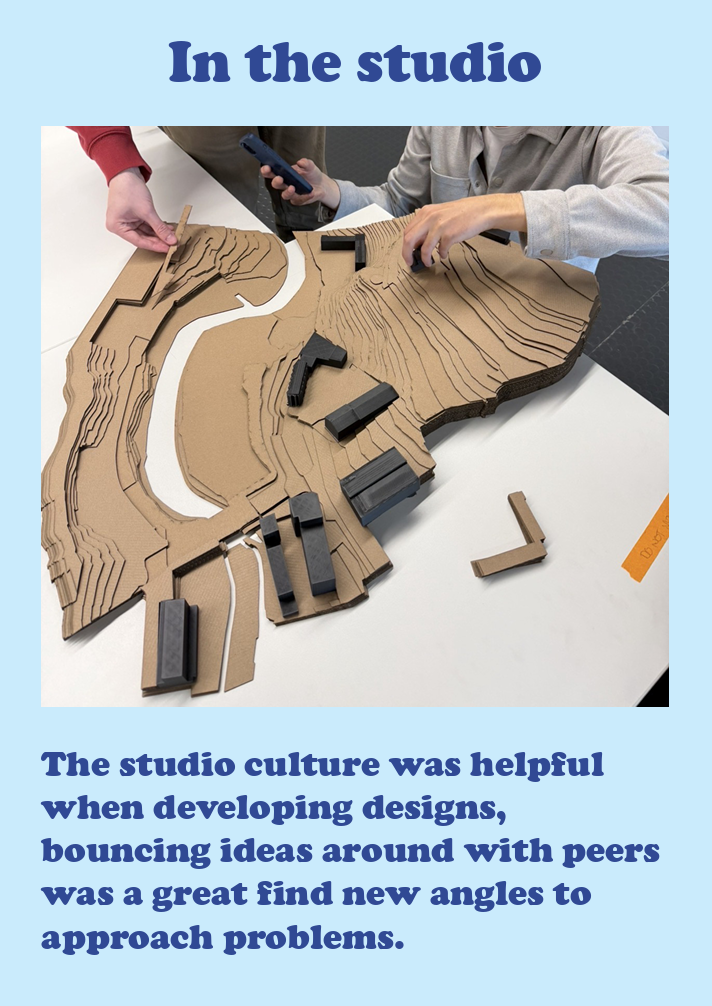
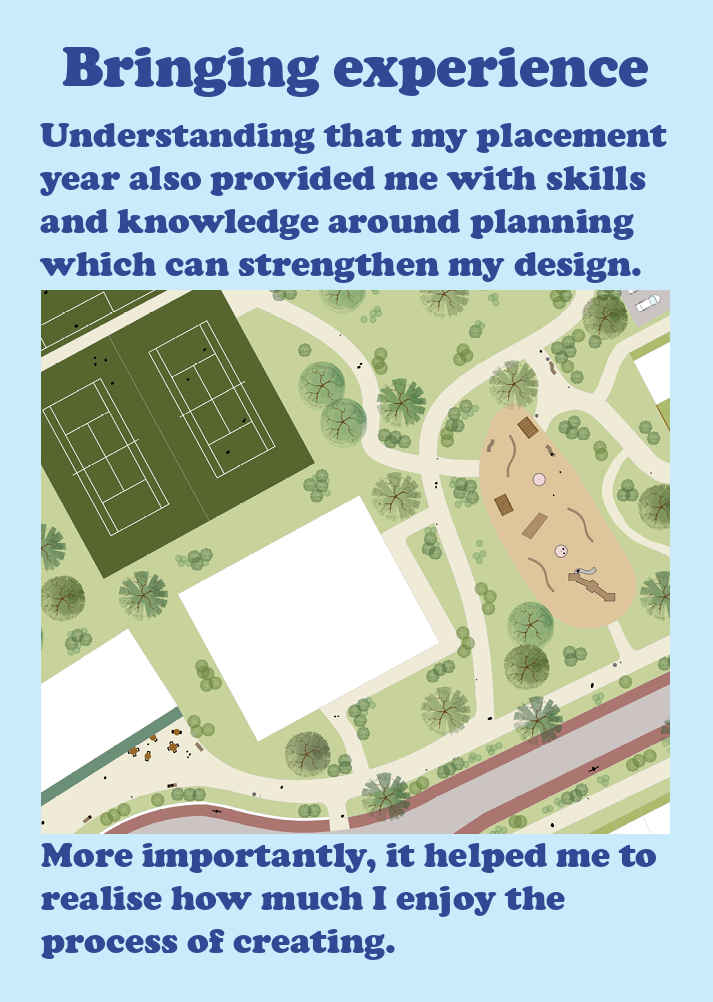
Figure 1: Author’s Own (2026) Carousel Slides for Instagram Post Available at: https://www.instagram.com/maurbandesign/
Key Takeaway – How changing my approach to design strengthened my knowledge of urban spaces.
This Masters year has been a very insightful experience, both academically and personally. The exploration of techniques to overcome the ‘design block’ I encountered, taught me a lot about my approach to design and problem solving.
To strengthen my designs from a theoretical standpoint, I wanted to ensure that my foundational knowledge of urban design theory and societal issues was well integrated into my process. So, I turned to academic reading.
Previously, I struggled to engage thoughtfully with a range of academic sources as they were often too complicated or overwhelming. Coming back to university following my placement year, I was inspired push myself.
The restorative city framework (Roe and McCay, 2021) is centred around 7 key characteristics that, when combined, can create spaces which prioritise mental health and wellbeing.
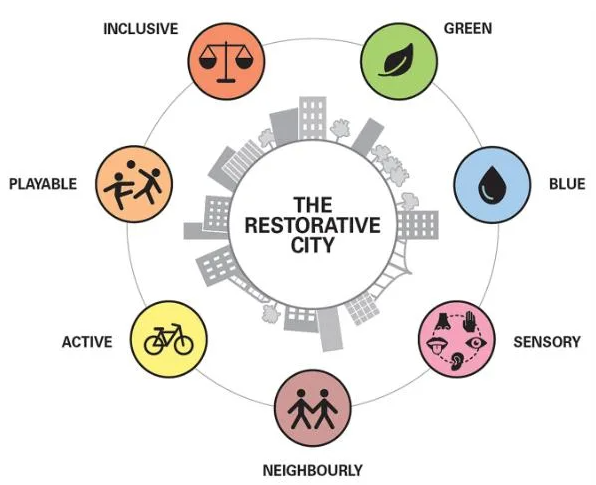
Figure 2: The Restorative City Framework. (Roe and McCay, 2021, p.13, Figure 1.3)
Following the Covid-19 Pandemic, we became more aware of the need to prioritise mental health in our daily lives by going outdoors (Soga et al, 2021) but our urban spaces are often centred around car dependency, allocating space that could be for pedestrians, to motor vehicles (Mueller, et al, 2020).
Whilst designing people centred spaces has always been a core value of my designs, I often was unable to communicate this in an engaging way. The restorative city framework has provided me with the knowledge of how to articulate my ideas and core values through my design. Comparing the work I have produced this year, and in stage 3 of AUP, my designs are more sophisticated and clearly informed by research.
I have found great enjoyment in overseeing my own learning this year, it has allowed me to try new ways of approaching tasks, and my resilience has grown significantly, an important life skill which will stick by me as I continue professionally.
References:
Mueller, M. et al. (2020) ‘Changing the urban design of cities for health: the superblock model’, Environmental International, 134, pp. 1-13. Available at: https://doi.org/10.1016/j.envint.2019.105132
Roe, J. and McCay, L. (2021) Restorative Cities. Urban design for mental health and well-being. Bloomsbury.
Soga, M., et al. (2021) ‘A room with a green view: the importance of nearby nature for mental health during the COVID-19 pandemic’, Ecological Applications, 31(2), pp. 1-10. Available at: https://www-jstor-org.libproxy.ncl.ac.uk/stable/27029176?sid=primo&seq=1 (Accessed: 22 May 2026)
