

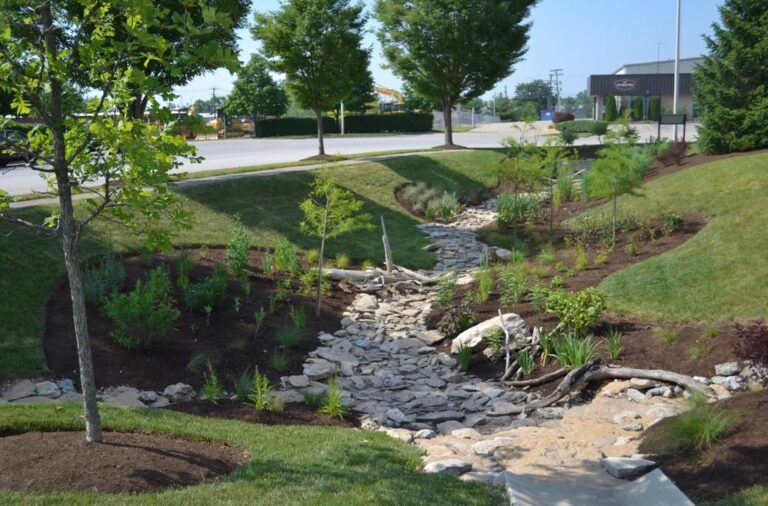
I found this blog to be a meaningful attempt to shift the focus from the technical and ecological functions of rain gardens toward the often-overlooked social aspects. In many Chinese cities, including my hometown of Shanghai, green infrastructure is increasingly being adopted, but community engagement still tends to be treated as a procedural formality rather than a core design element. This blog highlights that issue quite well.
I especially appreciate the author’s argument that community involvement is more than just “listening.” It reminds me of how sometimes urban projects in China include public consultation merely as a checklist item—asking residents what flowers they like without explaining the long-term purpose of the project or integrating their concerns into the overall planning. The blog rightly points out that real engagement happens when residents are included from the early design phases, especially when their everyday experiences—like flooding issues or a lack of child-friendly spaces—are directly incorporated into the rain garden’s design logic. This is something I think should be emphasized more often in practice, not only in the UK but globally.
Another important point raised is the issue of long-term maintenance. I agree that abandoned rain gardens are not necessarily a result of poor design, but rather a lack of shared ownership. The idea of building a volunteer maintenance system is very relevant. From my perspective, creating such a system can also help build stronger neighborhood ties, which is something we should aim for in urban design.
However, I feel the blog could improve in a few areas. The writing could be more organized, with clearer transitions between the points. For example, the paragraph on maintenance jumps into the topic a bit too quickly, and it might help to first reflect on why community participation often ends at the design phase. Additionally, while the idea of rain gardens as social nodes is very insightful, it could be backed by a stronger connection to spatial theory—perhaps referencing how space is activated through informal interactions.
Overall, the blog successfully reframes rain gardens as not only ecological tools but also social infrastructures. As urban designers, we should keep asking how our designs can support long-term stewardship and social vitality—not just short-term visual outcomes.
References:
1.Ahern, J. (2011). From fail-safe to safe-to-fail: Sustainability and resilience in the new urban world. Landscape and Urban Planning, 100(4), 341–343.
2.Chiesura, A. (2004). The role of urban parks for the sustainable city. Landscape and Urban Planning, 68(1), 129–138.
3.Ferguson, B. K. (2005). Porous Pavements. CRC Press.

I found this blog to be a meaningful attempt to shift the focus from the technical and ecological functions of rain gardens toward the often-overlooked social aspects. In many Chinese cities, including my hometown of Shanghai, green infrastructure is increasingly being adopted, but community engagement still tends to be treated as a procedural formality rather than a core design element. This blog highlights that issue quite well.
I especially appreciate the author’s argument that community involvement is more than just “listening.” It reminds me of how sometimes urban projects in China include public consultation merely as a checklist item—asking residents what flowers they like without explaining the long-term purpose of the project or integrating their concerns into the overall planning. The blog rightly points out that real engagement happens when residents are included from the early design phases, especially when their everyday experiences—like flooding issues or a lack of child-friendly spaces—are directly incorporated into the rain garden’s design logic. This is something I think should be emphasized more often in practice, not only in the UK but globally.
Another important point raised is the issue of long-term maintenance. I agree that abandoned rain gardens are not necessarily a result of poor design, but rather a lack of shared ownership. The idea of building a volunteer maintenance system is very relevant. From my perspective, creating such a system can also help build stronger neighborhood ties, which is something we should aim for in urban design.
However, I feel the blog could improve in a few areas. The writing could be more organized, with clearer transitions between the points. For example, the paragraph on maintenance jumps into the topic a bit too quickly, and it might help to first reflect on why community participation often ends at the design phase. Additionally, while the idea of rain gardens as social nodes is very insightful, it could be backed by a stronger connection to spatial theory—perhaps referencing how space is activated through informal interactions.
Overall, the blog successfully reframes rain gardens as not only ecological tools but also social infrastructures. As urban designers, we should keep asking how our designs can support long-term stewardship and social vitality—not just short-term visual outcomes.
References:
1.Ahern, J. (2011). From fail-safe to safe-to-fail: Sustainability and resilience in the new urban world. Landscape and Urban Planning, 100(4), 341–343.
2.Chiesura, A. (2004). The role of urban parks for the sustainable city. Landscape and Urban Planning, 68(1), 129–138.
3.Ferguson, B. K. (2005). Porous Pavements. CRC Press.