

Engaged or just consulted? The struggle of finding meaningful engagement in UK Placemaking Plans
Across the UK, most placemaking plans now come with a promise: this is your chance to shape the future of your area. Through exhibitions, surveys and workshops, participation is presented as central to planning and urban design. Yet a pattern often emerges. The opportunity to contribute is there, but the ability to exert real influence feels far less certain.
In theory, placemaking means designing places not just for people, but with people. It should reflect local identity, everyday life and community needs (Project for Public Spaces, 2007). UK planning policy has embedded engagement within plan-making and development processes. However, as Baker (2007) notes, once participation becomes formalised, it can quite often function less like an open conversation and more like a procedural requirement.
Consultation or Conversation?
This box-ticking risk is clear in how consultations are structured. Public exhibitions often present proposals that feel largely decided, supported by polished visuals and carefully framed arguments. Feedback is invited, but within limits. Surveys guide people towards set responses, while workshops tend to refine rather than question core concepts. Similar concerns emerged around Newcastle Quayside’s “Plot 12”, where residents criticised limited engagement opportunities, poor visibility of events, and difficulties submitting objections through the council’s online portal (Northern Insight, 2020).
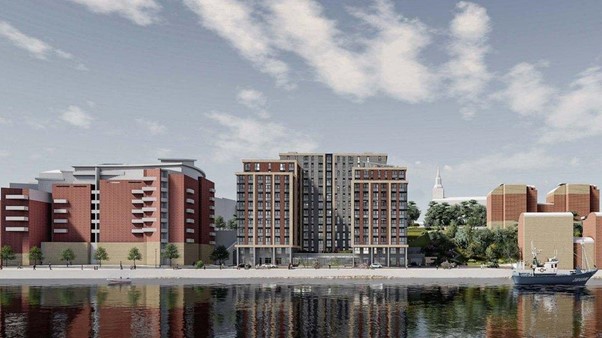 Figure 1: A polished render from Newcastle’s Plot 12 development, highlighting how engagement can occur once proposals already appear visually resolved. (Source: BBC News (2023), Available at: https://www.bbc.co.uk/news/uk-england-tyne-65167479)
In this sense, participation can operate as risk management for developers and councils, as communities are consulted, but the project direction remains largely unchanged. As Innes and Booher (2004) suggest, tightly controlled participation can struggle to produce meaningful change and instead reinforce existing decision-making structures.
Arnstein’s “ladder of participation” (1969) is useful here. Much of what is presented as engagement actually amounts to consultation, where people are heard but not given genuine influence. Within many placemaking plans, participation becomes visible and measurable, but not necessarily meaningful.
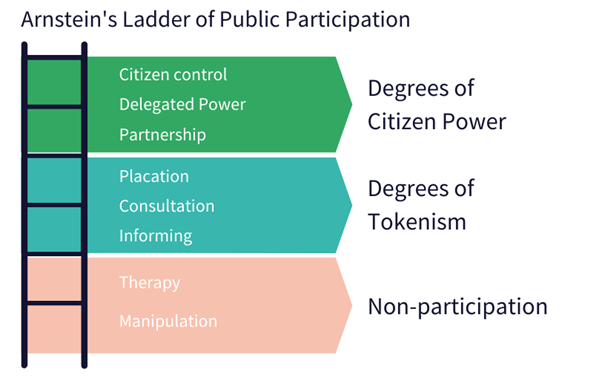 Figure 2: Arnstein’s (1969) “Ladder of Participation”, illustrating the difference between consultation and genuine citizen power. (Source: Commonplace (2023), Available at: https://www.commonplace.is/blog/arnsteins-ladder-of-citizens-participation-explained)
From my placement experience, this creates a noticeable disconnect. Planning documents often present engagement as a strength, yet it can be difficult to see how public input has materially changed the final outcome. Participation can begin to feel more like building support for proposals rather than shaping them from the outset.
Learning from Newport
However, this is not always the case. A strong example I encountered was the Stride Treglown Newport Placemaking Plan. The project embedded engagement early on, involving over 1,700 residents, businesses and community groups through surveys, workshops and face-to-face discussions. This feedback directly informed the Plan’s “60 Big Ideas for Newport”, including walking routes, public spaces and community initiatives (Stride Treglown, 2025). What made Newport convincing was not simply the scale of engagement, but the visibility of its impact within the final proposals. Rather than participation sitting alongside the design process, it became part of how the vision itself was shaped.
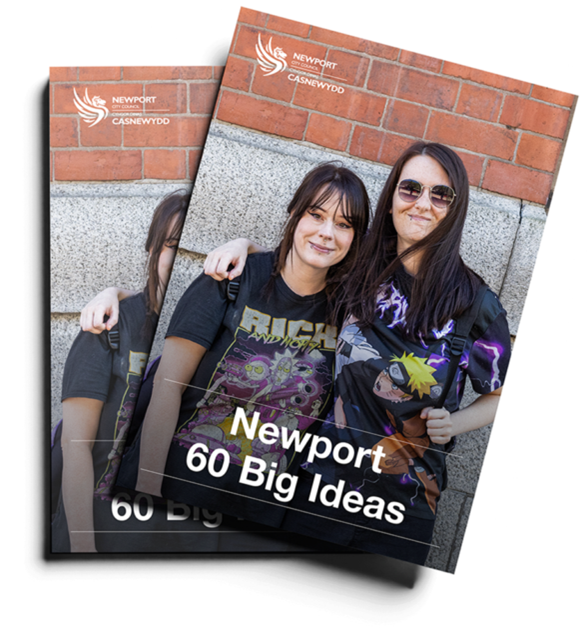 Figure 3: ’60 Big Ideas for Newport’, where residents and community groups shared their “hopes, frustrations and ideas for the city’s future”. (Source: Stride Treglown (2026), Available at: https://stridetreglown.com/projects/newport-placemaking-plan/)
That said, examples like Newport remain difficult to achieve consistently. Placemaking plans operate within tight timelines, funding pressures and policy constraints, limiting flexibility. Participation is also shaped by who can engage. Those with time, confidence or planning knowledge are often overrepresented, while others remain excluded (Cooke and Kothari, 2001).
The issue, then, is not whether participation exists, but whether it moves beyond consultation into genuine engagement. While meaningful engagement is possible, too many placemaking plans experience the same gap of relying on consultation processes that ask communities to respond to decisions rather than help dictate them. Bridging that gap means involving communities in shaping proposals from the beginning, rather than inviting feedback once key decisions have already been made.
References
Arnstein, S.R. (1969) ‘A Ladder of Citizen Participation’, Journal of the American Institute of Planners, 35(4), pp. 216–224.
Baker, M. (2007) ‘Planning, policy and participation: The UK experience’, Planning Theory & Practice, 8(1), pp. 31–50.
Cooke, B. and Kothari, U. (2001) Participation: The New Tyranny? London: Zed Books.
Innes, J.E. and Booher, D.E. (2004) ‘Reframing public participation: Strategies for the 21st century’, Planning Theory & Practice, 5(4), pp. 419–436.
Northern Insight (2020) Newcastle City Council and developers come under attack for lack of full consultation. Available at: https://northern-insight.co.uk/media/newcastle-city-council-and-developers-come-under-attack-for-lack-of-full-consultation/ (Accessed: 2 May 2026).
Project for Public Spaces (2007) What is Placemaking? Available at: https://www.pps.org/article/what-is-placemaking (Accessed: 29 April 2026).
Stride Treglown (2026) Newport Placemaking Plan. Available at: https://media.stridetreglown.com/wp-content/uploads/2025/07/11085240/250619_Newport-Placemaking-Plan_Stage-3_FINAL_1_resize-for-web.pdf (Accessed: 1 May 2026).
