

Beyond Buildings:What Really Makes a Good and Liveable Community?
I’ve been in Newcastle for a few months. Looking back on the city now, I feel different. Some areas are pleasant to live in. For example, Grainger Street is a friendly street. The street is not too wide, the buildings are closer to people, and there are shops and cafés at the ground floor . So you can walk normally. Some areas in the city canter are also convenient. It is easy to reach the bus stop and daily service is available without some troubles. But there are other places where it is not comfortable. Cars move fast. Crossings can be noisy. Crossing may be a lengthy process. Some sections of the road are so empty that people don’t want to stay. In this contrast I come up with one question: What is good and liveable in a community besides buildings?
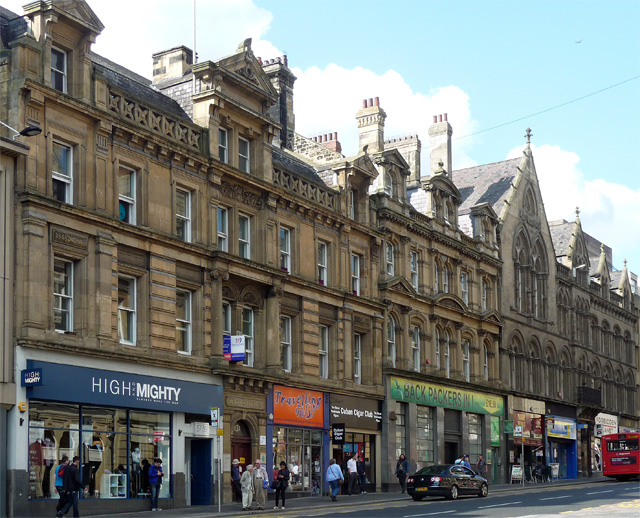
Figure 1. The shops on Granjeer Street are busy and lively. Source: Stephen Richards (2012), Wikimedia Commons.
What are some barriers to creating livable communities?
Obstacles often come from daily conflicts. For example, the conflict between car priority and pedestrian experience, and the conflict between health and traffic emissions. Housing costs are also stressful. The Department for Transport (2019) pointed out that inequality in transportation accessibility will affect people’s access to work, education, medical care and socialising. I can relate to this, because I have seen similar situations in Shanghai. The reason why some areas in Shanghai are more “liveable” is that the service is very close. You can walk to the subway station quickly. It is very convenient to buy vegetables, see a doctor, and do everyday shopping. Short distance will bring more street life and socialising. By contrast, the reason why some areas are “bad” is that it is too far from the service, the transportation is not convenient enough, and it takes a lot of time to travel. In some places, the environment is also worse, with louder noise and poor air. It is more difficult to form a strong sense of community in such areas.
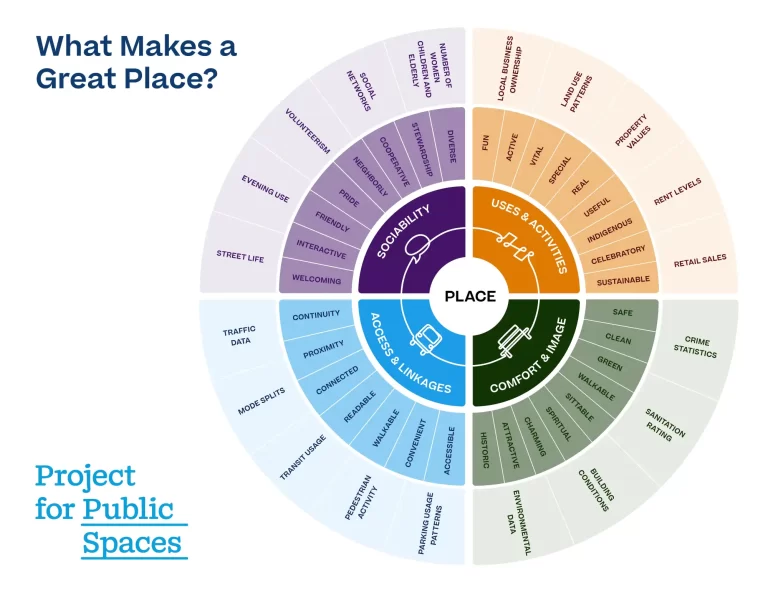
Figure 2. What Makes a Great Place? summarises the four key qualities of great places: access, comfort, uses and sociability. Source: Project for Public Spaces (PPS).
The factors that make the community better
A better community requires a lot of small changes, not a big project. Safe crossings and streets with less traffic are needed. They need mixed uses, to keep the area active during the day and evening. People also need a public space where we can sit and meet. Project for Public Spaces (2009) states that good access, comfort, activities and sociability, are all hallmarks of great places. There is also a positive local example: Ouseburn. Ouseburn Trust’s (2012) plan is based on three priorities: better connections, better public space and a mixed local economy. Ouseburn works because it provides people with a reason to get there and an agenda to stay there.
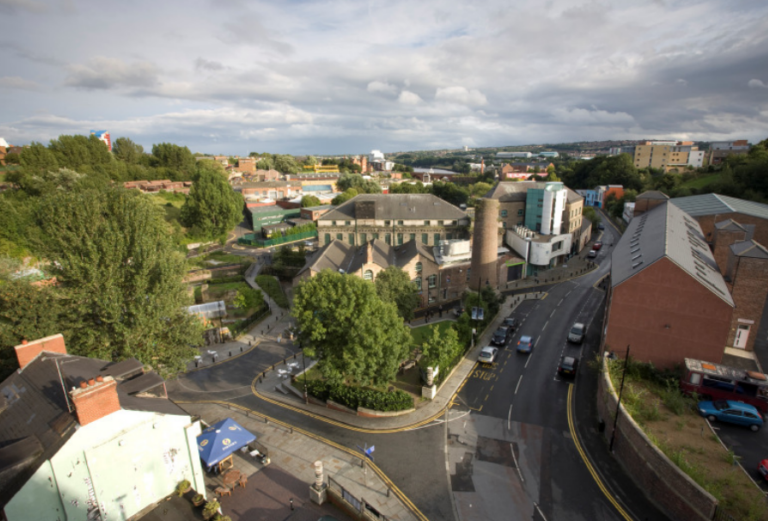
Figure 3. Ouseburn Valley shows the overall layout of the area. Source: Ouseburn Trust (2012) Ouseburn Regeneration Plan 2012–20.
Reference:
Department for Transport (2019) Future of mobility: inequalities in mobility and access in the UK transport system. Available at: https://assets.publishing.service.gov.uk/government/uploads/system/uploads/attachment_data/file/784685/future_of_mobility_access.pdf (Accessed: 15 May 2026).
Ouseburn Futures & Newcastle City Council (2012) Ouseburn Regeneration Plan 2012–2020, Newcastle: Ouseburn Trust. Available at: https://ouseburntrust.org.uk/wp-content/uploads/2024/06/Ouseburn_Regeneration_Plan_2012-20.pdf (Accessed: 16 May 2026).
Project for Public Spaces (2009) What makes a successful place? Available at: https://www.pps.org/article/grplacefeat (Accessed: 16 May 2026).
Image:
https://commons.wikimedia.org/wiki/File:Chaucer_Buildings_Grainger_Street_Newcastle_4612146_0c86043e.jpg
https://commons.wikimedia.org/wiki/File:Chaucer_Buildings_Grainger_Street_Newcastle_4612146_0c86043e.jpg
https://www.pps.org/article/grplacefeat
