

Can affordable housing work at scale?
As a global model of affordable housing, Vienna, Austria demonstrates that affordability, quality, and diversity can coexist if housing is preserved as a civic right. Nearly 60% of the city population now reside in subsidized housing, either directly subsidized by the municipality or in state-subsidized cooperatives (Forrest & Hirayama, 2015).
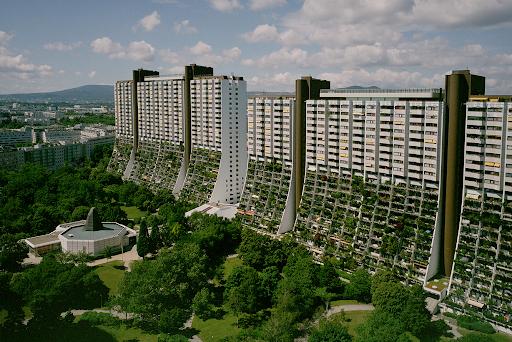
Figure 1: Exemplary Modernist housing: Alt Erlaa in Vienna (“Exemplary Modernist Housing: Alt Erlaa in Vienna”)
Vienna’s long-term ability to realize this quality of price and quantity is the distinguishing factor:
Historical Commitment and Policy Continuity: It was a progressive housing policy established in the 1920s “Red Vienna” era by the government with respect to a special housing tax (Amann, 2010). This served as the foundation for the subsequent programs. A culture of civic housing responsibility was initiated with this initial capital.
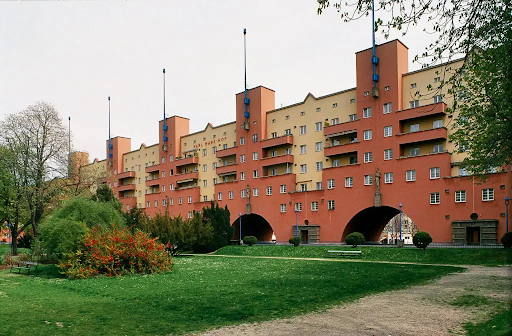
Figure 2: Red Vienna (“Standard Excursion 8: Red Vienna”)
Land Control and Non-Profit Development: Vienna possesses enormous plots of land that it rents out or retails to non-profit developers under strict terms. The “limited-profit” controls under which the developers work keep the prices low and compel reinvestment (OECD, 2020).
Cost-Based Rental Structure: Rents are no longer reliant on market forces; instead, rents are regulated on the basis of construction and upkeep costs. Even during periods of a well-developing city economy, price stability is guaranteed by the policy (Scanlon et al., 2015).
Social Mix Requirements: Openness of social housing to the middle class tends to enhance social diversity and avoid stigma. Housing complexes will be guaranteed successful, inclusive neighborhoods with this policy (Tsenkova, 2021).
Sustainable Public Financing: The city spends around €450 million every year in housing on a regular basis. Efficient architecture design techniques are utilized to spend money, resulting in high levels of utility as well as beauty (Amann, 2010).
Vienna’s success in affordable housing is built on long-term public investment, controlled urban growth, and a socially grounded welfare model — rather than market deregulation or short-term subsidies. Is such a sustained, strategic approach possible in the UK?
REFERENCE
Amann, W. (2010). Vienna: A Global Model for Housing Policy. Institute for Real Estate, Construction and Housing Ltd.
Forrest, R. and Hirayama, Y. (2015). The Financialisation of the Social Rented Sector: The Case of Vienna. Urban Studies, 52(2), pp.233–249.
OECD (2020). Brick by Brick: Building Better Housing Policies. Paris: OECD Publishing.
Scanlon, K., Whitehead, C. and Fernández Arrigoitia, M. (2015). Social Housing in Europe. Wiley-Blackwell.
Tsenkova, S. (2021). Cities and Affordable Housing: Planning, Design and Policy Nexus. Palgrave Macmillan.
Figure 1: “Exemplary Modernist Housing: Alt Erlaa in Vienna.” Blue Crow Media, 24 Aug. 2023, bluecrowmedia.com/blogs/news/alt-erlaa-modernist-housing-vienna.
Figure 2: “Standard Excursion 8: Red Vienna.” Architekturzentrum Wien, AzW, 2017, www.azw.at/en/education/red-vienna/. Accessed 25 Apr. 2025.
