

That’s awesome, I gained so much from reading your blog. You are simply the god of blogs! Rooftop gardens, as a new kind of community public space, can improve the natural environmental conditions of the community and increase the attractiveness of the building. At the same time, it is an important part of the residents to enhance the quality of life. It can be a good way to improve local microclimates and contribute to local biodiversity through design techniques. There is research to show that the design of roof gardens attracts and surprises people, but also provides peace and quiet, as well as the opportunity to have relaxation whilst enjoying the view of the community; and creates free use of the space.(WINNICKA-JASŁOWSKA, D. and TKACZUK, S,2022)
I learned about a housing design project called Balcony Glazing in Dutch Apartment Building, which was interesting. Using a floating roof garden design, the designers created a dark green façade that aims to be used not only as an outdoor space, providing privacy, sun protection and a natural air filter, but also as a living space for insects and birds. From the flat, the green niches look like small floating gardens. From a passer-by’s point of view, the steel façade creates first of all a light, elegant architectural landscape with a garden that changes constantly with the seasons thanks to the various foliage colours of the five tree species.( Solarlux,2025))
It is a major challenge to increase the utilisation and popularity of these rooftop gardens in communities where they have the advantage of high aesthetic value and cityscape views. I believe that additional features such as comfortable seating areas, cafes, restaurants and toilets then increase the length of time users stay. Secondly, easy access times and free access to all are key factors in increasing the popularity of roof gardens. In addition, a high level of maintenance in terms of architecture, landscaping, furniture and planting is necessary.
Reference:
WINNICKA-JASŁOWSKA, D. and TKACZUK, S. (2022). Architecture of Rooftop Gardens, as a New Dimension of Public Space in London. Case Studies in Qualitative Research. Architecture, Civil Engineering, Environment, 15(2), pp.45–56. doi:https://doi.org/10.2478/acee-2022-0014.
Solarlux (2025). Balcony Glazing in Dutch Apartment Building from Solarlux. [online] ArchDaily. Available at: https://www.archdaily.com/catalog/us/products/33485/balcony-glazing-in-stories-apartment-building-solarlux?ad_source=search&ad_medium=search_result_all [Accessed 31 Mar. 2025].
City on the Roof – How to Transform Idle Roofs into Prosperous Community Spaces?
With the development of urbanization, spatial resources have become increasingly scarce, and the ground space around buildings is almost completely occupied, leaving only the roof space. The roof, which is often overlooked, is often considered the “fifth facade” of a building. Nowadays, many designers and communities are reconsidering the potential of this space and striving to transform it into a part of a prosperous community.
The Evolution and Revival of Rooftop Gardens
According to Губарева (2019), rooftop gardens originated in ancient Mesopotamia, with the Babylonian Hanging Gardens being the most famous example. During the Roman period, the mysterious villas in Pompeii also had rooftop gardens. During the Renaissance, rooftop gardens were revived in European cities.
Roof gardens and ecosystems: bringing green miracles to cities
With the increasingly serious environmental problems, green roofs have gradually emerged as an innovative way to solve urban problems. Nowadays, rooftop gardens are no longer limited to the role of landscape, such as Rooftop Farming in the Heart of Manhattan – The Javits Center. Brooklyn Grange co-founder and CEO Ben Flanner commented that this design not only promotes green roofs, but also connects city residents with nature and promotes sustainable eating. It provides ecological services, produces high-quality food, and brings unique educational experiences to tourists.
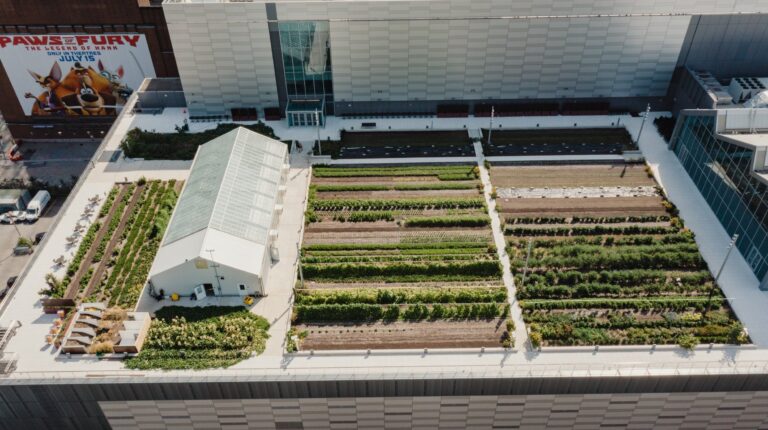
Figure 1:An aerial view of the rooftop farm. Photo: Brooklyn Grange(2023)
Sustainable Energy: Roofs as Urban Energy Centers
With the popularization of sustainable development concepts, rooftops are becoming a source of clean energy, and installing solar and wind energy equipment can reduce dependence on traditional energy sources. Many cities have promoted rooftop solar energy to achieve energy self-sufficiency. According to Brown (2021), California leads in rooftop solar installations, with an installed capacity of 9.4GW in 2019, followed by Massachusetts and New York with 1.6GW and 1.5GW respectively.These data demonstrate the feasibility of using roofs as urban energy centers and indirectly demonstrate the importance of roofs in sustainable energy, especially their potential as urban energy centers.
Conclusion: New Roofs Bring Vitality to Cities
Through innovative design and planning, the roof is no longer a neglected corner, but a vibrant ‘urban oasis’. Transforming idle roofs into gardens and energy centers not only enriches residents’ lives, but also promotes more sustainable and vibrant cities. Future cities will be greener, more interactive, and full of creativity.
References
1.Губарева, И. И. (2019). Roof Garden. Available at:https://elib.belstu.by/bitstream/123456789/31175/1/Gubareva_Roofgarden.pdf
(Accessed: 28/03/2025)
2.Brown, M. A., Hubbs, J., Gu, V. X., & Cha, M. K. (2021). Rooftop solar for all: Closing the gap between the technically possible and the achievable. Energy Research & Social Science, 80, 102203.
List of Figures
1.Grange,B.(2023).An aerial view of the rooftop farm. Available at:Award Winning and Innovative Rooftop Farming in the Heart of Manhattan – The Javits Center(Accessed: 29/03/2025)

That’s awesome, I gained so much from reading your blog. You are simply the god of blogs! Rooftop gardens, as a new kind of community public space, can improve the natural environmental conditions of the community and increase the attractiveness of the building. At the same time, it is an important part of the residents to enhance the quality of life. It can be a good way to improve local microclimates and contribute to local biodiversity through design techniques. There is research to show that the design of roof gardens attracts and surprises people, but also provides peace and quiet, as well as the opportunity to have relaxation whilst enjoying the view of the community; and creates free use of the space.(WINNICKA-JASŁOWSKA, D. and TKACZUK, S,2022)
I learned about a housing design project called Balcony Glazing in Dutch Apartment Building, which was interesting. Using a floating roof garden design, the designers created a dark green façade that aims to be used not only as an outdoor space, providing privacy, sun protection and a natural air filter, but also as a living space for insects and birds. From the flat, the green niches look like small floating gardens. From a passer-by’s point of view, the steel façade creates first of all a light, elegant architectural landscape with a garden that changes constantly with the seasons thanks to the various foliage colours of the five tree species.( Solarlux,2025))
It is a major challenge to increase the utilisation and popularity of these rooftop gardens in communities where they have the advantage of high aesthetic value and cityscape views. I believe that additional features such as comfortable seating areas, cafes, restaurants and toilets then increase the length of time users stay. Secondly, easy access times and free access to all are key factors in increasing the popularity of roof gardens. In addition, a high level of maintenance in terms of architecture, landscaping, furniture and planting is necessary.
Reference:
WINNICKA-JASŁOWSKA, D. and TKACZUK, S. (2022). Architecture of Rooftop Gardens, as a New Dimension of Public Space in London. Case Studies in Qualitative Research. Architecture, Civil Engineering, Environment, 15(2), pp.45–56. doi:https://doi.org/10.2478/acee-2022-0014.
Solarlux (2025). Balcony Glazing in Dutch Apartment Building from Solarlux. [online] ArchDaily. Available at: https://www.archdaily.com/catalog/us/products/33485/balcony-glazing-in-stories-apartment-building-solarlux?ad_source=search&ad_medium=search_result_all [Accessed 31 Mar. 2025].