

Insightful piece of work representing the northeast!
Class and Concrete: The Apollo Pavilion and the politics of Post-War Brutalism
The Post-War Brutalist movement transformed the Northeast, reshaping former industrial towns with bold concrete schemes promising a modern future for working-class communities. That said, the life span of these buildings has not been smooth sailing from clear signs of neglect to demolitions. Though I may be biased growing up around Peterlee, no structure embodies this political journey quite like the Apollo Pavilion (Figure 1). Designed by Victor Pasmore in 1968, the Grade II* listed monument in Peterlee, a former mining town, stands as a concrete testament to the ambitious yet contentious ideals of Post-War Modernism. This post narrates the Pavilions journey from a ‘brave new world’ monument to a derelict ‘eyesore,’ and finally to a symbol of built heritage.
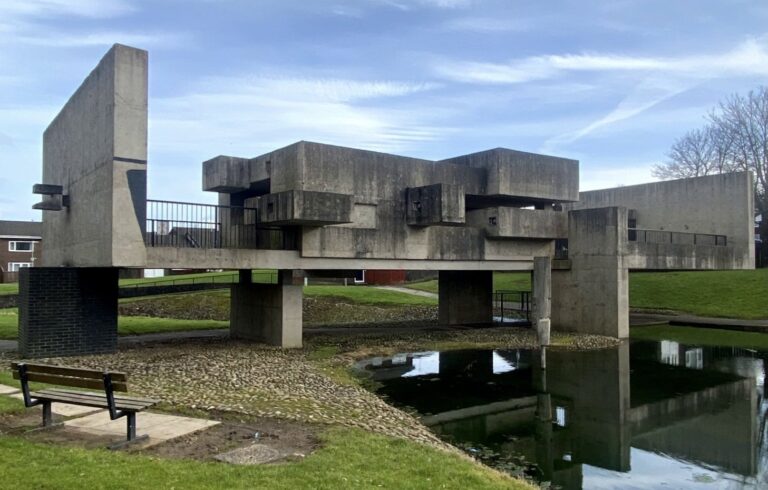
Figure 1 – Image of the Apollo Pavilion. Source: Authors Own.
A Vision of Urban Progression
Pasmore placed his central monument in the Sunny Blunts Estate (Figure 2), designed for mining families. Farmer and Pendlebury (2013) argue that, unlike many ‘plonked’ public artworks, the Pavilion was an integrated collaboration between Pasmore and architects though critics like Camillo Sitte suggested that positioning monuments in squares create ‘dead’ public space (Sitte & Collins, 1986). This modernist attitude embodies the middle-class intellectual belief that art could civilise and provide a better life for working-class mining families (Robinson, 1978). While Pasmore intended to lift the local community onto a ‘universal plane’ (Pasmore, 1967 cited in Peterlee Town Council, 2024), this top-down approach denied the lived reality of those it served, reflecting an ‘asymmetry of power’ (Usherwood, 2002) where the aesthetic tastes of the elite were imposed on the domestic environments of the working class.
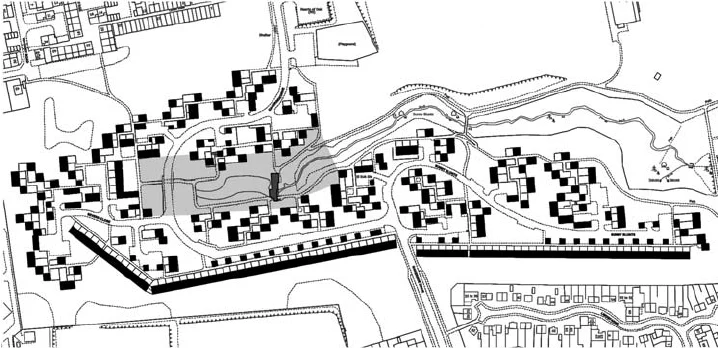
Figure 2 – Site Plan of the Sunny Blunts estate showing the Apollo pavilion in darker shading. Source: Drawing by Graham Farmer.
Abandonment of the ‘Dirty Concrete’
By the 1980s, the Pavilion was synonymous with the failures of ‘welfare-state Brutalism,’ a style often forced upon working-class communities while the elite favoured traditional aesthetics (While, 2007). Covered in graffiti (Figure 3), it attracted what the Development Corporation called ‘the idle and the ill-disposed’ (Farmer & Pendlebury, 2013). This disconnect peaked in 1982 when Pasmore suggested that the graffiti ‘humanised’ the sculpture. This comment epitomised the class-based arrogance of the period; to the artist, the ‘dirty concrete’ was an aesthetic, but to the community, its neglect symbolised ‘a lost familiar world’, sacrificed for a modernist transformation that many felt had failed them (Adams & Larkham, 2015).
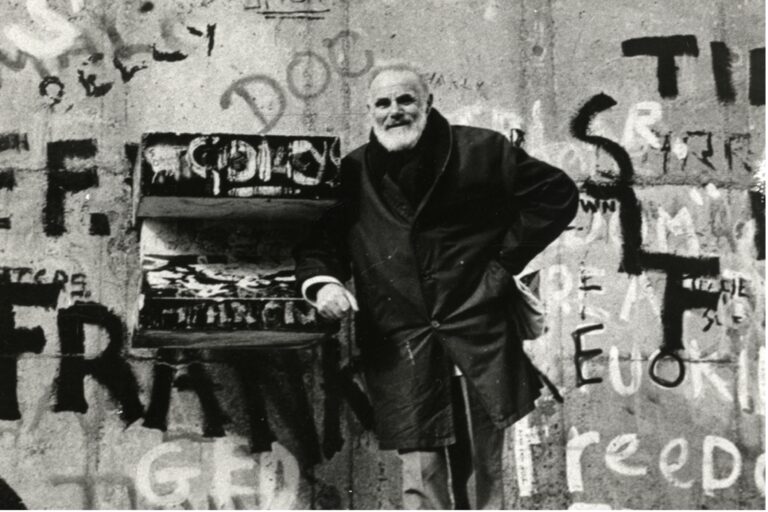
Figure 3 – Victor Pasmore in front of the graffiti-covered Apollo Pavilion. Source: Durham Record Office.
A Personal Reflection
Growing up around the Apollo I often credit it for my introduction to Urban Design. While from my experience the monument remains as contentious as ever, attitudes shifted in the late 2000’s when the Authorised Heritage Discourse, where ‘experts define value, often in the face of local hostility’, (Waterton, 2011) collaborated with the Apollo Pavilion Community Association, a local community group. This helped change the narrative of the Apollo from abandonment to heritage, securing a £336,000 grant in 2008 for restoration. Seeing the Apollo restored during my childhood impacted how I value the life span of Urban Design, teaching me that heritage is more about reclaiming spatial identity, even from a flawed, top-down ideal.
A Monument for the Future
Restored in 2011, the Pavilion shows growing creative re-engagement, notably through art installations such as Steve Messam’s 2019 installation ‘BlowUp’ (Figure 4). These interventions transitioned the Pavilion from ‘dirty concrete’ to a vibrant cultural asset (Pendlebury et al., 2009). Today, the Apollo Pavilion remains an object of provocation refusing to become a ‘warm, comforting blanket of heritage’ (Ashworth, 2006). Instead, it stands as a symbol of reclaimed local identity and a reminder of the necessity of public participation in Urban Design.
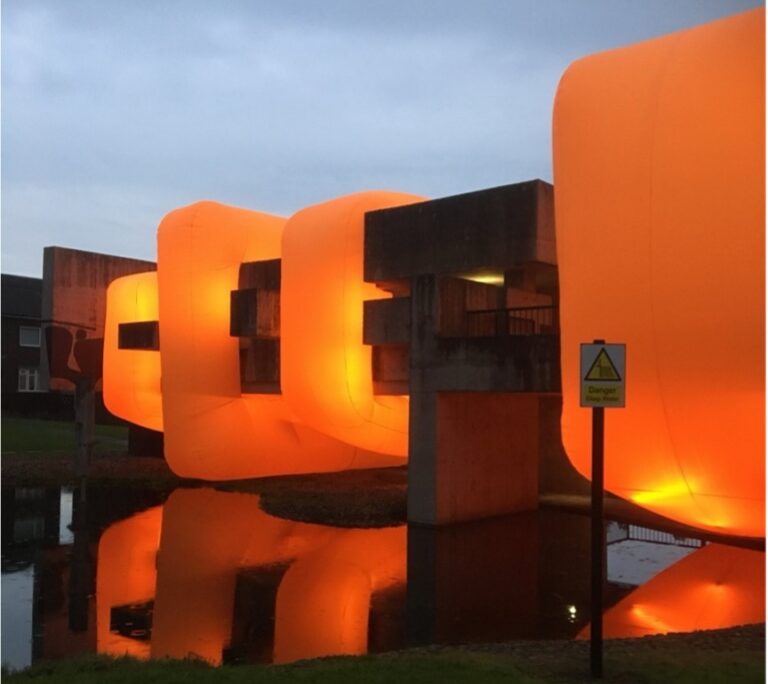
Figure 4 – Image of the Steve Messam’s 2019 installation ‘BlowUp’ . Source: Authors Own.
References
Adams, D. and Larkham, P. (2015). Walking with the ghosts of the past: Unearthing the value of residents’ urban nostalgias. Urban Studies, 53(10), pp.2004–2022. doi:https://doi.org/10.1177/0042098015588683.
Ashworth, G. (2006). The Politics of World Heritage: Negotiating Tourism and Conservation. Annals of Tourism Research, 33(1), pp.273–275. doi:https://doi.org/10.1016/j.annals.2005.08.003.
Carter, P. (2022). Landscape and memory: everyday experience in the heritage landscapes of North-East England. Doctoral Thesis, Newcastle University. Available at: https://theses.ncl.ac.uk/jspui/bitstream/10443/5916/2/Carter%20Philippa%20Final%20submission%20ecopy%2069010536.pdf (Accessed: 27/03/26)
Farmer, G. and Pendlebury, J. (2013). Conserving Dirty Concrete: The Decline and Rise of Pasmore’s Apollo Pavilion, Peterlee. Journal of Urban Design, 18(2), pp.263–280. doi:https://doi.org/10.1080/13574809.2013.772884.
Pendlebury, J., Townshend, T. and Gilroy, R. (2009) ‘Social Housing as Heritage: The Case of Byker, Newcastle upon Tyne.’ In Valuing Historic Environments, edited by L. Gibson, and J.Pendlebury, pp. 179–200. Farnham: Ashgate.
Peterlee Town Council. (2024). Victor Pasmore and the Apollo Pavilion – Peterlee Town Council. [online] Available at: https://peterlee.gov.uk/about-peterlee-town/culture-and-heritage/victor-pasmore-and-apollo-pavilion/.(Accessed: 24/03/26)
Peterlee’s Apollo Pavilion lit by inflatable sculptures. (2019). BBC News. [online] 21 Sep. Available at: https://www.bbc.co.uk/news/uk-england-tyne-49770402.
Sitte, C. and Collins, G. (1986). The birth of modern city planning : with a transl. of the 1889 Austrian ed. of his ‘City planning according to artistic principles’. New York: Rizzoli.
Usherwood, P. (2002). Victor Pasmore’s Peterlee Pavilion and the ‘publicness’ of public sculpture. Sculpture Journal, 8(1), pp.62–72. doi:https://doi.org/10.3828/sj.2002.8.1.7.
Waterton, E. (2011). In the spirit of self-mockery? Labour heritage and identity in the Potteries. International Journal of Heritage Studies, 17(4), pp.344–363. doi:https://doi.org/10.1080/13527258.2011.577967.
While, A. (2007). The State and the Controversial Demands of Cultural Built Heritage: Modernism, Dirty Concrete, and Postwar Listing in England. Environment and Planning B: Planning and Design, 34(4), pp.645–663. doi:https://doi.org/10.1068/b32085.
List of Figures
Figure 1 – Image of the Apollo Pavilion. (Authors Own, 2026)
Figure 2 – Site Plan of the Sunny Blunts estate showing the Apollo pavilion in darker shading. (Farmer, G., 2013)
Figure 3 – Victor Pasmore in front of the graffiti-covered Apollo Pavilion. (Durham Record Office., 1982)
Figure 4 – Image of the Steve Messam’s 2019 installation ‘BlowUp’. (Authors Own, 2019)
Featured Image – Image of the Apollo Pavilion. (Authors Own, 2026)

Insightful piece of work representing the northeast!