

Co-housing in the UK vs Shared Living in China: Governance, Space, and Housing Justice
From Chinese Shared Flats to UK Urban Design
Before coming to the UK, my understanding of “shared living” mainly came from my experience living in Chinese cities. As an undergraduate student, my experience was renting a two-storey loft flat with different tenants on upper and lower floor. In many big cities in China, particularly Beijing, Shanghai and Shenzhen, young people often choose to share a flat because the rent for a whole flat is too expensive. Since coming to Newcastle to study urban design, I have come to realize that “sharing” in the context of housing can actually have different meanings. It can be both a practical way of reducing living costs and a means of building community ties, enhancing social support and rethinking housing justice.
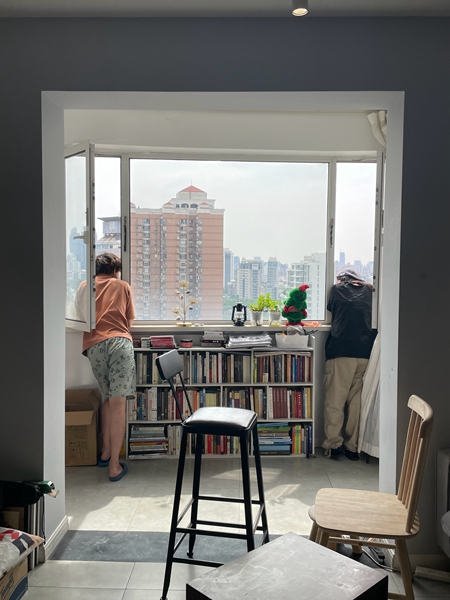
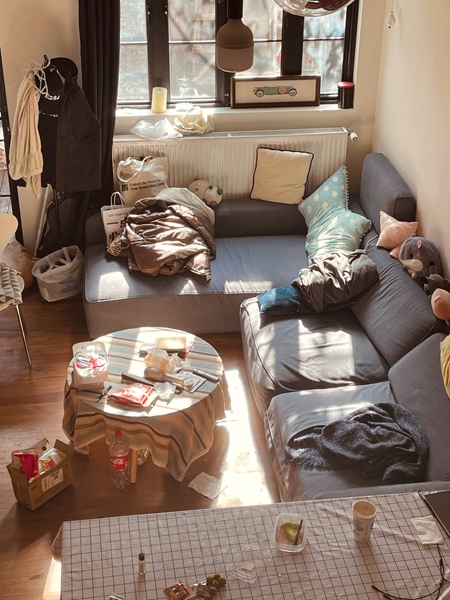
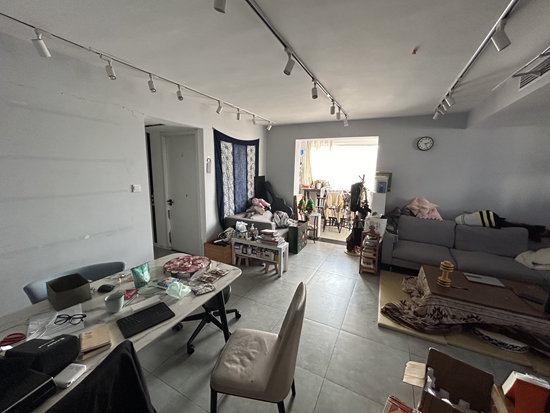
Figure 1. A shared living room in Dingxin Building, Jiashan Road, Shanghai. This image shows how shared flats can become everyday social spaces for young urban renters in China. Source: China Youth Daily, “A group of young people’s atypical shared living”, 2024.
UK Co-housing: Sharing as Community Building
In the UK, co-housing typically focuses on conscious community organisation. A representative example is Marmalade Lane in Cambridge. In this project, residents share a garden, a communal living room, guest rooms, and various daily activity spaces. Jarvis (2015) argues that co-housing has a kind of “social architecture” , because the design of space can support cooperation, care and neighbourly relationships. On the other hand, Tummers (2016) also suggests that self-managed co-housing in Europe can create active communities, although its scale and accessibility remain limited. In my view, this is significant because these shared spaces are not simply leftover areas within the building, but are designed to be an essential part of daily life.
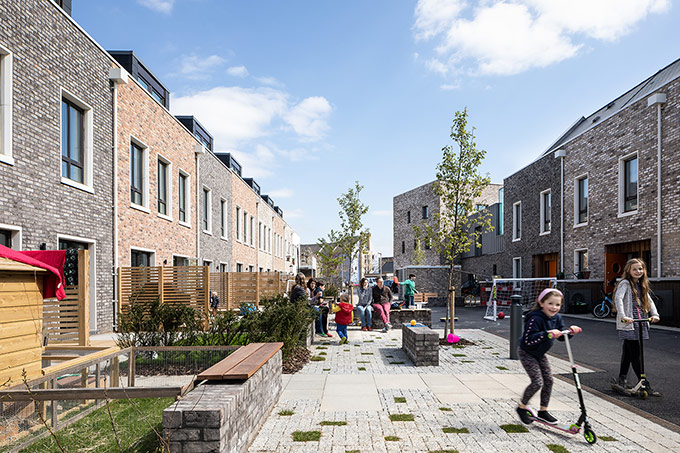
Figure 2. Marmalade Lane in Cambridge shows how shared gardens, car-free streets and communal facilities can support everyday community life. Source: Marmalade Lane / ArchDaily, Marmalade Lane Cohousing Development by Mole Architects.
Chinese Shared Living: Affordability and Limited Control
In contrast, shared living in China is often quite different. I remember Ziroom is an example. It is a common long-term rental apartment platform in China, which offers typically include a shared kitchen, bathroom, and living room. This model is practical for students, graduates, and young workers who need relatively affordable and convenient accommodation in large cities. According to Wang and Otsuki’ s (2016) study of house sharing among young people in Beijing, which found that economic pressure is a key reason for young people to share housing, while residents also care about privacy, space quality and everyday living habits. However, the governance of these spaces is primarily controlled by the company or landlord. The residents usually have little say in how the communal areas are managed. Thus, though Ziroom makes renting more convenient, it does not necessarily foster a sense of community or resident autonomy.

Figure 3. Ziroom represents a more market-led model of shared living in China, where shared apartments may improve access to rental housing but offer limited resident control. Source: The World of Chinese, “Room to Grow”, photo credit: VCG / Ziroom-related rental housing image.
My experience in Newburn Riverside Studio
My studies in Newcastle made this topic more concrete, especially in the Newburn Riverside studio. I not only designed residences but also considered how people can coexist harmoniously in a waterfront community. This studio helped me understand the significance of shared gardens, walkways, community spaces and the relationship of residences to the river. Although these spaces may seem small, they influence whether residents have the opportunity to meet, linger, walk safely, and develop a sense of belonging to the community. At the same time, it opened up my understanding of co-housing and shared living from the point of view of urban design.

Figure 4. Site photo from Newburn Riverside Studio. Source: Author’s own photograph, Newburn Riverside, 2026.
Reference:
- Jarvis, H. (2015) ‘Towards a deeper understanding of the social architecture of co-housing: evidence from the UK, USA and Australia’, Urban research & practice, 8(1), pp. 93–105.
- Tummers, L. (2016) ‘The re-emergence of self-managed co-housing in Europe: A critical review of co-housing research’, Urban studies (Edinburgh, Scotland), 53(10), pp. 2023–2040.
- Wang, Y. & Otsuki, T. (2016) ‘A study on house sharing in China’s young generation-based on a questionnaire survey and case studies in Beijing’, Journal of Asian architecture and building engineering, 15(1), pp. 17–24.
List of figures:
- Figure 1. A shared living room in Dingxin Building, Jiashan Road, Shanghai. This image shows how shared flats can become everyday social spaces for young urban renters in China. Source: China Youth Daily, “A group of young people’s atypical shared living”, 2024.
- Figure 2. Marmalade Lane in Cambridge shows how shared gardens, car-free streets and communal facilities can support everyday community life. Source: Marmalade Lane / ArchDaily, Marmalade Lane Cohousing Development by Mole Architects.
- Figure 3. Ziroom represents a more market-led model of shared living in China, where shared apartments may improve access to rental housing but offer limited resident control. Source: The World of Chinese, “Room to Grow”, photo credit: VCG / Ziroom-related rental housing image.
- Figure 4. Site photo from Newburn Riverside Studio.Source: Author’s own photograph, Newburn Riverside, 2026.
