Designing better cities : Urban design in practice with ARUP
Designing better cities : Urban design in practice with ARUP
Introduction
Hello, I am Sanskar Agrawal and today I am writing this blog on how urban design is getting progressed with ARUP.
ARUP a global company started by Ove Arup in 1946, in London,
As, We know how cities are expanding rapidly in recent years, according to the senses, about 70% of the total population will be in the cities till the year 2050, which will majorly forms many issues, like congestion, people will need affordable housing, and the transport system.
As, we all know urban design is about how an urban designer designs the spaces around himself, in which not only designing the areas like, streets, parks, buildings, and public spaces, but how to make the well-being of people’s easy and comfortable.
This Blog is in the respect of what ARUP has done In practice for urban design,
Human Centred Cities
Sustainability & Resilience
Technology and Data-Driven Design
The working of ARUP is not in the way that they are working in isolation, they collaborates with planners, architects, transport experts, ecologists, economists, and they ensure that every design is meaningful and viable.
Human-centred cities
Building resilience to events that are said to be once-in-a-lifetime and easy for local communities to overlook is now an urgent priority. Human centred design plays an important role In this.
Human centred design isn’t new, but it focus on underlying human needs and actively embedding them within developed solutions,
A big part of HCD strength is in what it reveals at the individual and community level, enabling the development of new solutions from previously underserved needs.
For example, ARUP work in king’s cross, London transformed former industrial land into one of the UK’s most vibrant mixed-use districts.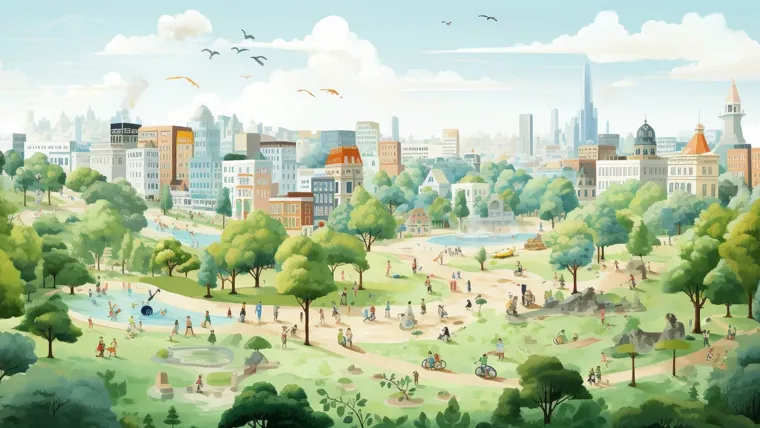
This image shows the ARUP philosophy on which they communicates with several core ideas,
Human Centred And Inclusive Urban Design
Green And Blue Infrastructure
Mixed-use, Compact, and walkable city
Visionary but realistic illustration style
Represents urban futures, not just current reality
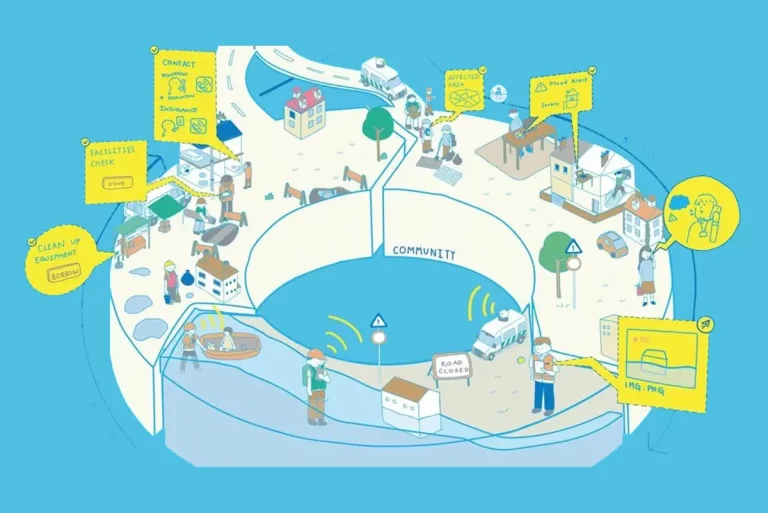
Mapping Out key needs from the community groups in a flooding event to shape a new digital service proposition.
Sustainability And Resilience
Climate change is reshaping the future of cities. ARUP integrates nature-based solutions, low carbon strategies, and adaptable urban forms into practical design.
Their waterfront resilience masterplans – such as efforts in Hong Kong and New York Show how rising sea levels, heat stress, and storm events can be mitigated through:
Green infrastructure
Flood resilient public spaces
Blue green ecological corridors
Circular urban systems
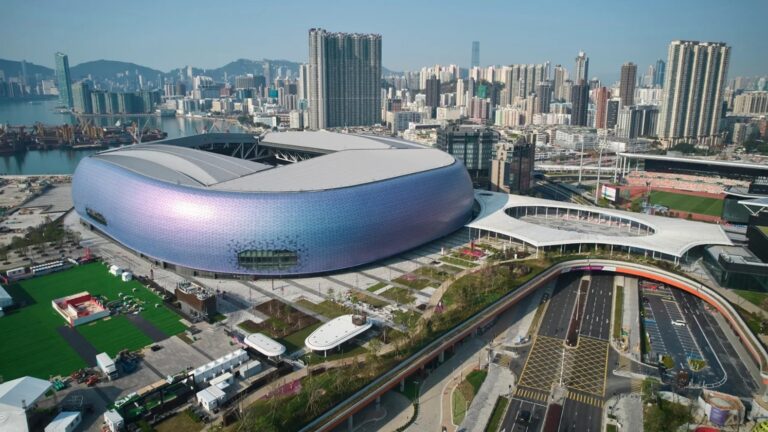
Low-carbon design, innovative technology and smart city initiatives: Arup’s role in contributing to the sustainable development of the Kai Tak district
Technology and data driven design
ARUP is a leader in using technology such as digital twins, mobility modelling, and GIS analytics to shape urban futures. These tools allow designers to stimulate traffic flow, test climate risks, and model future infrastructure performance before building anything physically.
This ensures cities are adaptable, no fixed and can respond to changing technology, demographics and environmental pressures.
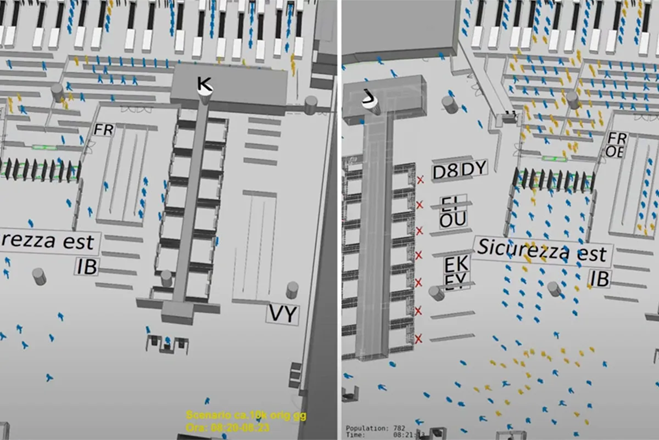
Mass Motion helping to ensure physical distancing at Rome Fiumicino airport
The above image shows the airports, which is made with the help of mass motion criteria to ensure physical distancing at Rome Fiumicino Airport.
Conclusion
Urban design in practice with ARUP reveals a shift in how we imagine cities from functional infrastructure to living environments shaped around communities, sustainability, and innovation. Their work demonstrates that the cities of tomorrow must be inclusive, resilient, and regenerative not just efficient.
References
https://www.arup.com/insights/how-human-centred-design-can-boost-resilience-to-climate-change/
https://www.arup.com/about-us/corporate-reports/sustainability-policy/
https://www.arup.com/globalassets/downloads/insights/digital-twin-towards-a-meaningful-framework.pdf



Your post is greatly appreciated. It was truly fascinating to observe how you depicted ARUP to be not merely a consultancy for engineering or design, but rather an organization that is influencing the values and priorities of the future urban areas.
One thing that really caught my attention was the example of King’s Cross. It illustrates how the transformation of post-industrial land can be turned into more than just a commercial regeneration project if it is designed with human-friendliness, mixed-use, and inclusivity in mind. On the other hand, it made me recall the arguments in class about who reaps the benefits of urban renewal. Human-centered design picks out the needs, but whose needs are given priority remains the question that impacts spatial justice. Displacement of lower-income residents may be a byproduct of urban regeneration in some cities where new vibrant areas emerge, but also land prices are pushed up. I wonder if ARUP has a strategy to mitigate this risk in their projects, or if it remains a challenge in the design industry yet to be resolved.
Your discussion on technology and digital twins is great, as it mirrors the transition into proactive and predictive design. Nonetheless, this also brings up an intriguing conflict: can digital instruments completely portray the feelings and social ties that people have with locations, or is that something that can only be obtained through community involvement?