

Five Important Factors for Healthy Neighborhood
Five Important Factors for Healthy Neighborhood
In urban design, healthy neighborhood relationships are very important. Good neighborhood relationships can promote community cohesion, enhance communication and cooperation among residents. Also,it can enhance the sense of security and happiness in the community. This harmonious atmosphere can bring healthier and more harmonious community life, and also help solve some problems and challenges within the community. Therefore, it is crucial to consider and promote harmonious neighborhood relationships in urban planning and design.
In this theme, it can usually be divided into five parts: healthy lifestyle, community health resources, disease prevention and management, family health and child care and mental health.
Healthy Lifestyle
A healthy lifestyle is crucial in urban design as it directly affects the quality of life of residents and the overall health of the community. By creating environments and facilities that support health, cities can promote healthy living for people.
Here is an example which is successful in Singapore(Grant Associates, 2012). This project is one of the world’s largest landscape projects. It combines architectural structure with various gardening techniques.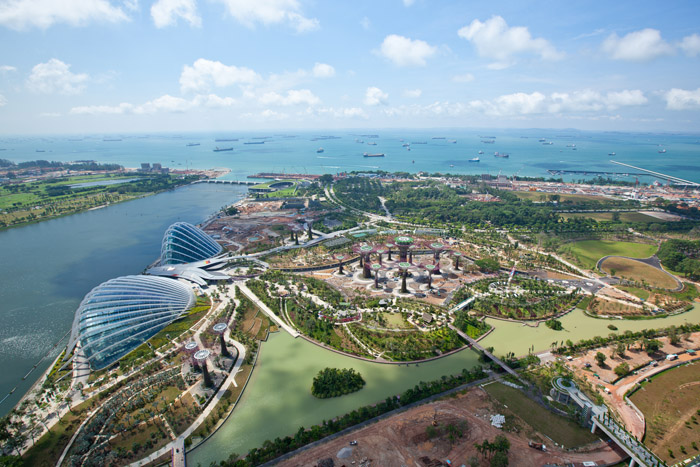
Figure 1: large garden in Singapore
This park has many themes related to people’s lifestyles, encouraging them to walk more. And it provides people with a healthy lifestyle through vertical greening.
Figure 2: facilities in the garden
Community Health Resources
It refers to the available health resources within a community, including four parts.
- Provide basic medical services;
- Promoting health education;
- Support for mental health;
- Community participation and support.
In urban design, considering and intergating these resources is crucial as they directly affect the health and well-being of community residents. Providing sufficient and diverse health resources to the community can help build healthier and more sustainable urban communities.
Disease Prevention and Management
In urban design, emphasizing disease prevention and management has a positive impact on healthy neiborhood relationships. By providing health education and promotional activities, increase resident’s awareness of disease prevention can make a healthier lifestyle.
Secondly, establish medical resources such as clinics and health centers in the community, so that residents can more conveniently access health consultation and medical services, which helps in early prevention and treatment of diseases.
Finally, jointly caring about health issues and addressing disease risks can promote cooperation and support among residents.
Blue Zones
A successful case is “Blue Zones” in the United States. This refers to some cities or regions where residents have a long and healthy lifestyle. These areas have successfully improved the living habits and health levels of residents through health education, creating a healthy community environment and so on. They are all strengthen the connections and neighborhood relationships between communities.
These successful cases demonstrate that incorporating disease prevention and management into urban design can promote healthier neighborhood relationships and create a more livable community environment.
Family Health and Child Care
It plays an important role in urban design and have a profound impact on healthy neighborhood relationships.
Child Friendly Facilities
Design and plan child friendly parks, playgrounds or other facilities help children to easily participate in outdoor activities and social interactions. They also provide opportunities for parents to take part in together and establish connections.
Parent Child Activities and Support Organizations
Establish parent-child activity centers, family support organizations or clubs to provide parents with educational resources and communication platforms which also encouraging mutual support and cooperation among neighbors.
Sense of Security and Social Connections
By enhancing the sense of security and social networks in the community, providing children and family members with a happy and safe living environment can help cultivate healthier and closer neighborhood relationships.
In Stockholm, Sweden, the city takes into account the needs of families and children in urban design. It provide a large number of outdoor activity venues and a child friendly community environment, which is conducive to interaction between family members and community cohesion.
Therefore, taking care of families and children in urban design helps to create healthier and more cohesive neighborhood relationships, enabling community members to better integrate and develop together.
Mental Health
Psychological health is crucial for healthy neighborhood relationships in urban design. Focusing on mental health in urban design can promote the overall happiness and stability of the community, providing residents with a healthier and more livable living environment. This kind of attention can not only improve an individual’s mental health level, but also help to enhance the firmness and mutual assistance of neighborhood relationships.
Psychological Health Services
Providing psychological health services and support institutions within the community can help residents better handle stress and emotional issues. It can conducive to establishing healthier neighborhood relationships.
Above all, there are five main factors which are important to the healthy neighborhood.
Reference:
- https://www.gooood.cn/gardens-by-the-bay-by-grant-associates.htm
- https://money.com/blue-zone-states-health-longevity/
- https://www.unlv.edu/sites/default/files/24/Health-Community-January2012.pdf
