Housing Justice in New York City
New York City is one of the most visited locations on Earth with more than 66 million visitors in 2019 (Office of the New York state comptroller, 2021), known for its high-rise architecture, Broadway theatre productions, shopping districts and iconic landmarks. However, this booming economy has had an enormous impact on the locals that live within the city, particularly with regards to the quality and accessibility of housing.
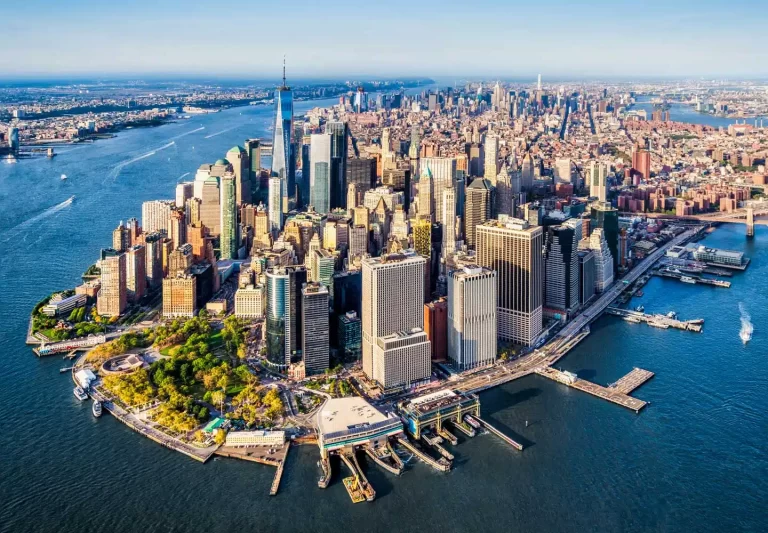
Image: PODS. (2025) The Five Boroughs of New York, Explained. Available at: https://www.pods.com/blog/nyc-moving-guide-the-new-york-city-boroughs-explained (Accessed: 24/11/2025).
What are the issues with housing in New York City?
There were 3,705,000 total housing units within New York city in 2023, of which 2/3 are renter occupied. Here property ownership has become a capital investment for the rich rather than residents able to purchase their own home. Some issues in the housing stock of New York include high rents, poor quality living spaces, and inaccessible units.
28% of the housing units within New York require residents to go up at least 1 flight of stairs without access to an elevator and this is before the layout of the unit itself is even considered on accessibility grounds. Occupancy levels within New York are very high too, meaning there is limited availability when searching for a property, higher demand further increasing rental prices. The median rental price of units within New York city of $1,652 per month means many residents are spending upwards of 30% of their incomes, in the worst cases upwards of 50% for properties that regularly suffer from rodent issues, damp and mould, leaks, and issues with heating (Gaumer, 2024). Rent prices are also rapidly increasing and at a much faster rate than income rates. This means eviction rates are also increasing and have led to more than 158,000 homeless New Yorkers in 2024. Approximately 1/3 of these were children (Office of the New York state comptroller, 2025).
Why is injustice present?
Ultimately there is a supply and demand issue in New York city causing the inflation of rent prices and limited access to affordable housing. Between 2010 and 2020, the city added 500,000 jobs but only 250,000 housing units (CBC, 2023). Many of the new units built are also designed to cater for the luxury market, very little being designed with affordability and the average person in mind. Only 1 in 5 new build units in the last decade were affordable to households earning below 80% of the Area Median Income (Furman Center, 2023). There is also a large eviction crisis currently in New York City, with residents being forced out of their homes due to unprecedented rent increases and unable to afford legal representation to fight this. The city is not being effectively planned for and designed to decrease the rates of homelessness, prevent forced evictions or provide access to affordable yet good quality housing.
What is being done to change it?
Several schemes have been implemented in New York city to attempt to rectify the issues with housing. Among these is the mandatory inclusionary housing scheme which was introduced in 2016. This scheme requires new developments in certain areas of the city to include a minimum number of affordable units. These units are permanently income restricted affordable housing and so have an expiration date (department of city planning, 2016). In exchange developers are allowed access to the Inclusionary housing zoning benefit programme which gives them the ability to construct a larger building in the form of a larger floor area (Patka, 2022). The 2024 proposed annual action plan for New York City also included the anti-displacement plan which aimed to reduce the number of evictions across the city (www.nyc.gov, 2024).
The city of New York recently elected a new mayor, Zohran Mamdani, whose manifesto focused greatly on issues faced by everyday New Yorkers, particularly highlights the high cost of living and housing. His promises include freezing rent prices and rapidly increasing the number of affordable units being built, as well as cracking down on bad landlords and provide better protection for tenants (Zohran for new York City, 2025). Mamdani’s socialist policies that seek to benefit the working class are a refreshing change to the typical campaigns ran by politicians and his victory shows the power and desire of the residents of New York to see change in this area.
References:
Citizens Budget Commission (2023). Zoned Out: How New York City’s Zoning Rules Limit Housing. Available at: cbcny.org (Accessed 24/11/2025).
Department of City Planning (2016) Madatory Inclusionary Housing. Available at: https://www.nyc.gov/content/planning/pages/our-work/plans/citywide/mandatory-inclusionary-housing (Accessed: 24/11/2025).
Gaumer, E. (2024) 2023 New York City Housing and Vacancy Survey: Selected Initial Findings. Available at: https://www.nyc.gov/assets/hpd/downloads/pdfs/about/2023-nychvs-selected-initial-findings.pdf (Accessed: 24/11/2025).
NYU Furman Center. (2023). State of New York City’s Housing and Neighborhoods in 2022. Available at: https://furmancenter.org/stateofthecity/state-of-the-city-2022 (Accessed: 24/11/2025).
Office Of The New York State Comptroller (2021) The Tourism Industry in New York City: Reigniting the Return. Available at: https://www.osc.ny.gov/files/reports/osdc/pdf/report-2-2022.pdf (Accessed: 24/11/2025).
Office of the New York State Comptroller (2025) DiNapoli: Numbers of Homeless Population Doubled in New York. Available at: https://www.osc.ny.gov/press/releases/2025/01/dinapoli-numbers-homeless-population-doubled-new-york (Accessed: 24/11/2025).
Patka, Y. (2022) What to Know about NYC Mandatory Inclusionary Housing. Available at: https://adstach.com/content/What%20to%20Know%20about%20NYC%20Mandatory%20Inclusionary%20Housing.pdf (Accessed: 24/11/2025).
The City of New York (2024) Proposed 2024 Annual Action Plan. Available at: https://www.nyc.gov/assets/consolidatedplan/downloads/pdf/Appendix-6-Anti-Displacement-Plan–2024-Update-FINAL.pdf (Accessed: 24/11/2025).
Zohran for New York City. (2025) Housing by and for New York. Available at: https://www.zohranfornyc.com/policies/housing-by-and-for-new-york (Accessed: 24/11/2025).



Your article was a pleasure to read, as it very plainly shows how a city that is regarded as successful worldwide is still capable of failing most of its inhabitants at the same time. The contradiction that you have brought out is a big one. New York, being a cultural and economic powerhouse, has the power to attract millions of visitors, but the same reasons that draw tourists to the city seem to take away from the residents’ basic right to have affordable and safe housing.
The presentation you have made of the eviction statistics and the increasing rent burden indicates that the injustice is not an accident; it is made by the system through policy, financialization, and market logic. The link to Arnstein’s Ladder is quite strong, as it shows that the tenants have very little power in deciding where they live or whether they get to stay in their houses. I considered your analysis of “luxury-driven” development as very relevant, and it indeed prompts one to ask the question of whether policies promoting affordability, such as Mandatory Inclusionary Housing, could successfully neutralize the developers’ main influence over the market, or whether they just beautify the face of an inherently unbalanced system.
Reading your article, I could not help but ask myself whether a market-driven city can ever be just in terms of providing housing or if an ideological revolution is the only way to make it happen.
This article is clear and concise, it highlights the issues facing the residents of New York in an objective manner. The use of facts and figures shows how the situation is only deteriorating over time, and that despite New York being perceived as an economic powerhouse and one of the financial capitals of the world, it is still a city ripe with poverty and injustice. Also by citing the various housing schemes that have become necessary just to ensure that residents of the city are able to continue living in it, this shows that the issue is being addressed at the local authority level and beyond.
The degree of the issue is clearly shown due to the increasing number of homeless in the city, and especially evident when you consider that so many are children as stated in the article. This shows a fundamental failure to address the issue of stable housing by local authorities, as well as surrounding factors such as mental health, addiction, emotional trauma, sexual abuse etc (Kaya, Maass 2023). This failing to protect the youth, shows a clear “hands off” approach to the issue, especially when considering New Yorks resources.
The counterargument to this failing however is the obstinate view that New York as an entity should be putting all it’s resources into maintaining and expanding it’s role as the financial capital of America and perhaps the world. Following the modernist view that cities are engines for economic growth, innovation and wealth creation, and by adhering to that process eventually New York will be able to solve all it’s issues without needing to stop prioritizing its financial interests (Glaeser 2011). However, this argument is obviously inhumane and not-practical.
References:
Kaya, Y.B. & Maass, K.L. (2023) Queue Routing Strategies to Improve Equitable Housing Coordination New York City. Cornell University.
Glaeser, E.L (2011). Triumph of the City: How our Greatest Invention makes us richer, smarter, greener, healthier and happier. New York: Penguin Press