

Learning to design beyond policy requirements – A reflexive summary
My background as a planning policy officer has clearly influenced my approach to design and often led me to think in ways that are more pragmatic and would satisfy regulations and local plans without pushing boundaries. This can lead to housing design that feels generic and lacking identity, the kind produced by mass housebuilders in the UK.
This semester has encouraged me to look at design from a new perspective and consider the lived experience of those utilising the site. This aligns with Gehl’s argument that successful urban environments should prioritise the human experience and everyday social interactions rather than just focusing on physical infrastructure (Gehl, 2013). I was cautious and unsure at first how to approach speculative design, often over analysing from a policy perspective. Through collaboration in the studio and being challenged by my tutors, I was pushed to lean into my creative ideas and ultimately produced a much better design because of it. I have become more comfortable presenting my ideas (even unfinished ones) and receiving constructive feedback on them. I was able to see how others approached challenges and learn from that whilst sharing some of my own insights. The mix of cultures in our cohort provided different world views and showed that not all placemaking is the same. This aligns with Jane Jacobs’ view that diversity and human activity is imperative for creating successful environments (Jacobs, 1992).
The blog extended my studies beyond conventional masterplanning and encouraged me to look at aspects of urban design I had personal connections with. I learned that urban design extends beyond physical form to include lived experience, movement, social interaction, and sense of place.
Going forward, I will approach urban design in a more reflective and people orientated way through balancing policy requirements with the social and emotional experience of place making.
References:
Gehl, J., 2013. Cities for people. Island press. Available at: https://books.google.co.uk/books?hl=en&lr=&id=lBNJoNILqQcC&oi=fnd&pg=PR3&dq=cities+for+people+jan+gehl&ots=hHtdpY-8ej&sig=NDChucThcmW26OuilclAvCljgYs#v=onepage&q=cities%20for%20people%20jan%20gehl&f=false (Accessed: 14/05/2026)
Jacobs, J., 1992. The death and life of great American cities. Vintage.
This summary is linked to an Instagram post which can be found at https://www.instagram.com/maurbandesign/
The slides for this instagram post are below:
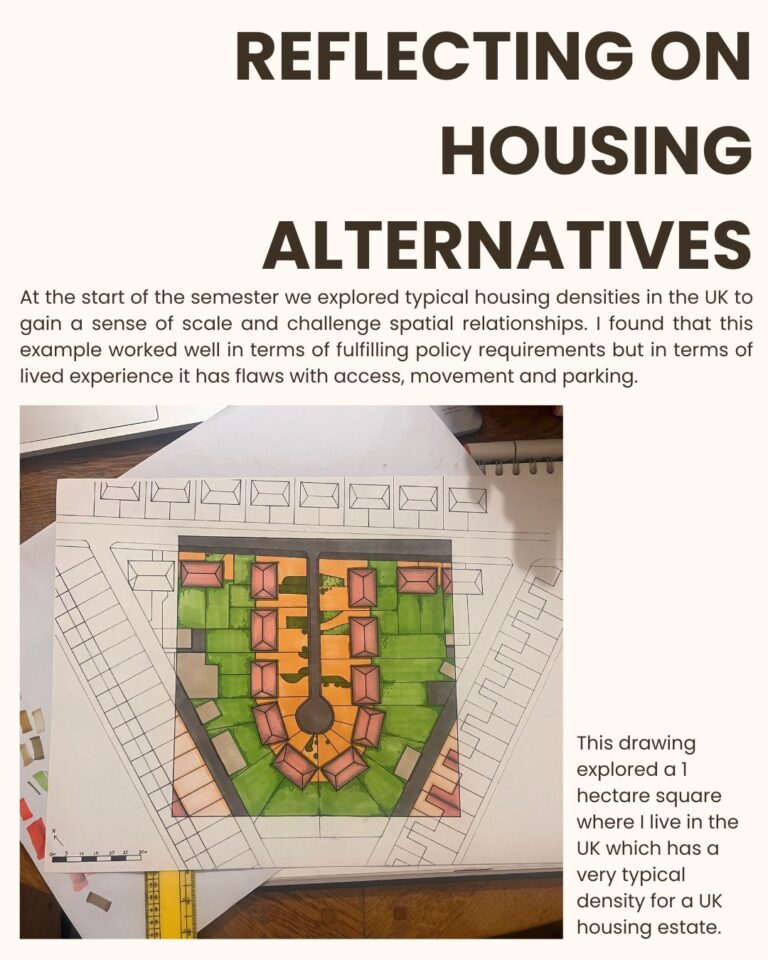
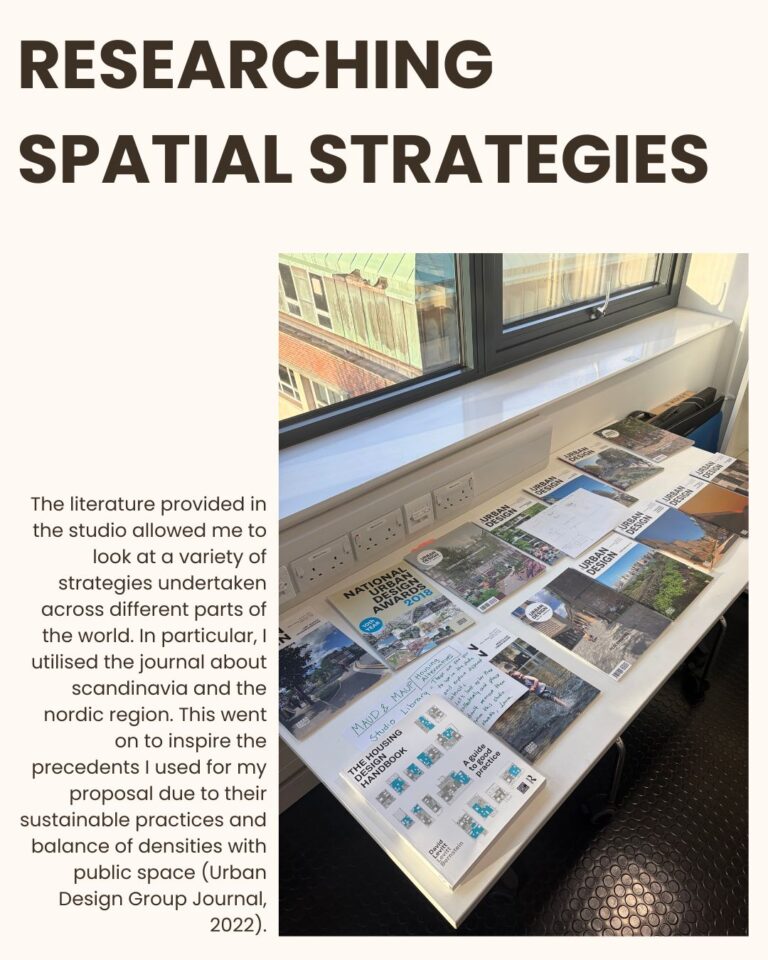
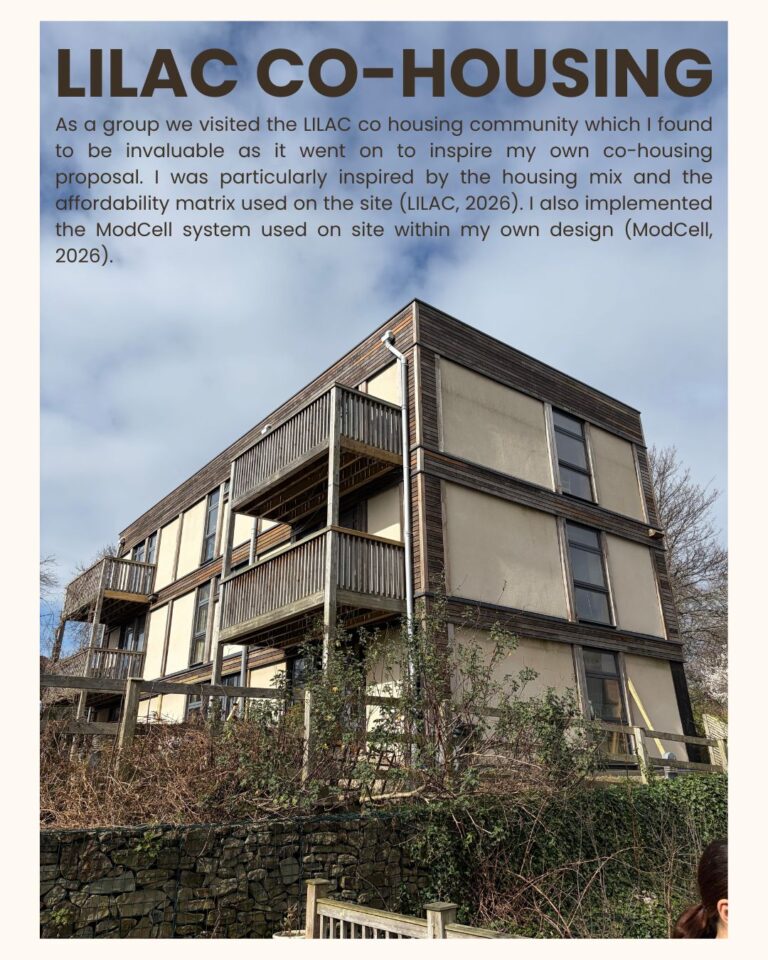
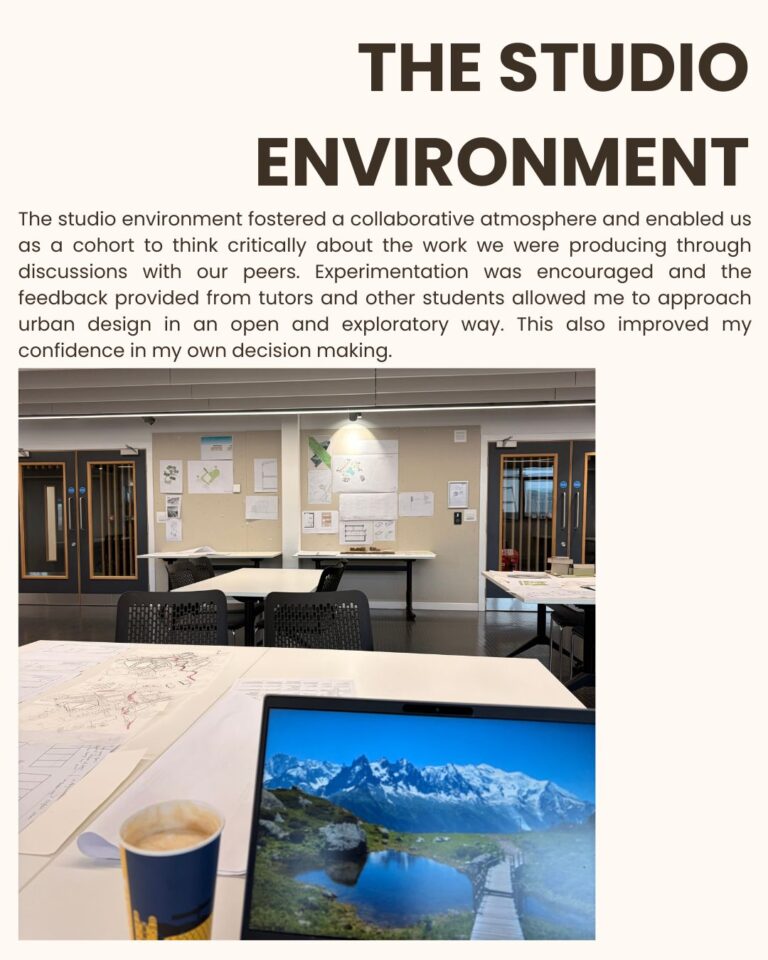
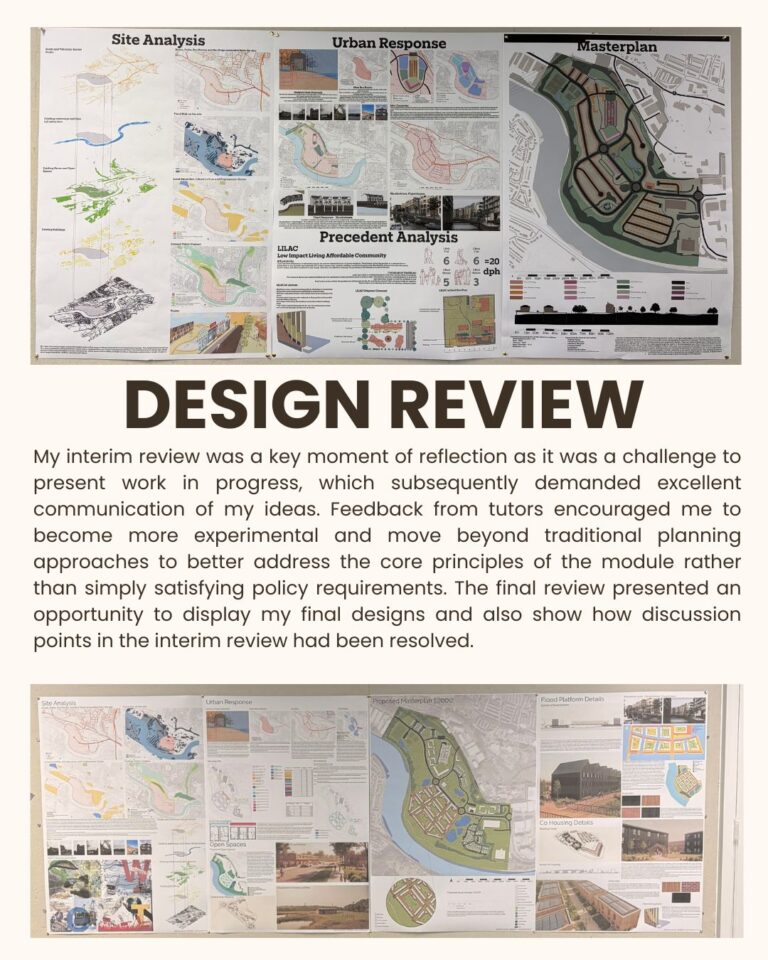
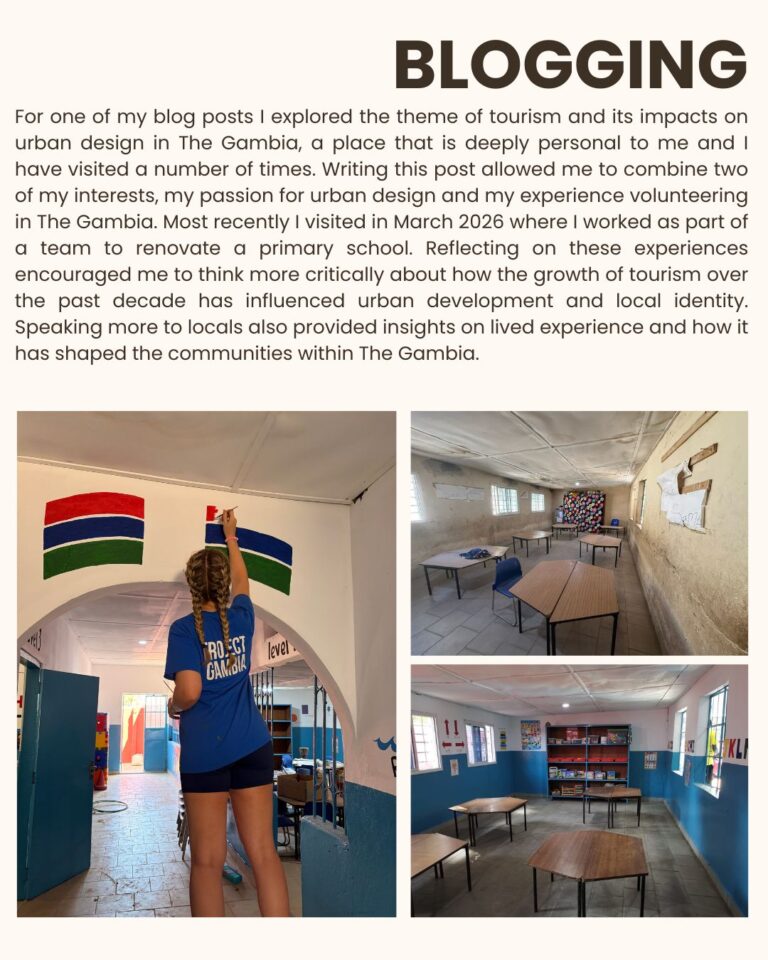
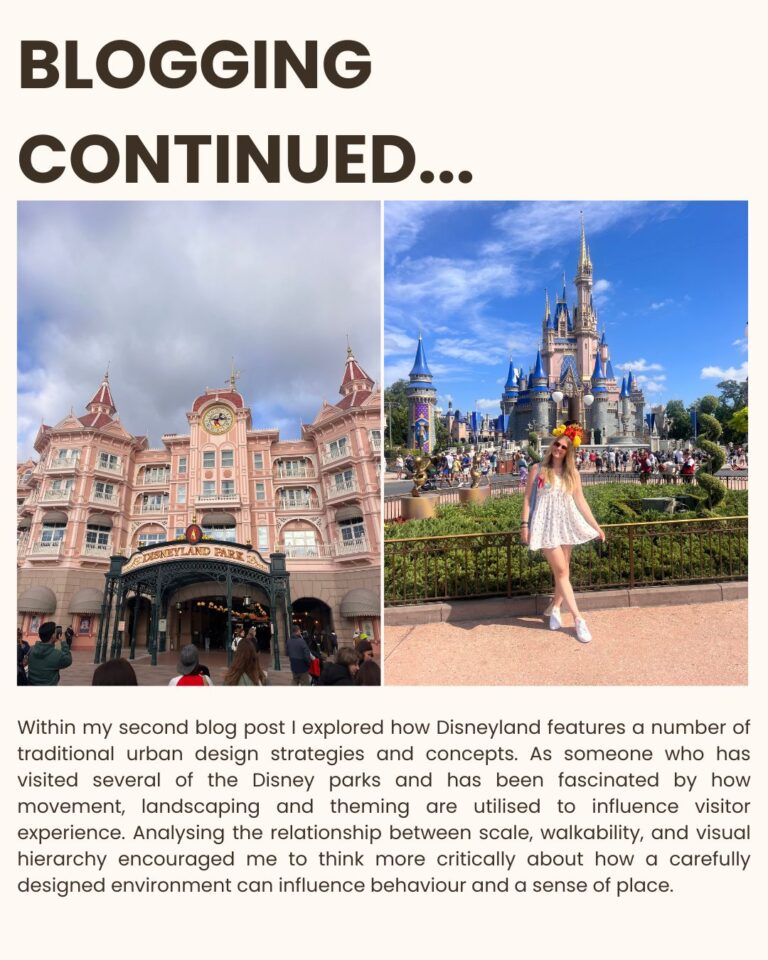
How I moved from seeing urban design as physical planning and policy, to understanding it as something shaped by experience, behaviour, identity, and collaboration.
Reflecting on my experience of the Housing Alternative module and being a co-author of a blog has helped me to develop a new approach to urban design. The process of conducting research, undertaking site visits, participating in design reviews, and exploring blogging has encouraged me to test my ideas through a variety of mediums. Coming from a planning policy background this process has instead taught me to consider the experiences of people utilising spaces rather than just fulfilling policy requirements.
References:
All images are the authors own.
LILAC (2026) Low Impact Living Affordable Community. Available at: https://www.lilac.coop/ (Accessed: 16/05/2026).
ModCell (2026) helping you build a more sustainable future. Available at: https://www.modcell.com/ (Accessed: 17/05/2026).
Scandinavia and the Nordic region (2022) Urban Design Group Journal, 161 (Winter). Available at: https://www.udg.org.uk/sites/default/files/publications/files/UD161_magazine.pdf (Accessed: 17/05/2026).
