

This article presents a thoughtful and constructively organized reflection on the “missing middle” in urban environments, particularly because of its emphasis on Kevin Lynch’s (1960) concept of spatial legibility. Through its examples, it illustrates well that environments like Solihull offer transition zones that support the gradual development of spatial literacy. However, its argument could be improved by being more critical of the process of producing space. Spaces are produced by the underlying socio-political and economic structures (Lefebvre, 1991), and because of this, the lack of transitional spaces is not simply an accident but a product of systemic issues. The article identifies rural inaccessibility as one of the key problems but does not look at how urban design also plays a role in relation to exclusion. For example, environments that are designed for efficiency and/or control can create barriers to informal use of the space (Low and Smith, 2006). This also raises questions about how design practices may inadvertently lead to reinforcing social inequities. In the end, this article raises an important question about whether or not cities have been designed to support the various stages of spatial development.
Outgrowing Space: The Missing Middle in Our Cities
You don’t just grow out of spaces you are pushed out of them. As a child, space feels intuitive. Parks, playgrounds, and suburban streets are familiar, and therefore legible. Movement is slow, and there is freedom to pause, hesitate, and explore without consequence. These spaces hold you unconditionally.
But that changes abruptly.You become too old for the park, yet you don’t have the spatial literacy to read a city. What was once intuitive becomes overwhelming.
For many, this shift is immediate. For me, it was gradual and that difference matters. Growing up in Solihull, I had access to a sequence of spaces. A short walk to Dorridge station, then a 20-minute train to Solihull, and a 30 minute journey to Birmingham. These weren’t just journeys, but stages. Moving through smaller, more legible environments first meant I could build confidence gradually, rather than being forced to adapt all at once. That kind of transition isn’t guaranteed it depends on access, not design.
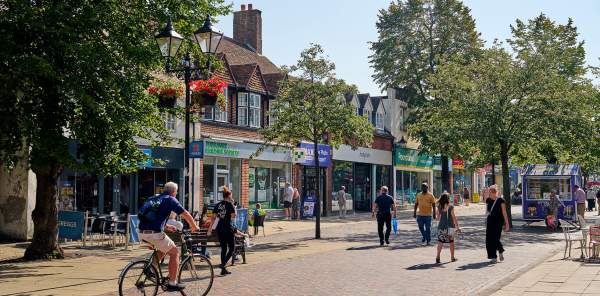
Figure 1: Pedestrianised streets and human-scale infrastructure in Solihull town centre (Source: Visit Birmingham, n.d.).
As a town Solihull, operated at a human scale. Pedestrianised streets, accessible parks, and an abundance of public seating. There were clear paths, recognisable centres, and constant opportunities to stop. In keeping with Kevin Lynch (1960), it was legible not just visually, but experientially. It gave me “spatial training wheels”. So when I arrived in Birmingham, I had already learned how to move.
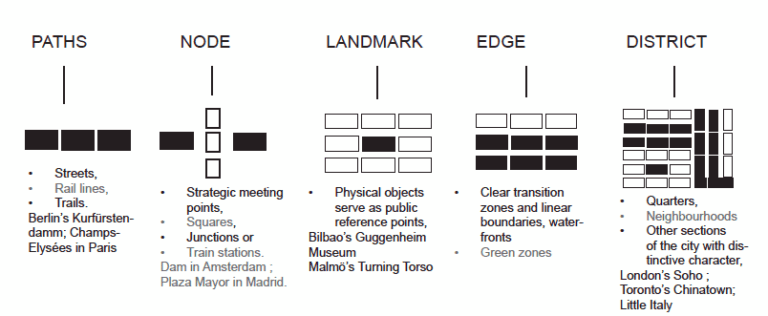
Figure 2: Kevin Lynch’s diagram of the Five Physical Elements (Source: Jojic, 2019).
But this is not universal.
Across the UK over 9 million people live in rural areas that are poorly connected (Defra, 2026). Meaning car use is mandatory (CPRE, 2023). In essence people don’t have access to transitional space due to poor infrastructure and access in terms of transport; consequently children don’t have the agency and can’t develop spatial literacy from a young age (Hillman et al., 1990) which later impacts their capacity to interact with public space in their teens (Shtebunaev, 2026).
Why is this an issue?
Children make up nearly a quarter of the population (ONS, 2024), yet cities aren’t designed for cognitive spatial development more so speed and productivity. This creates Friction.Teenagers are at the centre of the friction. Too old for child-oriented spaces, but not yet equipped for adult ones, they are pushed into environments that are only legible through experience. As a result, they create their own nodes, often transport hubs or fast-food spaces not because they are antisocial, but because these are the only accessible environments available to them (Sheffield Hallam University, 2026).
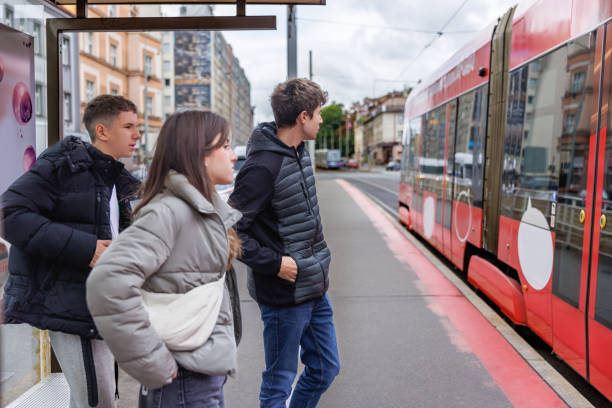
Figure 3: Young people using urban transit hubs as primary nodes for navigation and social gathering (Source: iStock, 2024).
This is often framed as an issue of transport. But access alone is not enough. If a space cannot be understood without experience, it is not truly accessible. Looking back now, Birmingham feels intuitive. But that intuition was learned through repetition, not the city’s quality of design. What once felt overwhelming now feels obvious not because the city changed, but because I grew up.
We need to design spaces that people grow into, not spaces that force us to grow up.
Reference List
CPRE (The Countryside Charity) (2023) State of the North: Transport and Rural Exclusion Report. London: CPRE.
Department for Environment, Food & Rural Affairs (Defra) (2026) Statistical Digest of Rural England: Population and Infrastructure. London: HM Government.
Hillman, M., Adams, J. and Whitelegg, J. (1990) One False Move… A Study of Children’s Independent Mobility. London: Policy Studies Institute.
iStock (2024) Young teenage girl waiting at the bus stop. [Online image] Available at: https://www.istockphoto.com/photos/young-teenage-girl-waiting-at-the-bus-stop (Accessed: 27 April 2026).
Jojic, S. (2019) Kevin Lynch diagram of the Five Physical Elements. [Online image] Available at: https://www.researchgate.net/figure/Kevin-Lynch-diagram-of-the-Five-Physical-Elements-Source-Sonia-Jojic_fig2_331300356 (Accessed: 27 April 2026).
Lynch, K. (1960) The Image of the City. Cambridge, MA: MIT Press.
Office for National Statistics (ONS) (2024) Estimates of the population for the UK, England, Wales, Scotland and Northern Ireland. Newport: ONS.
Sheffield Hallam University (2026) Young people as researchers and change-makers in economically disadvantaged neighbourhoods in the UK (CHiLL Report). Sheffield: SHU.
Shtebunaev, S. (2026) Young people’s perceptions towards the planning of the future ‘smart city’ in Europe: Teenagers’ voices. PhD Thesis. Birmingham City University.
Visit Birmingham (n.d.) Solihull town centre. [Online image] Available at: https://visitbirmingham.com/inspire-me/explore-the-west-midlands/solihull/ (Accessed: 27 April 2026).

This article presents a thoughtful and constructively organized reflection on the “missing middle” in urban environments, particularly because of its emphasis on Kevin Lynch’s (1960) concept of spatial legibility. Through its examples, it illustrates well that environments like Solihull offer transition zones that support the gradual development of spatial literacy. However, its argument could be improved by being more critical of the process of producing space. Spaces are produced by the underlying socio-political and economic structures (Lefebvre, 1991), and because of this, the lack of transitional spaces is not simply an accident but a product of systemic issues. The article identifies rural inaccessibility as one of the key problems but does not look at how urban design also plays a role in relation to exclusion. For example, environments that are designed for efficiency and/or control can create barriers to informal use of the space (Low and Smith, 2006). This also raises questions about how design practices may inadvertently lead to reinforcing social inequities. In the end, this article raises an important question about whether or not cities have been designed to support the various stages of spatial development.
I found this a really thought-provoking blog Ayanda. The idea that people gradually develop ‘spatial literacy’ through experience really resonated with me, especially coming from a rural village in Lincolnshire myself. Looking back, I remember how movement often felt restricted and dependent on adults. Public transport was limited, distances between places were greater, and access to cities relied almost entirely on car travel. I think this shaped the way I later experienced urban environments. Exposure to more complex public spaces came much later and felt far less gradual than the transition you describe moving into Birmingham.
I really enjoyed your discussion around ‘transitional space’. I found it connected closely to Farrington and Farrington’s discussion of how rural accessibility is shaped by both distance and limited mobility opportunities (Farrington and Farrington, 2005), and was intrigued by your point about how teenagers occupying transport hubs or fast-food spaces connected these two ideas. I relate back my own upbringing, where these become some of the only informal public spaces available to young people. For further reading, I’d recommend Matthews et al’s The Street as a Third Space, which argues that as young people walk, explore and spend time together, they develop familiarity with spaces and develop their own sense of belonging and place (Matthews et al., 2003), despite the quality of the urban environment.
Your blog led me reflect for the first time on how my own confidence in urban space was harder to build growing up in a rural area, and prompted me to question whether urban confidence is something we as urban designers can actively help develop, or something people are simply expected to learn through repeated exposure.
References
Farrington, J. and Farrington, C. (2005) ‘Rural accessibility, social inclusion and social justice: Towards conceptualisation’, Journal of Transport Geography, 13(1), pp. 1–12.
Matthews, H., Limb, M. and Taylor, M. (2000) ‘The street as thirdspace’, The Sociological Review, 48(1), pp. 63–88.