Reclaiming the Post-Industrial Street: The case of Horden.
A recent BBC article, Inside Horden, the County Durham town failed by politics paints a harrowing picture of spatial isolation, economic decline and a growing feeling of abandonment. While much of the conversation focuses on economic statistics, reading this article through an Urban Design lens highlights a profound crisis of sense of belonging in the Post-industrial Northeast (Buchanan and Eley, 2026). This post explores these spatial impacts on the Post-Industrial Street and asks a fundamental question: who are these spaces for and do the people living in them still feel they belong?
Urban Design as a Catalyst for Social Decline
The Urban Structure of Horden has played a significant role in its social and economic decline. Defined by its ‘numbered streets’, of which my Grandad was raised on 7th Street, Horden consists of a high-density grid of Victorian terraces (Figure 1&2) purpose built to house the working-class mining families. (Figure 3) While this once fostered a close-knit community, today the ‘numbered streets have inspired dread among even the most hardened of local residents’ (Townsend, 2017).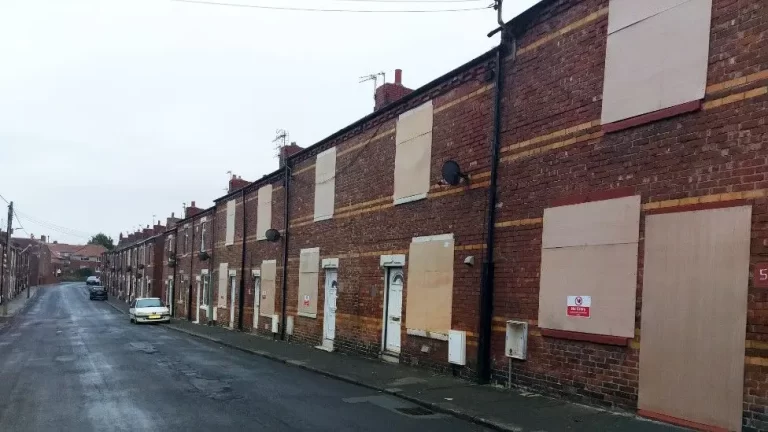
Figure 1: One of the Numbered Streets in Horden, County Durham showing vacant bordered up housing. (Source: Eley. A, 2026)
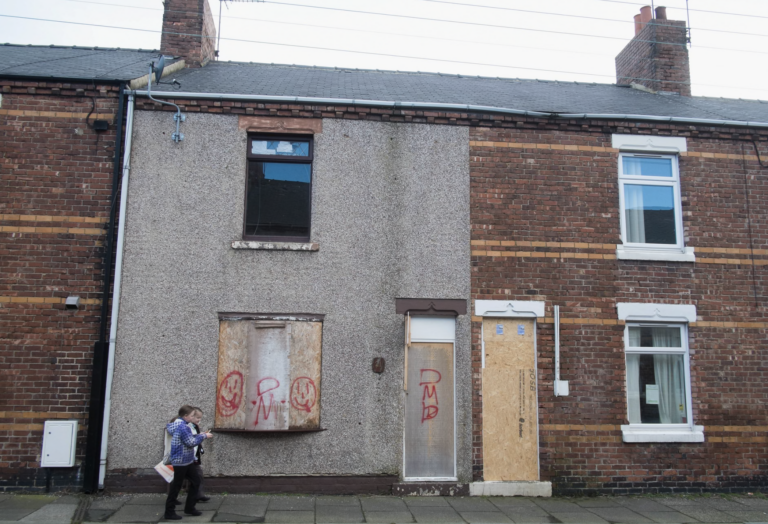
Figure 2: Terraced housing typology showing bordered up and vandalised streets. (Source: Forsyth. I, 2017)
When the Colliery closed in 1987, the communities primary economic and social security disappeared, leaving the area vulnerable to ‘territorial stigmatisation’ (Wacquant, 2007). Today, the abundance of cheap, uniform housing has led to 80% of housing being owned by landlords with up to 56% being absentee private landlords (Pain, 2017). This showcases the harsh reality of a failed urban design strategy, where areas designed to serve a singular industry face spatial abandonment once that industry disappears.
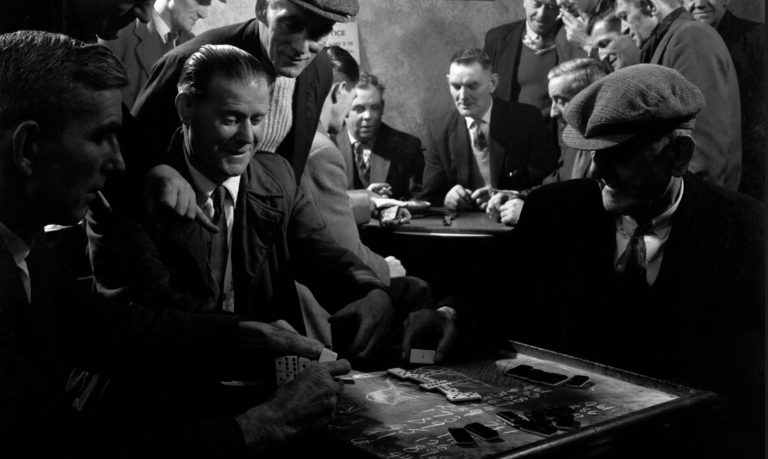
Figure 3: Miners meeting at a Horden community hall in 1963. (Source: Heritage images, n.d)
The Crisis of Belonging
Rising landlord ownership within the residential street presents a growing threat to sense of place. One resident stated that while she ‘wouldn’t want to bring her kids up anywhere else’ she believes that the residential street is ‘being damaged by people who buy houses from out of the village but don’t maintain them’ (Buchanan and Eley, 2026).
Arguably, the main threat to Horden’s identity is the call for large scale demolitions. Historic England suggests that access to a historic built environment is a key component of local identity (Historic England, 2009) therefore the proposal to demolish over 100 homes has been described as a ‘social cleansing’ by residents who feel their working-class heritage is being erased (Buchanan and Eley, 2026). When physical landmarks are knocked down, sense of place is disrupted, risking a state of ‘placelessness’ where residents lose a connection to their surroundings.
This raises the question: who is this space for? While the council frames demolition as a ‘clean slate,’ nearly 90% of residents would prefer refurbishment (Townsend, 2017) (Figure 4). This top-down approach reveals a disconnect between the residents lived reality and the state’s vision of a successful urban design strategy.
But what is the alternative?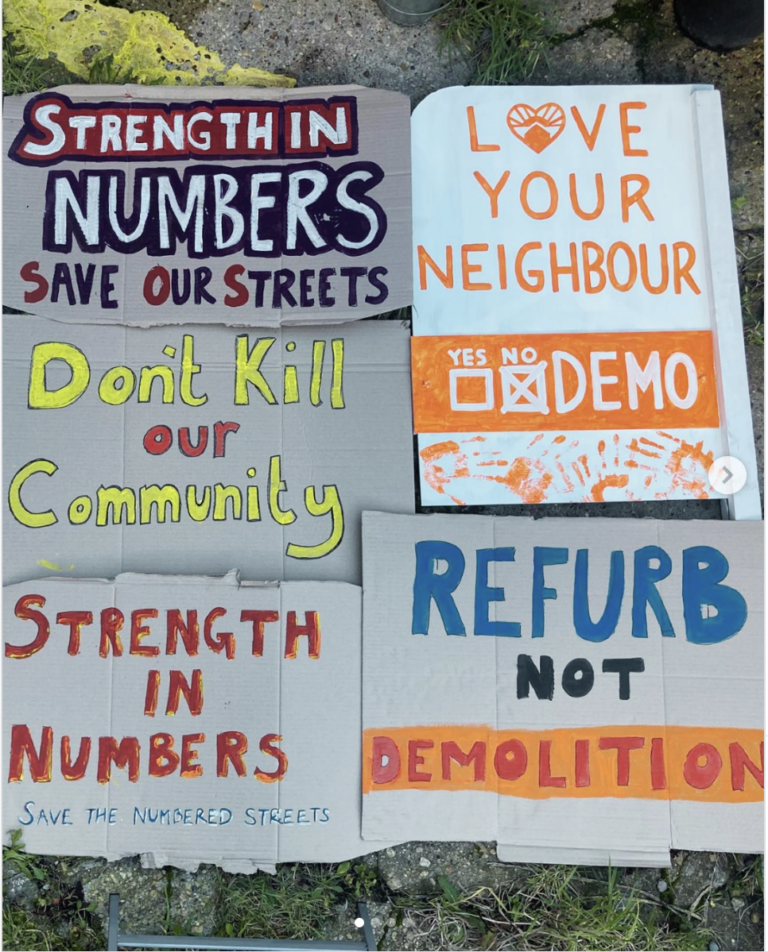
Figure 4: Banners made by local residents to protest the mass demolitions of the numbered streets. (Source: SAVE Britain’s Heritage, 2025)
The Welsh Streets Model: A Structural Solution
A viable alternative exists in Liverpool’s Welsh Street project. (Figure 5) Following community resistance against demolition backed by SAVE Britain’s Heritage, the site underwent ‘remodelled refurbishment’ (MCAU, 2018). This model offers a blueprint for areas like Horden:
- Conversion: Combining small terraces into larger, high-quality family homes (HLP Architects, 2021).
- Environmental Retrofitting: Improving EPC ratings through modern insulation and sustainable heating.
- Community-Led Heritage: Reasserting Victorian grids as valuable assets that can foster deep social identity.
The success of the Welsh Street project proves that through community led action and adaptive reuse, we can preserve a sense of belonging, deliver high standard housing and reclaim the Post-Industrial Street.
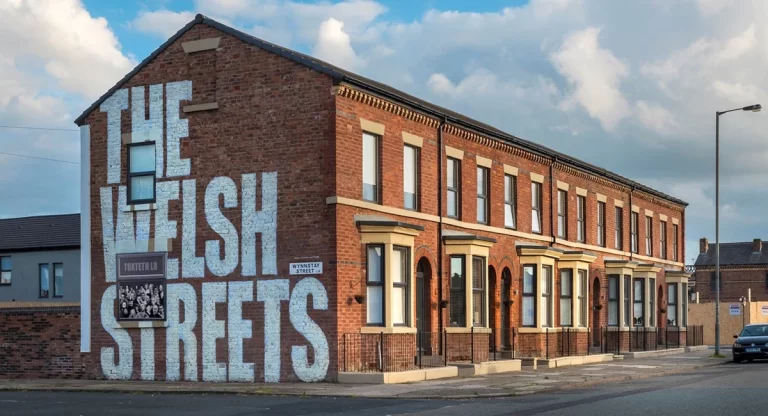
Figure 5: The Refurbished Welsh Street Project. (Source: MCAU, 2018)
Reference list
Buchanan, M. and Eley, A. (2026). Inside Horden, the County Durham town failed by politics. BBC News. [online] 18 Feb. Available at: https://www.bbc.co.uk/news/articles/cm2136jnjx1o.
Historic England (2009) Sense of Place and Social Capital and the Historic Built Environment. London: English Heritage.
HLP Architects (2021) Welsh Streets Regeneration Project, Liverpool. Available at: https://www.hlpdesign.com/our-work/refurbishment-conversion/886-welsh-streets-regeneration-project-liverpool (Accessed: 8 May 2026).
MCAU (2018) Welsh Streets Liverpool. Available at: https://www.mcau.co.uk/projects/welsh-streets-liverpool (Accessed: 8 May 2026).
Pain, R. (2017) Impact of private landlords on former coalfield communities. Durham: Durham University.
SAVE Britain’s Heritage (2024) SAVE backs community campaigners fighting to save over 100 homes. Available at: https://www.savebritainsheritage.org/news/save-backs-community-campaigners-fighting-to-save-over-100-homes(Accessed: 8 May 2026).
Townsend, M. (2017). ‘People are starving’: village life in Britain’s blighted coalfields. [online] the Guardian. Available at: https://www.theguardian.com/society/2017/aug/26/blighted-coalfields-village-life-pit-village-people-starving-horden-co-durham (Accessed: 8 May 2026).
Wacquant, L. (2007). Territorial Stigmatization in the Age of Advanced Marginality. Thesis Eleven, 91(1), pp.66–77. doi:https://doi.org/10.1177/0725513607082003.
List of Figures
Figure 1: One of the Numbered Streets in Horden, County Durham showing vacant bordered up housing. (Source: Eley. A, 2026)
Figure 2: Terraced housing typology showing bordered up and vandalised streets. (Source: Forsyth. I, 2017)
Figure 3: Miners meeting at a Horden community hall in 1963. (Source: Heritage images, n.d)
Figure 4: Banners made by local residents to protest the mass demolitions of the numbered streets. (Source: SAVE Britain’s Heritage, 2025)
Figure 5: The Refurbished Welsh Street Project. (Source: MCAU, 2018)



As someone who also grew up in a post-industrial mining town, this resonates with me. The decline of the industrial sector has left many mining and industrial towns disempowered and in great decline. Whilst many have made attempts to regenerate, there is a clear longing by communities for how the towns used to thrive back in the day (Pahl and Crompton, 2018). I appreciate the point of view from Horden, and how the familiar Victorian terraces have been impacted differently to those I know.
Your exploration of the idea that the identifying characteristic of the streets has been a key factor in their own downfall, one that has been exploited by landlords, is an interesting point. The revitalisation of these streets being a strong desire for residents shows the fondness they have for their local heritage and makes me wonder, in what other ways can streets be reclaimed?
It appears that Liverpool has some fascinating examples of retrofitting run down and abandoned housing. Granby Four Streets Community Land Trust also retrofitted houses as part of their ‘10 House Project’ (Granby Four Streets, 2026). This involved 11 terraced houses becoming affordable homes. Two of the terraces were more difficult to save and so became a winter garden and community room. This community led endeavour has created a thriving hub of workshops, gardening, and a range of other social and community-led activities (Reynolds and Tilley, 2025). It has given a different perspective on bringing ‘new life’ to these once run down homes.
References:
Granby Four Streets CLT (2026) 10 House Project. Available at: https://www.granby4streetsclt.co.uk/other-projects#10houseproject (Accessed: 10 May 2026).
Pahl, K. and Crompton, M. (2018) ‘Introducing Rotherham’, in E. Campbell, K. Pahl, E. Pente, and Z. Rasool (eds.), Re-imagining contested communities: Connecting Rotherham through research. Policy Press, pp. 17-27.
Reynolds, P. and Tilley, H. (2025) ‘Retrofitting Condemned Properties into Affordable Homes’, Urban Design Journal, (Summer 2025 Issue 175), pp. 46-49.