

Reflective Summary: Lessons from Top-Down Design Failures and Alternative Practices
My challenge: Overcoming Flooding Vulnerability
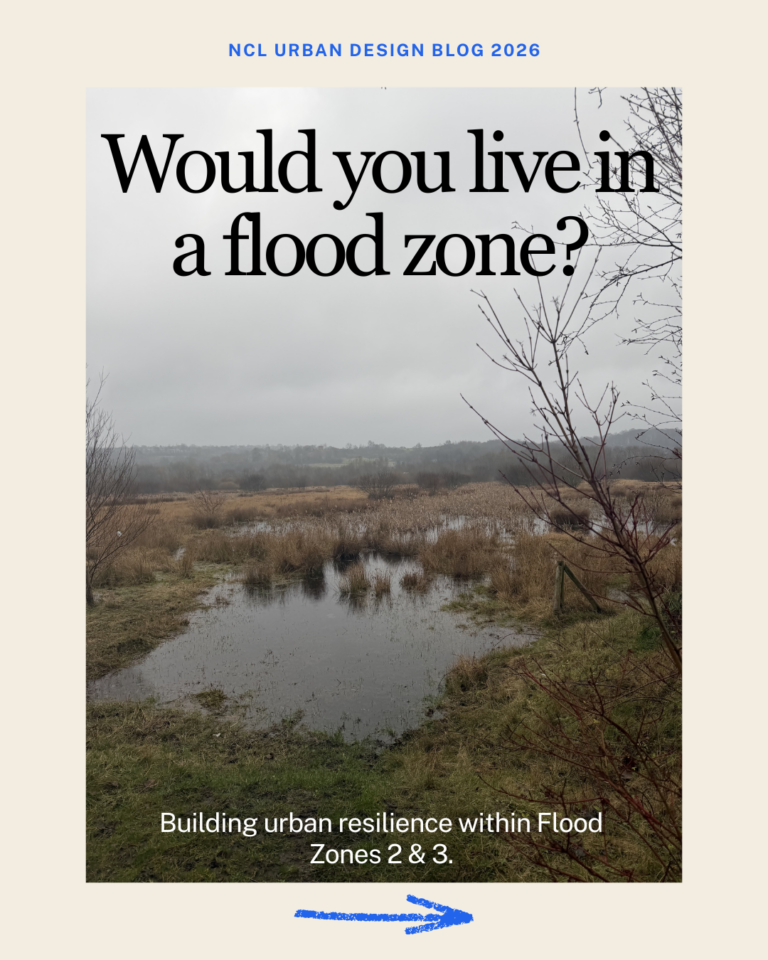
Would you live in a flood zone?
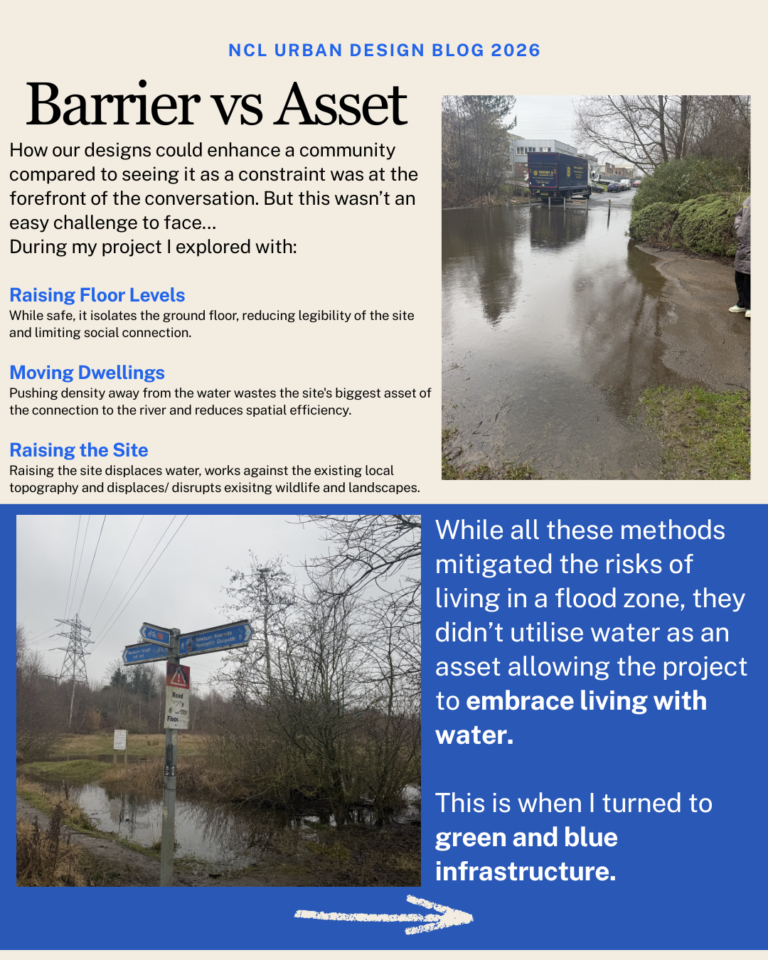
Well, this was the challenge we faced as urban design students during our latest Housing Alternative module. Our site was at least 75% in flood zones 2 or 3 and how we could go about our design strategies to enhance a community wasn’t an easy challenge to face. I explored traditional mitigation such as moving housing away from flood zones or raising the site topography but none of those methods allowed the project to embrace living with water.
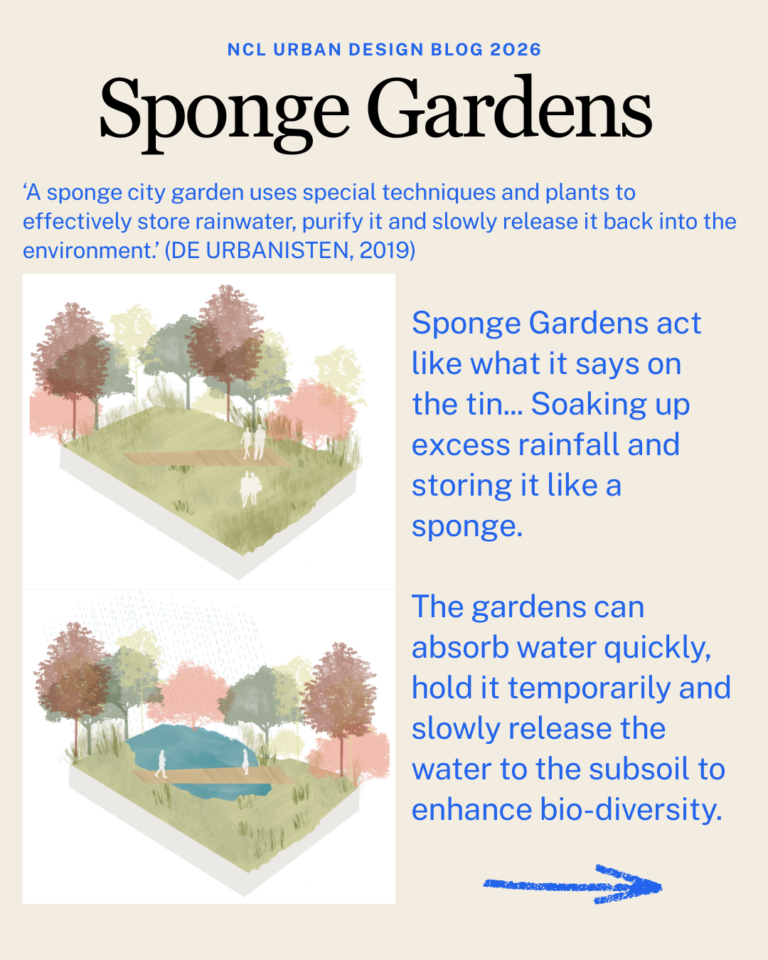
This is when I turned to green and blue infrastructure, integrating flooding into a biodiverse strategy creating a space for a variety of users.
With flooding only getting worse it raises a serious question: how do we design for a much wetter future?
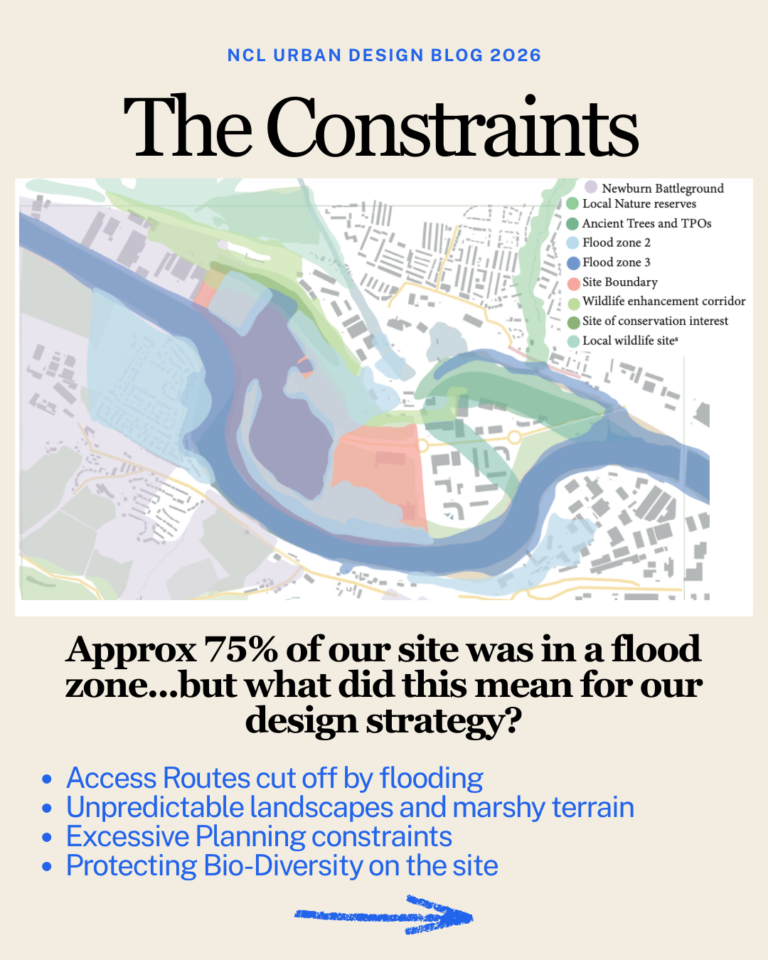
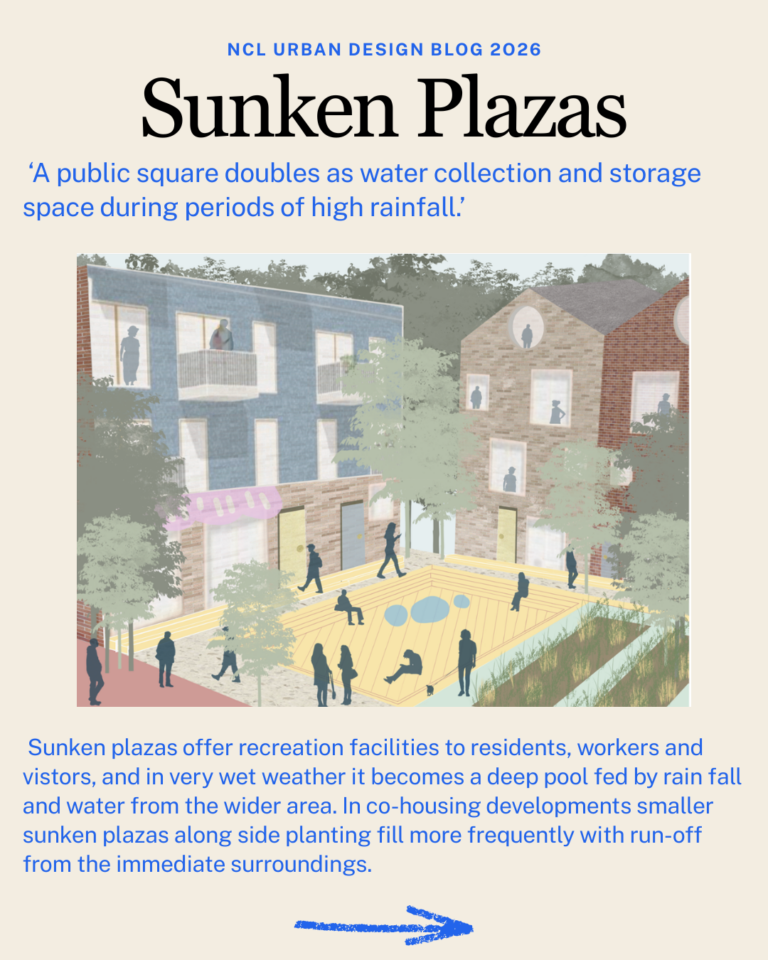
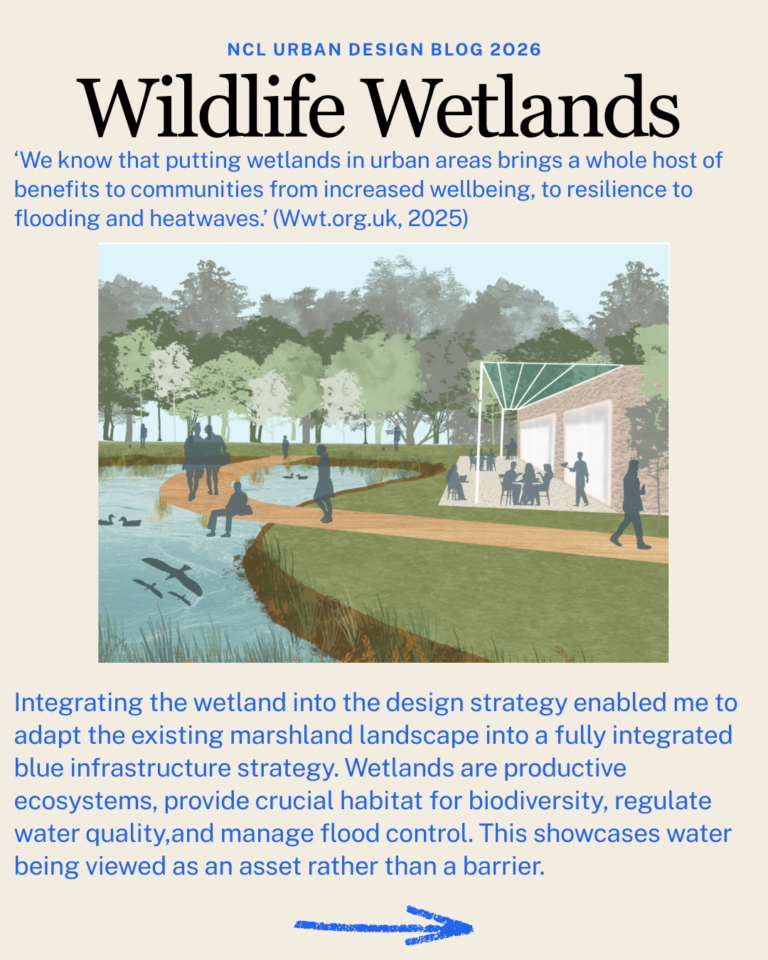
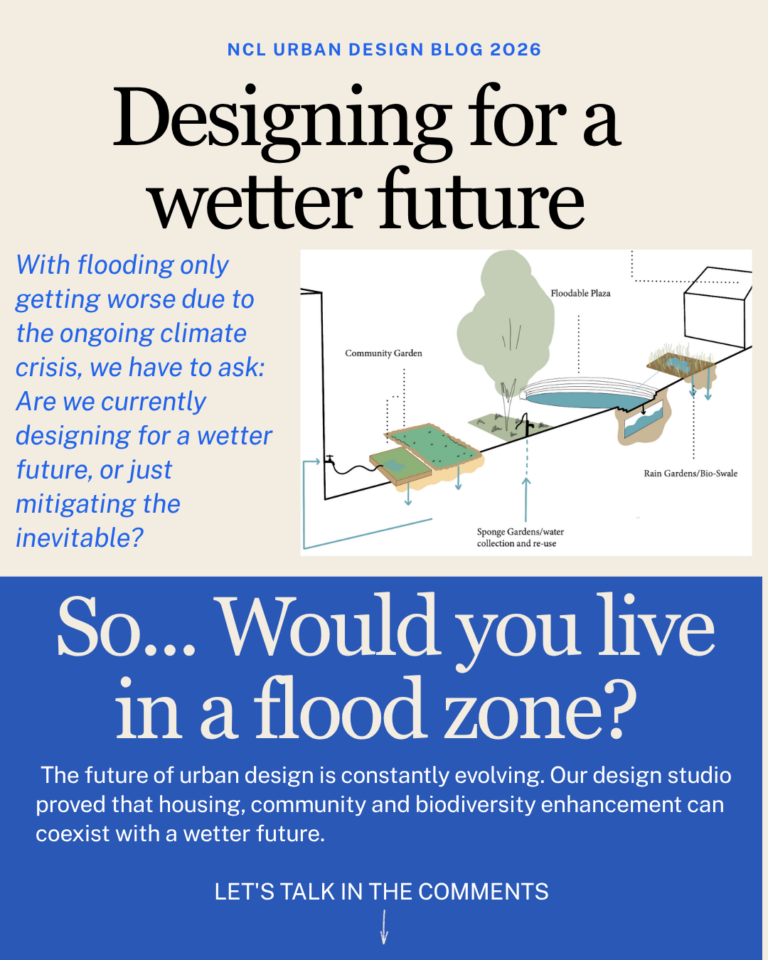
Images: Author’s Own (2026) Carousel Slides for Instagram Post. Available at https://www.instagram.com/maurbandesign/
Reflective Summary: Lessons from Top-Down Design Failures
Growing up in the Northeast, I have always been aware of the social decline in the area. However, researching Horden and Peterlee this semester through an urban design lens has allowed me to shed light on how a top-down approach to urbanism has historically failed my local communities. My defining takeaway from this blogging module is the need for meaningful public participation and alternative frameworks in post-industrial regeneration projects.
A key takeaway from this research is that successful design strategies must actively protect local identity and a ‘sense of place.’ Whether through the top-down approach to the Apollo Pavilion or the demolitions used to clear a ‘blank slate’ in Horden, planning consistently ignores existing social fabric (Pritchett, 2014). This research highlighted to me that when we ignore a community’s lived reality, the resulting spaces tend to feel alien, triggering a crisis of sense of belonging (Wacquant, 2007). This research highlighted that forcing top-down strategies onto communities disrupts the local sense of place, risking ‘placelessness’ for residents (Buchanan and Eley, 2026).
This module allowed me to explore how bottom-up approaches can be a successful alternative. In Peterlee, the restoration of the Apollo was driven by community groups and locals who fought to redefine its cultural value. This taught me that through targeted community action, residents can actively reclaim their spatial identity. Similarly, alternative models like the Welsh Streets highlighted through grassroot campaigns that existing terraced housing could be saved, retrofitted, and reimagined to meet the needs of the community directly resisting the destructive, profit-driven defaults of contemporary planning (Townsend, 2017).
Ultimately, researching the failures of top-down strategies within my local area has deepened my understanding of spatial injustice and has enabled me to reflect on my role as a future urban designer in taking a community led approach. Reviewing the success of grassroot action in both case studies has inspired me to think innovatively about solutions to spatial injustice, especially in the regeneration of typically working-class areas such as Peterlee and Horden.
References
Buchanan, L. and Eley, A. (2026). Inside Horden, the County Durham town failed by politics. BBC News.
Pritchett, B. (2014). British Neo-Constructivism between 1956 and 1978: Art and the politics of technoscientific modernisation (Doctoral dissertation, The Open University).
Townsend, M. (2017). The Welsh Streets: How a community fought demolition and won. SAVE Britain’s Heritage.
Wacquant, L. (2007). Territorial Stigmatization in the Postcolonial Age. Thesis Eleven, 91(1), 66-77.
