

Reflective Summary: Reflections on Growth, Challenges, and Urban Learning
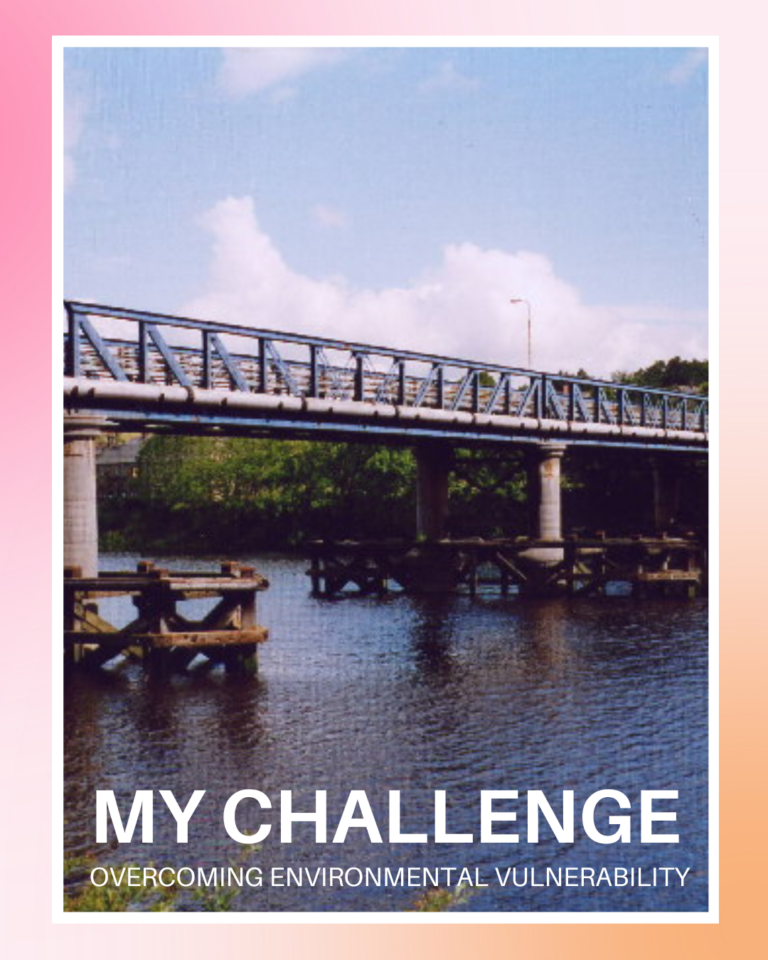
My Challenge: Overcoming Environmental Vulnerability
Would you live in a city designed without considering climate vulnerability?
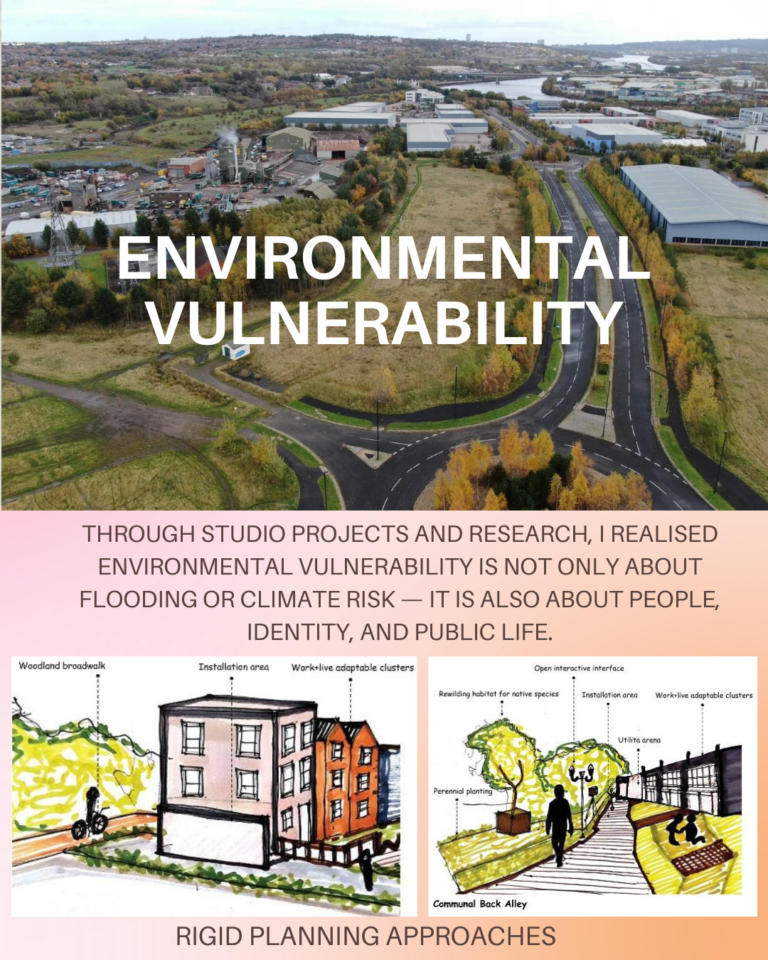
This became one of the biggest questions throughout my journey as an MA Urban Design student at Newcastle University. Through studio projects and research, I began to realise how environmental vulnerability is not only linked to flooding or climate change, but also to the way urban spaces are planned, experienced, and inhabited by communities.
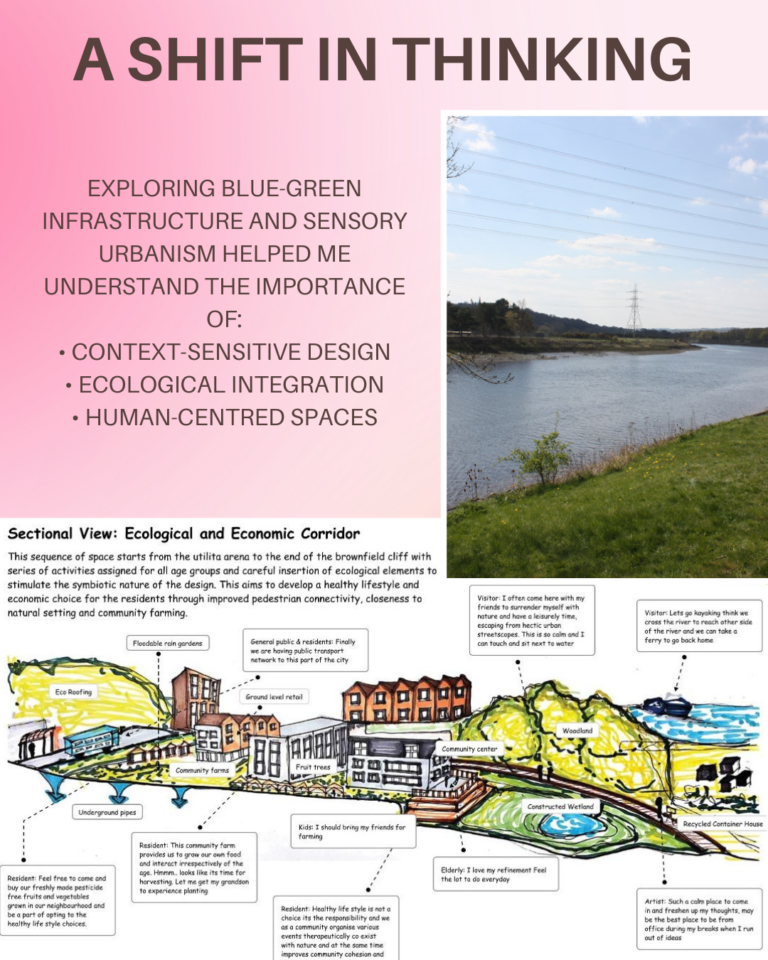
Initially, I approached sustainability through physical interventions and technological solutions. However, as my projects developed, I recognised that resilience cannot simply rely on engineered responses. Exploring blue-green infrastructure and sensory urbanism encouraged me to think about how ecological systems could become integrated into everyday public life rather than remaining isolated technical strategies. Instead of designing against nature, I began exploring how urban spaces could adapt to and coexist with environmental change while still supporting community interaction and identity.
This process challenged my assumptions about what makes a successful urban environment. It pushed me to think critically about flexibility, accessibility, and emotional connection to place, particularly within post-industrial and rapidly changing urban contexts. With climate pressures continuing to intensify, this experience raised an important question for me as a future designer: how do we create cities that are not only sustainable, but also socially meaningful and adaptable for future generations?
Reflexive Thoughts on Urban Design Challenges
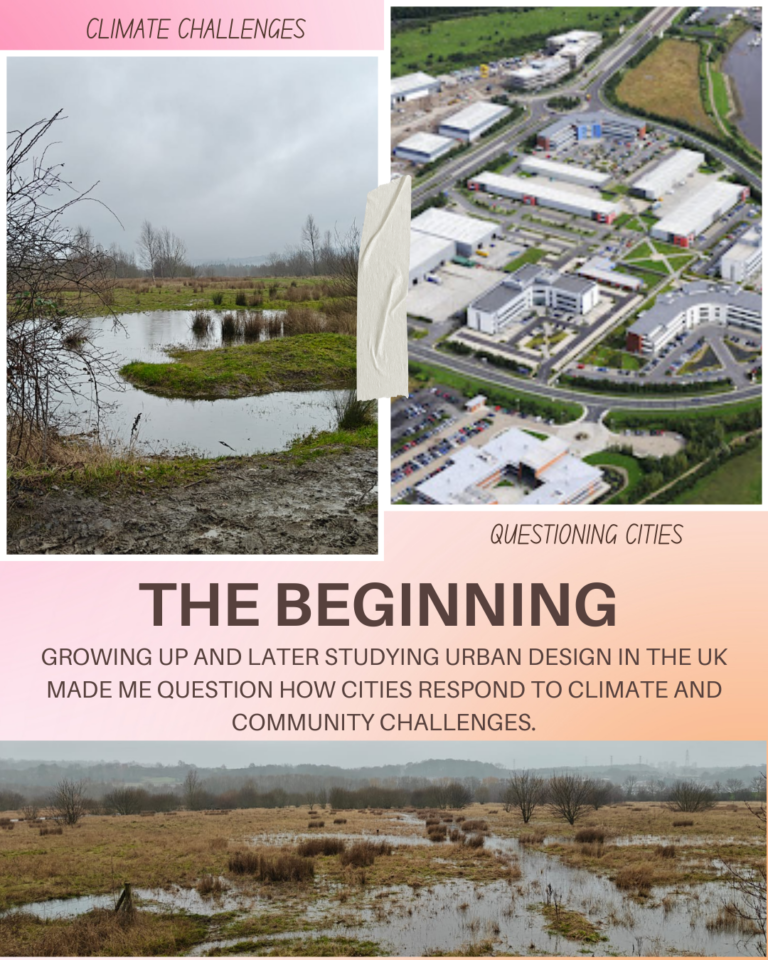
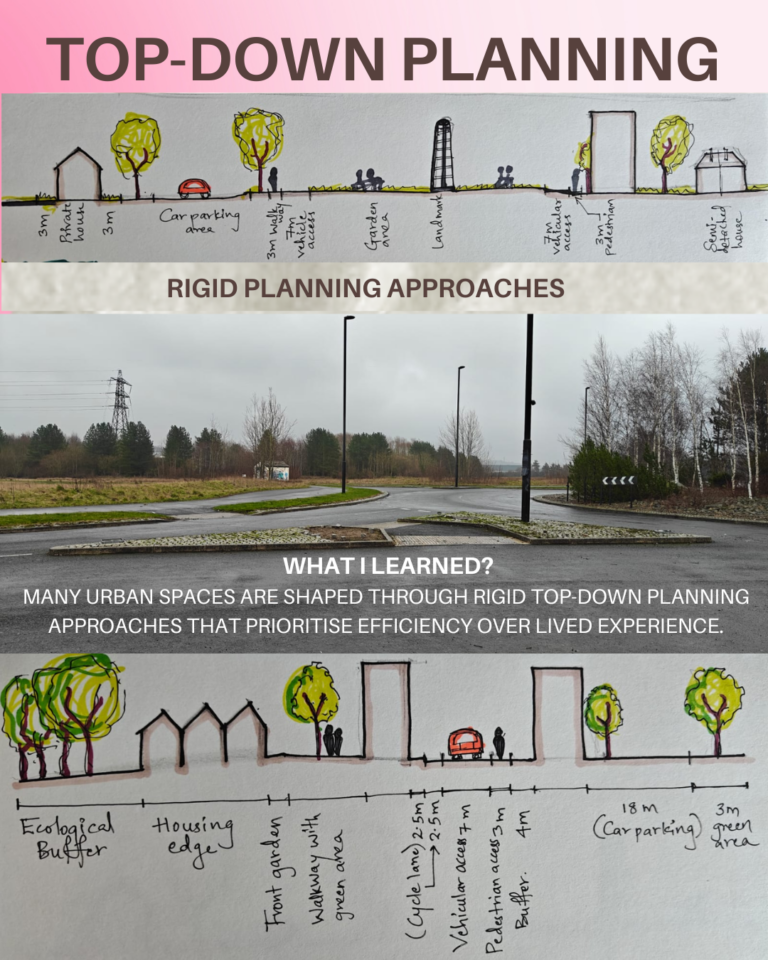
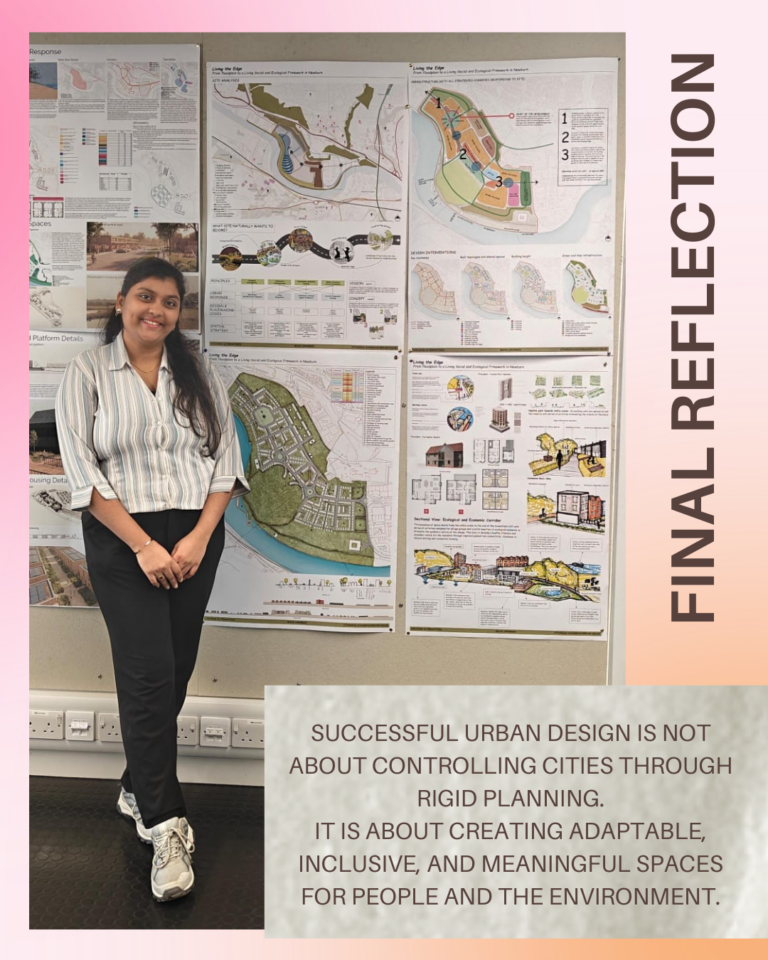
Growing up and later studying urban design in the UK has allowed me to reflect more critically on how many urban spaces are shaped through rigid top-down planning approaches. Throughout this module, I explored how large-scale planning strategies often prioritise efficiency and visual order while overlooking local identity, lived experience, and community participation.
A key takeaway from this research was understanding the importance of context-sensitive and people-centred design. Through studying public spaces, regeneration projects, and blue-green infrastructure, I realised that when planning ignores the everyday experiences of communities, spaces can become disconnected and lacking in social meaning. Gehl (2011) highlights the importance of designing cities around human interaction and movement, while Pallasmaa (2012) explains how sensory and emotional experiences shape meaningful environments.
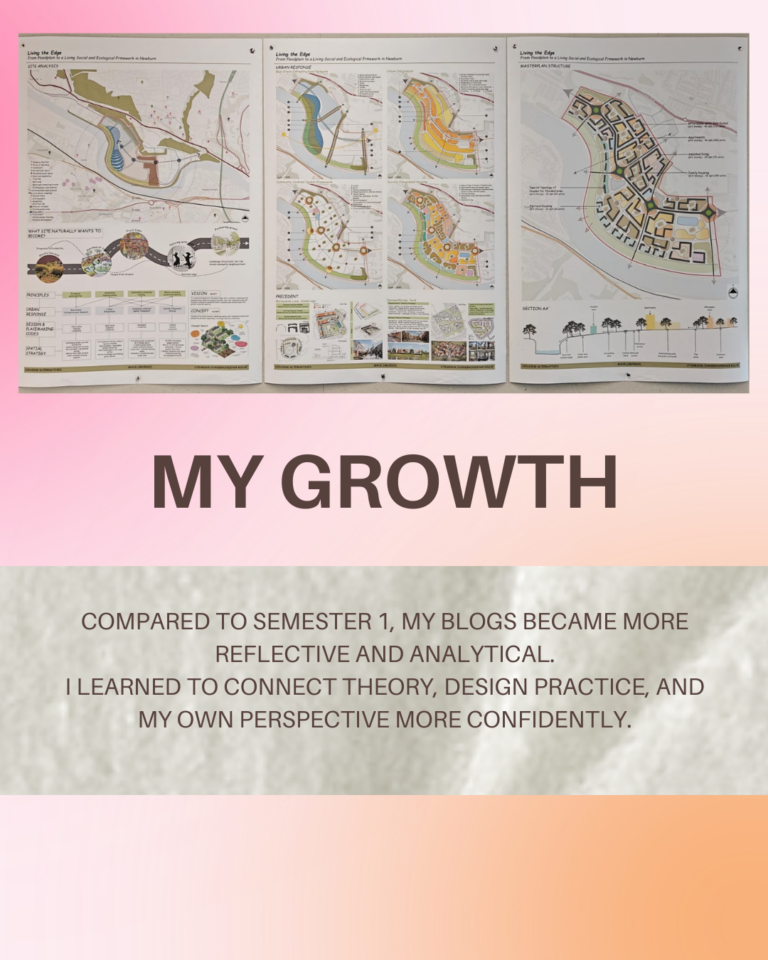
Compared to Semester 1, my blogging and reflective writing skills have also improved significantly. Earlier, my blogs were more descriptive and focused mainly on summarising ideas. Through lectures, peer blogs, and research, I became more confident in critically analysing urban issues and connecting theory with design practice. This module helped me improve the structure, clarity, and analytical depth of my writing while also encouraging me to express my own perspective more clearly. Reflecting on these themes has strengthened my understanding of inclusive and adaptable urban design approaches.
References
Carmona, M. (2021). Public Places Urban Spaces: The Dimensions of Urban Design. Routledge. (Accessed: 19/05/2026).
Gehl, J. (2011). Life Between Buildings. Island Press. (Accessed: 19/05/2026).
Pallasmaa, J. (2012). The Eyes of the Skin: Architecture and the Senses. Wiley. (Accessed: 19/05/2026).
Spirn, A.W. (1984). The Granite Garden: Urban Nature and Human Design. Basic Books. (Accessed: 19/05/2026).
