

Semester Reflection: Urban Design Learning and Growth from an International Student’s Perspective
As an international student who studied interior design at the undergraduate level and is now pursuing a cross-disciplinary master’s in urban design, the blog creation task in the TCP8090 module this semester has been a challenging yet exciting learning adventure for me. At first, I felt lost with urban design ideas, but later managed to finish blogs about Arup’s practice research and co-housing in Britain. Over time, I learned how urban design relates to fair use of space. I also went through both easy and hard times while adjusting to a new study field, fitting in with a different culture, and learning on my own.

Figure 1. Newcastle upon Tyne skyline and the Tyne bridges.
Understand the Deep Logic of Spatial Equity
By going through study materials, listening to lectures, and reading blog articles, I, a beginner in urban design, slowly learned about the basic ideas of spatial fairness. When I studied interior design, I mainly focused on comfort and user experience within a single space, and I assumed equity simply meant making a space functional and easy to use. However, Agyeman et al. (2016) argue that environmental justice has moved beyond a single issue of unequal distribution of resources. it is a continuous process embedded in everyday life, community interactions, and sustainable development. This new information changed my view entirely.
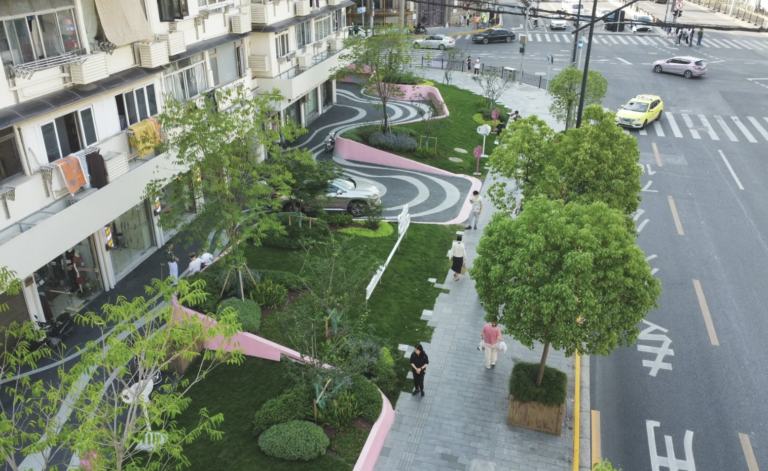
Figure 2. Design of the Pocket Park in Lane 575, Henan Middle Road, Huangpu District, Shanghai.
When researching Arup’s Adelaide project, I first learned how digital twin technology can help designers anticipate the needs of residents in different areas, so that people living in suburbs and those in city centers can get access to green spaces equally. When studying co-housing communities in UK, I saw examples in Newcastle’s CoHut and Leeds’ LILAC, which can help me realize the interior design idea of shaping spatial relationships can be scaled up to the neighbourhood level. Moreover, Jan Gehl’s (2011) discussion of public space vitality in Life Between Buildings also helps me combine the human-centered core of interior design and the spatial equity of urban design. These discoveries made me see that interdisciplinary knowledge is not a burden; instead, it allows me to interpret the value of large-scale design through a more human, micro-level lens.

Figure 3. A Picture of Digital Twin.
Challenges and Responses for International Students
In my opinion, for International students and those changing majors just like me face real struggles with writing blogs. When I first researching British co-housing communities, I didn’t understand local housing laws and community culture, so I had to spend more time reading academic sources to understand its significance for low-income groups. When writing about the Arup’s case, I often felt uncertain about how to express technical words in English and worried my spelling might be imprecise. The most difficult thing for me was changing my focus from interior design to urban design. At first, I only looked at some small details such as the interior layout of co-housing units, but later I learned to think about how these communities interact with cities and balance different group’s needs. When posting about co-housing communities on Instagram, I deliberately used comparison images instead of complex textual descriptions to avoid language shortcomings and make the content more intuitive.
Achievements, Shortcomings and Future Directions
This semester’s learning process has given me some more valuable gains than the blogs themselves: not only have I mastered skills in literature screening and multimedia storytelling, but I have also learned to examine cities from a cross-cultural perspective, such as comparing the renovation of old residential areas in my hometown with British co-housing communities to discover different paths to achieving spatial equity under different cultures. However, I am also aware of my shortcomings: my theoretical foundation in urban planning is still too weak, so when analyzing the Arup project, I could only understand the application principles of digital tools superficially. Additionally, as an international student, I have visited local communities too few times, resulting in my blog case analyses relying heavily on literature.
In the future, I will use my spare time to learn the basic knowledge points related to urban design, visit more communities in Newcastle on weekends, take more photos and conduct on-site investigations. In terms of English writing, I will accumulate more words and communicate more with my classmates. This semester’s learning experience has made me understand that urban design is not an isolated design, but is about “spatial justice” for everyone. Although there are still many deficiencies now, I will carry this harvest and reflection with me and continue to explore and make progress on the road of urban design.
Reference:
- Agyeman, J., Schlosberg, D., Craven, L. & Matthews, C. (2016) Trends and directions in environmental justice: From inequity to everyday life, community, and just sustainabilities. Annual Review of Environment and Resources, 41, pp. 321-340.
- Gehl, J. (2011) Life between buildings: Using public space. Washington, DC: Island Press.
