The Instagram City: How Social Media is Reshaping Urban Design
Present-day cities have become more focused on visual appearance, consumption, and visibility via the Internet than just on the social or practical needs they were designed for in the first place. Guy Debord’s Society of the Spectacle helps to understand this phenomenon by explaining that social life is experienced through images, and urban environments are set up to be visually consumed, rather than experienced.
Urban settings are constructed to be utilized, viewed, and experienced. An excellent example of this transformation can be found in Shoreditch, an area of London that’s been radically transformed from industrial to trendy due to street art and arts-related businesses occupying the spaces in the vicinity. The result of this trend is that these areas have turned into curated, highly photogenic environments that have been designed as “Instagram-friendly” (Visit London, no date). While these visually appealing areas may attract tourists and investors, they also raise concerns about the authenticity of the urban space and who is included or excluded from these new spaces. Zukin (2010) notes that the transformation of these spaces has frequently displaced people from their homes and altered their sense of place and community because their cultural identities are now monetized.
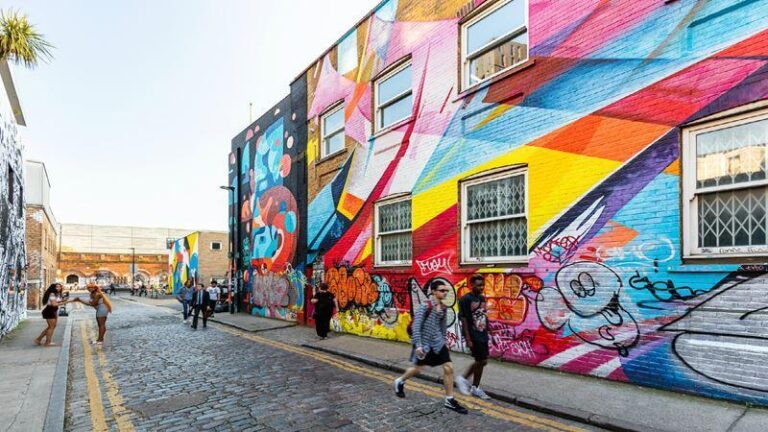
Figure 1: Street art in Shoreditch, London illustrating the transformation of urban space into an Instagrammable environment associated with creative industries and urban regeneration. (Visit London, no date)
The use of online platforms is an important influencer of these urban relationships at the local level through the way that people both create and share visual content related to places in their communities. According to Highfield and Leaver (2016), social media sites like Instagram lead to design decisions about the creation of new urban places being heavily influenced by aesthetics (i.e., visual appeal) rather than social function or other types of functionalities (i.e., physical comfort). A good example is the many cafés built in the city of Seoul that are intentionally designed to generate interest on social media. A large proportion of the design decisions made by café designers in this city are based on how visually attractive a café will be for potential users to share photographs of their experience at that café on social media.
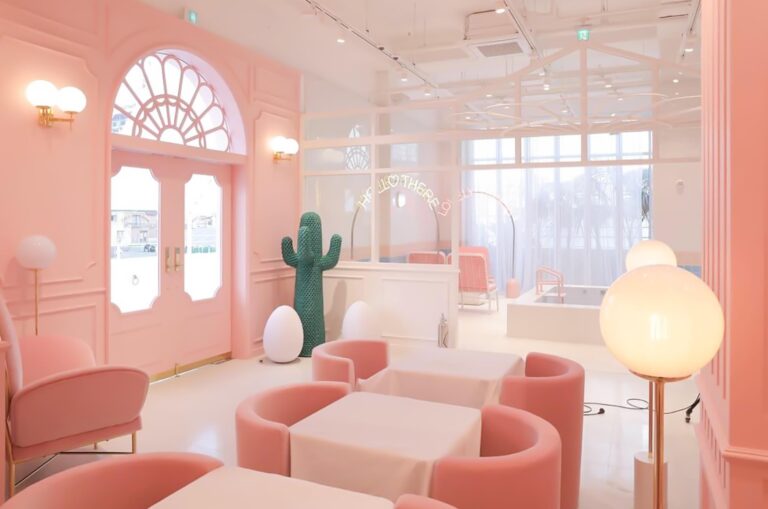
Figure 2: Aesthetic café interior in Seoul demonstrating how commercial spaces are curated to maximise visual appeal and social media engagement. (Mayflower, no date)
In a broader context, there are examples such as Dubai of how spectacle manifests itself through architecture and urban form. The iconic skylines or high-density developments show an intention to convey a global prominence and attract foreign investments to augment these developments, reinforcing Debord’s assertion that urban environments are more frequently experienced as visual spectacles rather than as places to live. The consequence being that although the construction of these spaces creates economic growth, they place greater emphasis on visual impression rather than inclusivity.
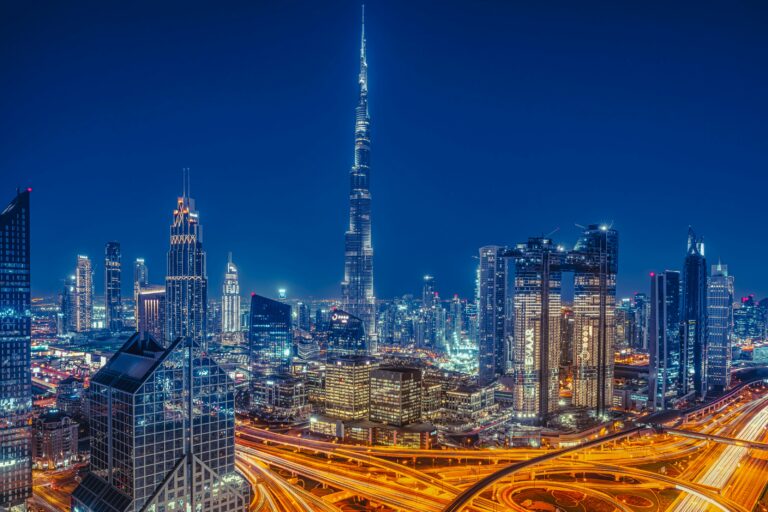
Figure 3: Dubai skyline at night, representing large-scale urban development driven by spectacle, high-density architecture, and global image-making. (Unsplash, no date)
Nevertheless, not all urban design follows this pattern. Jan Gehl (2010) promotes human-centric design by encouraging walking, social interaction, and interacting with the community. Gehl’s urban design approach opposes spectacle-driven urbanism by focusing on experiences from day-to-day life rather than visual consumption.
Modern urban spaces exist at the confluence of spectacle and social habitation; while urban design based on the image can increase visibility and economic viability, those same designs raise important questions regarding authenticity, accessibility, and for whom the cities were created.
References
Debord, G. (1967). The Society of the Spectacle. Paris: Buchet-Chastel.
Gehl, J. (2010). Cities for People. Washington, DC: Island Press.
Highfield, T. and Leaver, T. (2016). Instagrammatics and digital methods: studying visual social media, from selfies and GIFs to memes and emoji. Communication Research and Practice, 2(1), pp.47–62. doi:https://doi.org/10.1080/22041451.2016.1155332.
Low, S. and Smith, N. (2006). The Politics of Public Space. New York: Routledge.
Mayflower (no date). 5 Instagram-worthy cafes in Seoul. [online] Available at: https://www.mayflower.com.my/blog/5-instagram-worthy-cafes-in-seoul (Accessed: 15/04/26).
Miles, M. (2017). Cities and Literature. London: Routledge.
Visit London (no date). Shoreditch bars and pubs. [online] Available at: https://www.visitlondon.com/things-to-do/london-areas/hoxton-and-shoreditch/things-to-do/food-and-drink/shoreditch-bars-and-pubs (Accessed: 15/04/26).
Zukin, S. (2010). Naked City: The Death and Life of Authentic Urban Places. Oxford: Oxford University Press.
Unsplash (no date). Burj Al Arab skyline image. [online] Available at: https://unsplash.com/photos/burj-al-arab-DcyL0IoCY0A (Accessed: 15/04/26).
List of Figures
Figure 1 – Street art in Shoreditch, London illustrating the transformation of urban space into an Instagrammable environment associated with creative industries and urban regeneration. (Visit London, no date)
Figure 2 – Aesthetic café interior in Seoul demonstrating how commercial spaces are curated to maximise visual appeal and social media engagement. (Mayflower, no date)
Figure 3 – Dubai skyline at night, representing large-scale urban development driven by spectacle, high-density architecture, and global image-making. (Unsplash, no date)



I really like this post, since it says something that I have noticed in real life:cities are becoming more about being “seen” online, rather than actually being used on a daily basis. Your Shoreditch example makes that shift easy to imagine.
I couldn’t help but think of the “traffic-chasing” cycle when reading it as a person has lived in Shanghai. I have seen many internet-fame shops opening with dramatic themes and perfect lightings with young people posing for pictures. It’s exciting at the beginning. But many of these locations go stale after a short time as the food is mediocre, the service is sloppy, and the overall atmosphere is not conducive to everyday life. This is why your point about spectacle rings true for me, rather than just in the theory.
My take on your post is that you could take it one step further and ask a more important question: what makes a place a “one-time” visit vs a place you want to go back to again and again? Al Siyabi (2024) states that whilst social media can enhance place branding, it must be supported by tangible value and be managed accordingly. Moreover, Gherheș et al. (2025) also pointed out that the sustainability of the city’s image largely depends on residents’ satisfaction with infrastructure and quality of life, not just whether it is good or not.
Reference
Gherheș, V., Coman, C., Bucs, A., Gavriluță, N., Dalban, M. and Anton, M. (2025) ‘Sustainable urban branding: insights from Rasnov’s case study’, Sustainability, 17(8), 3595. Available at: https://www.mdpi.com/2071-1050/17/8/3595 (Accessed: 16 May 2026)
Al Siyabi, N., Marsden, J. and Guo, B. (2024) ‘How social media contributes to place branding’, in Višňovský, J. and Majerová, J. (eds.) Social Media and Modern Society. London: IntechOpen. Available at: https://eprints.whiterose.ac.uk/id/eprint/216298/ (Accessed: 16 May 2026)