

THE THING ABOUT SUBURBIA: A HABIT OF CTRL + C & V.
THE THING ABOUT SUBURBIA.
The UK is home to over 68 million people and intriguingly, about 80% of its population currently reside in its suburbia (Historical England, n.d.), making the suburban house and housing estate the mainstream form of inhabitation at present. As urban design students, suburbia is a term we have probably encountered at some point; a notoriously contentious one long known as a hot topic for critical discourse not just within the built environment, but across multiple disciplines as well (Abbott, 2023; & Huq, 2009). It is apparent that the suburban dwelling and way of life has been adopted by the vast majority (Hunter, 2016), yet contemporary suburbia remains polarising with more critics than advocates. This begs the question: Why does suburbia continue to be negatively received?
The criticism of suburbia extends beyond its visuality and physicality – more than just a place of habitation, suburbia has morphed into a concept and represents a set of ideals under the allure of ownership and freedom (Hunter, 2016). Whether in the fields of architecture and planning or sociology and economics, much of the commentary on suburbia rarely ever favours it. Intellectuals and professionals alike have regularly denounced the qualities of suburbia or lack thereof, branding it dull and repetitive in every sense of the word (Abbott, 2023; & Huq, 2009). For instance, the new town, as critically analysed by Dutch architect Aldo van Eyck (1962), has been diagnosed as “amorphous”, “additive”, and of a “heterogenous monotony”. Seen as an uninspired landscape that lacks the ‘right-size’ in number and scale, the suburb has perhaps become “a meaningless accretion of quantities with no real room for anything beyond mere survival”. Along with the promise of novel design models and theories, the apparent negative consequences that suburbia has had or will impose, like its inherent connection to sprawl and the environment, have only served to further fuel the disdain for it (Biddulph, 2000).
Suburbia has also found itself in a wide array of pop-culture expressions such as film; television; music; and literature. Often portrayed in a satirical; grim; dystopic; or even banal sense, suburban morphologies and life within it serve as critical backdrop and/or subject matter. (Huq, 2013). Take for example, the written works of English novelist George Orwell. Here the suburb is narrated as “repellent”, composed of “labyrinths of meanly decent streets, all so distinguishably alike” (1935), while suburban streets are “just a prison with the cells all in a row” (1939). Parallelly, the song ‘Little Boxes’ (1962) by Malvina Reynolds satirically criticises suburban houses as poor quality “little boxes” “that all look just the same”, extending this critique to the suburban man and his aspirations. While these examples are older, such sentiment towards contemporary suburbia remains.
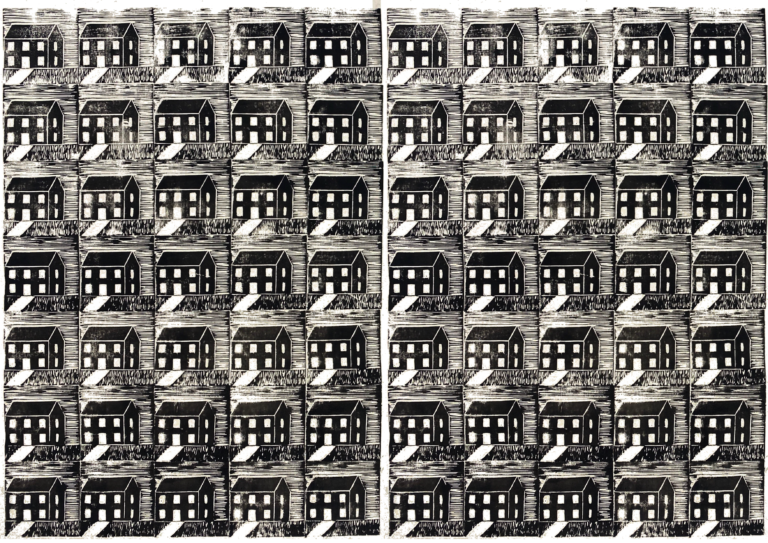
FIGURE 01: AGGLOMERATION ‘TICKY TACKY’ (REYNOLDS, 1962) HOUSES.
A HABIT OF CTRL+C & V.
Now imagine this: a Monopoly-like brick house with a slate roof, cloned and multiplied into rows and rows across a vast area of land as far as the eye can see, much like an agglomeration of cookie-cutter houses that are far too many and all too similar – this description paints an apt picture of how most suburban landscapes are stereotypically perceived, and perhaps how they are created at face value. There is an apparent recurring theme of repetition in the countless critiques of suburbia, and it surely goes deeper than simple observation. Tracing this repetition back to its first instance, the way in which space is produced within suburbia seems to be one of the root causes of suburban lamentation.
The ‘production of space’ (Lefebvre, 1991) is not one of chance. Moulded by various influences, it is instead done so through human intent. Extending this notion to suburbia, its monotonous character is not at all coincidental. The term ‘production’ is inherently linked to that of ‘manufacture’ and therefore, to manufactured goods. Thus, ‘space’ as a form of ‘production’ is perhaps comparable to commodity (Lefebvre, 1991; & Molotch, 1993). A mathematical ‘space’ largely devoid of design innovation and finesse, the suburban house is prime for replication; more or less homogenised for speed and simplicity with ever so slight differences to misleadingly imply any real choice. Moreover, adherence to planning regulations and processes is maintained, and seamless market exchange is facilitated (Biddulph, 2000). Such a production of the suburban home has rendered it mere house; a speculative form created for ‘abstract’ purpose devoid of any appropriation to its inhabitants unless personally transformed (Lefebvre, 1991; & Molotch, 1993). Parallelly, the suburb itself is also ‘space’ – a commodified landscape purposefully dominated by an accumulation of CTRL+C/V houses to be purchased and sold. What is left of surrounding space beyond and between dwellings are not much more than personal gardens and car parking spaces (Biddulph, 2000). The repetition of the suburban house into suburb and the repetition of the suburbs into suburbia compounds these conditions, and in turn its stigma.
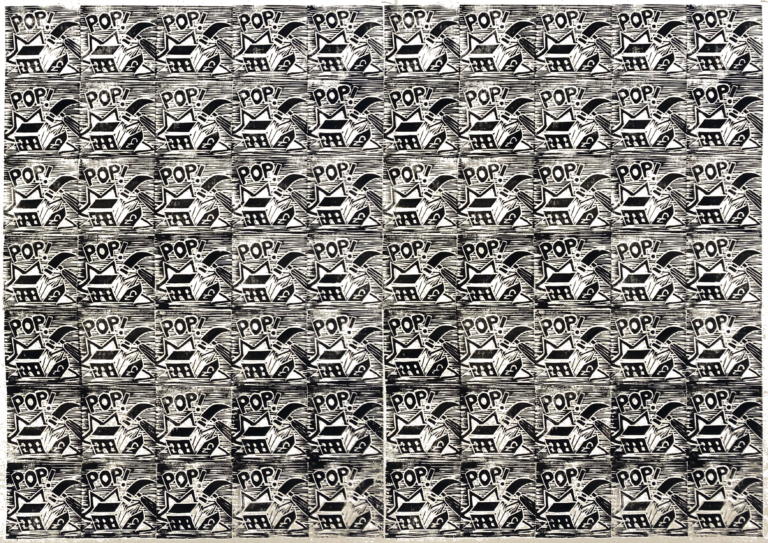
FIGURE 02: CHANGE THE PRODUCTION OF SPACE (LEFEBVRE, 1991).
CONCLUDING THOUGHTS.
Repetition is not inherently bad, nor is the suburban lifestyle and ethos. But in the case of suburbia, both have been greatly exploited. Space is more than just backdrop – it is tool; expression; life (Lefebvre, 1991; & Molotch, 1993). For negative connotations and criticisms of contemporary suburbia to change, its careless design and production will have to be transformed or reimagined – with more attentiveness towards its inhabitants, their interactions, and needs. Out-of-city living and possible preference or need for it will always exist. Instead of its expansion, perhaps the appropriate exploration is how existing suburbia can be reclaimed and regenerated.
REFERENCES:
Abbott, C. (2023) ‘What’s Wrong with Suburbs’, Suburbs: A Very Short Introduction, Very Short Introductions, Vol. 726 [Online] New York: Oxford University Press. Available at: https://doi.org/10.1093/actrade/9780197599242.003.0007 (accessed 16th December 2024)
Biddulph, M.J. (2000) ‘Re-humanising Critiques of Suburbia’, Urban Design Studies, Vol. 06 [Online] Araxus Books, pp. 159-172. Available at: https://orca.cardiff.ac.uk/id/eprint/35582/ (accessed 16th December 2024)
Historic England (n.d.) ‘Understanding Suburban Heritage’, Urban and Public Realm Heritage [Online] Historic England. Available at: https://historicengland.org.uk/research/current/discover-and-understand/urban-public-realm/suburbs/ (accessed 16th December 2024)
Hunter, P. (2016) Towards A Suburban Renaissance: An Agenda for Our City Suburbs [Online] The Smith Institute. Available at: https://www.smith-institute.org.uk/book/towards-urban-renaissance-agenda-city-suburbs/ (accessed 16th December 2024)
Huq, R. (2009) ‘Suburbia: The New Utopia?’ [Online] The Guardian. Available at: https://www.theguardian.com/commentisfree/2009/nov/16/suburbia (accessed 16th December 2024)
Huq, R. (2013) Making Sense of Suburbia Through Popular Culture [Online] London: Bloomsbury Academic. Available at: https://library.oapen.org/handle/20.500.12657/58742 (accessed 16th December 2024)
Lefebvre, H. (1991) The Production of Space, trans. Donald Nicholson Smiith (Oxford: Blackwell, 1991)
Molotch, H. (1993) ‘The Space of Lefebvre’, Theory and Society, Vol. 22, No. 6 [Online] JSTOR, pp. 887–895. Available at: https://www.jstor.org/stable/658004 (accessed 16th December 2024)
Orwell, G. (1935) A Clergyman’s Daughter (Penguins Classic; 1st Edition, 2000)
Orwell, G. (1939) Coming Up for Air (Penguins Classic; 1st Edition, 2001)
Reynolds, M. (1962) ‘Little Boxes’ [Song]
Van Eyck, A. (1962) ‘Steps Towards a Configurative Discipline’, Collected Articles and Other Writings 1947-1998, Aldo van Eyck: Writings Vol 02, Netherlands: Sun Publishers
LIST OF FIGURES:
Figure 01: Drawn by Author (2024)
Figure 02: Drawn by Author (2024)
