Think about how green facilities can improve the city’s landscape—— Blue Green Newcastle And Shenzhen Futian water system optimization
In contemporary society, with the continuous development of urbanization, cities have occupied forests, lakes, woodlands and grasslands that can handle water resources, breaking this natural water cycle. With the pace of development, water resources in cities are constantly being taken. When rain comes, they can only be treated as sewage. If they are not handled properly, it is easy to cause waterlogging disasters. This has caused many environmental and urban problems. I think we should maintain a balance between urbanization and the protection of the natural environment. Today’s urban design should maintain the basic functional construction of the city and take into account the aesthetic needs of the urban landscape.
Background of the Futian Water Ecology Project
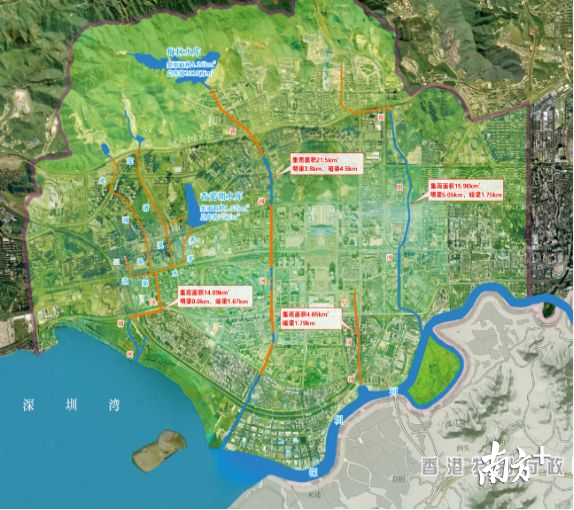
The area has a large population, many urban villages, difficult sewage treatment, and a high degree of urbanization. The drainage pressure is large and there is a greater risk of waterlogging.、
High-standard construction of urban blueways
The blueways focuses on protecting and linking natural, historical and cultural resources, and providing residents with space for recreation and interaction. By integrating the systematic management of mountains, water, forests, fields, lakes and grasses, and focusing on water as the main thread, the city’s production, living and ecological patterns are optimised on the basis of the water environment, water ecology and water safety.
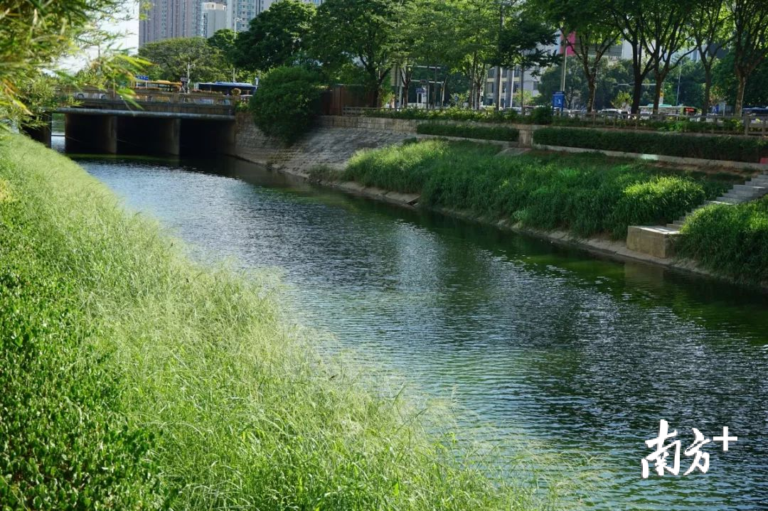
Blueways emphasises the combination of ‘water management, urban management and production management’, protecting the natural ecology and providing residents with high-quality open space.
At the same time, it integrates the design strategy of ‘seamless connection, three-dimensional multi-dimensional’, and also integrates the scattered spaces along the river into an ecological vitality corridor
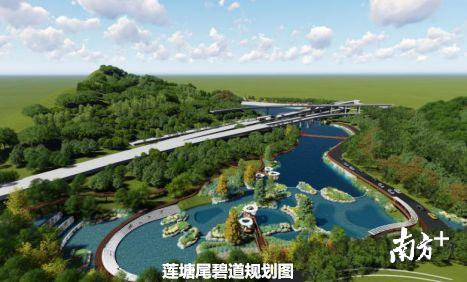
Technology-enhanced eco-city construction and design
There is a high degree of similarity between the Futian practice in Shenzhen and the Bluegreen City project in Newcastle upon Tyne. In Newcastle, modelling tools such as Paramics were used to test the effectiveness of transport and water systems in the design. In this way the city’s waterlogging problems were solved and more public space was created for the city.
The Futian project in Shenzhen uses GIS technology for water system analysis, such as precipitation prediction and flow analysis, population and facility distribution, green space resource distribution, data sharing and real-time monitoring; at the same time, both projects are very important for public participation, through community education and interactive activities, to enhance the residents’ understanding of and support for stormwater management and green infrastructure. In Futian, Shenzhen, the practice has also established a relevant reporting and monitoring mechanism.
References
1、Shenzhen Sewage Resource Utilisation Action Plan Taken from Shenzhen Water Affairs Bureau
https://swj.sz.gov.cn/xxgk/zfxxgkml/yhyshj/content/post_11349377.html
2. Taken from Nanfang.com https://pc.nfnews.com/5374/2617318.html
3、Eco-China website https://www.eco.gov.cn/news_info/60122.html
4、https://www.researchgate.net/publication/344858102_GISdelixinxixitongjishuzaishuihuanjingguanlijihuanjingyingxiangpingjiazhongdeyouxiaoyingyong



Your analysis is clear and insightful, showcasing the practical efforts of the Blue-Green Newcastle project and Shenzhen’s Futian water system optimization in improving urban ecosystems. I particularly agree with your point that urbanization must strike a balance with environmental protection. This is not only a challenge for Shenzhen but also for many rapidly developing Chinese cities, including my hometown, Shanghai.
I was impressed by how the Futian project uses GIS technology for water resource analysis and involves the community to raise awareness of green infrastructure. This combination of technology and public participation not only addresses drainage pressure but also promotes ecological values. Additionally, the comparison between Newcastle and Futian is meaningful. Despite their different contexts, both cities have implemented innovative solutions for water management and public space improvement, showing how global experiences can be adapted locally.
If you could explore more about the social and cultural differences between the two cities and how these impact the projects, it would make the comparison even stronger. For example, how does public education in Shenzhen differ from Newcastle’s approach? Overall, your work effectively highlights how urban development and environmental protection can go hand in hand to create better cities.