

After reading this blog, I agree with the author’s idea of ’15-minute community life circle’ mentioned in his blog. In my opinion, the quality of life of young people in the community will be greatly improved if their basic needs of living, working, leisure, and socialising can be met within a 15-minute walk. At the same time, though, I wonder if cities in the UK could actually support this model in practice. I know that this idea has already been developed in cities such as London, Manchester, and Cambridge, which were originally developed on the basis of the Walkable City concept, and have the infrastructure and planning foundations for walkable neighbourhoods. In Newcastle, however, youth communities are often built on the fringes of the city, where access and facilities are still poor and public transport and services are still lacking. Therefore, this idea should not just be a conceptual slogan, but also requires cities to really set aside space and resources for ‘young people first’ in their overall planning. Only then can the 15-minute community life circle be truly inclusive and effective.
Understanding and reflection on the design of youth communities in the UK
Background
With the aging of the population and the acceleration of urbanization, young people in the UK face multiple challenges such as housing shortage, employment pressure and lack of social space. Youth community design has gradually shifted to a multifunctional, sustainable and inclusive space concept, emphasizing community participation and mental health support.
Case Study
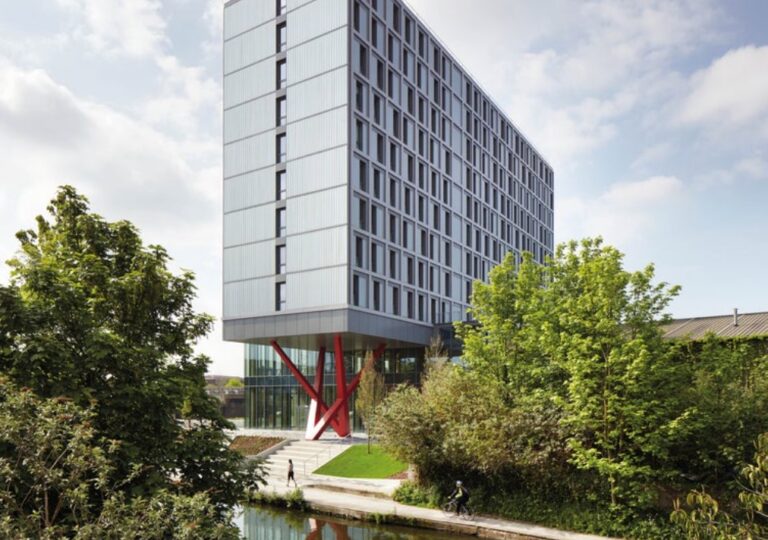
London’s “The Collective” co-living community
The Collective is a leading global co-living brand that offers private bedrooms and a wealth of shared facilities, such as kitchens, gyms, and rooftop gardens, aiming to reduce living costs and promote social interaction among young people.You can use the web version of VR to get an advance understanding of the appearance and layout of this community Its New York project was designed by the renowned architect Kengo Kuma, combining red brick facades with public cultural spaces, emphasizing the historical connection between the community and the local community.
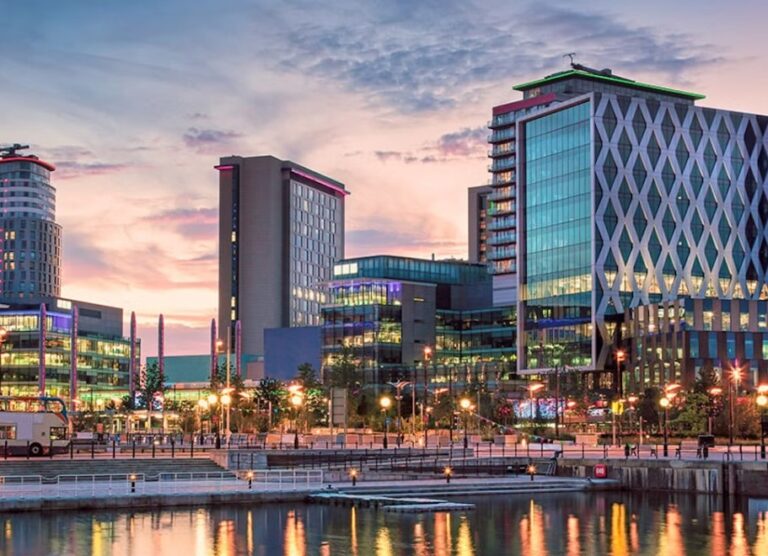
Manchester’s “Homes for Students” youth apartment
It is a youth community designed for students and young workers, providing single rooms, shared apartments and study areas, close to universities and employment centers, and convenient commuting. The community integrates living, learning and social functions, is equipped with smart home technology, and enhances residents’ sense of belonging through planned activities.
Reflection and Challenge
Although the UK has accumulated rich experience in youth community design projects, most projects rely on short-term funding, resulting in a lack of sustainability. We need to think from the perspective of young people and think about what they really need.I think we can learn from the concept of “15-minute community life circle” in design, integrate smart cities, shared spaces and ecology into youth communities, and create a low-carbon, vibrant and inclusive digital life circle.
Reference
thecollective.(2025).https://www.thecollective.com/co-living,(Accessed: 19 April 2025).
(2025).https://wearehomesforstudents.com/student-accommodation/manchester,(Accessed: 19 April 2025).

After reading this blog, I agree with the author’s idea of ’15-minute community life circle’ mentioned in his blog. In my opinion, the quality of life of young people in the community will be greatly improved if their basic needs of living, working, leisure, and socialising can be met within a 15-minute walk. At the same time, though, I wonder if cities in the UK could actually support this model in practice. I know that this idea has already been developed in cities such as London, Manchester, and Cambridge, which were originally developed on the basis of the Walkable City concept, and have the infrastructure and planning foundations for walkable neighbourhoods. In Newcastle, however, youth communities are often built on the fringes of the city, where access and facilities are still poor and public transport and services are still lacking. Therefore, this idea should not just be a conceptual slogan, but also requires cities to really set aside space and resources for ‘young people first’ in their overall planning. Only then can the 15-minute community life circle be truly inclusive and effective.