Who Belongs Here? Perceptions of Student Accommodation and Urban Identity
Walk through a city centre in the UK and you won’t have to travel far before encountering a new Purpose Built Student Accommodation (PBSA) development. Experiencing this first-hand on projects during my placement year in Bristol made it clear to me that these proposals rarely progress without significant resistance.
Read through the objections and many of the concerns raised feel both familiar and, in many cases, valid. Yet the consistency and intensity of this opposition has led me to question whether these responses instead reflect deeper assumptions about who is perceived to belong in a city.
Studentification and the need for PBSA
Across UK student markets, a persistent imbalance between supply and demand remains, with an average of 2.7 students competing for each available bed, rising to above 3.5 in cities like London and Bristol (Savills, 2024). As a result, the expansion of student accommodation has become a defining feature of many UK cities. The process of ‘studentification’, describing the dominance of student populations in local neighbourhoods, means objections are often framed around material impacts (Hubbard, 2008).
However, as Revington (2021) highlights, this viewpoint often risks oversimplifying a more complex social and spatial issue, extending to questions of how spaces are shaped, who they are designed for, and whose presence is considered legitimate.
Negative perceptions about PBSA stem, in part, from the days when student housing, particularly Houses in Multiple Occupation (HMOs), were basic and utilitarian. Concerns relating to parking, affordability and noise may well have been justified. High concentrations of student housing can also contribute to rising rents, displacement, and pressures on services (Morgans, 2023), and poorly integrated schemes often reinforce these divisions. But these assumptions don’t always match the realities of today’s developments.
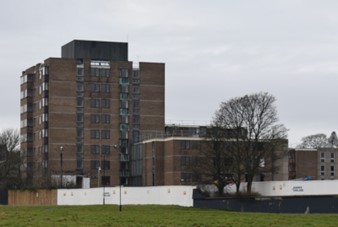 Figure 1: A lingering perception of PBSA: Castle Leazes in Newcastle. Source: Newcastle Photos (2025), Available at: https://newcastlephotos.blogspot.com/2024/12/castle-leazes-halls-of-residence.html (Accessed: 7 April 2026)
Treating these impacts as inherent to all forms of student housing overlooks key differences. The impacts of PBSA, by comparison, are often more contained. If different models produce different outcomes, then opposition cannot be explained by impact alone.
Belonging in a city
This led me to deeper questions of identity and belonging. Students are increasingly viewed as transient and distinct from established communities (Munro and Livingstone, 2012). As a result, planning objections often reflect anxieties about change and a perceived loss of community identity. Studentification is not therefore just a physical transformation, but a social and cultural one too, where students are seen as agents of change (Smith, 2005). What follows is an unspoken ‘us vs them’ dynamic, positioning students as outsiders to more stable, established communities.
It raises the question: what defines a ‘real’ community, and are we placing too much value on permanence over other forms of belonging?
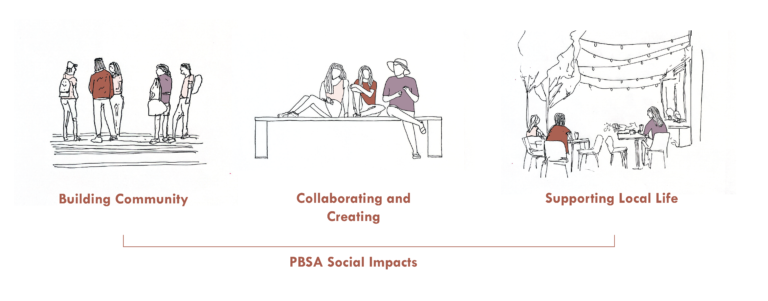 Figure 2: Reframing student living as a driver of belonging. Source: Author’s own
Reflecting on my experience in Bristol, I initially understood these objections as issues to be resolved through design or management. However, working on PBSA schemes showed how resistance often persists regardless of any efforts of appeasement. I now understand these objections as being part of a broader negotiation over space, identity, and change.
In this negotiation, the role of design is nuanced. A more integrated approach, through active ground floor uses, shared public spaces, and mixed-use environments, can begin to position students as part of everyday urban life rather than separate from it.
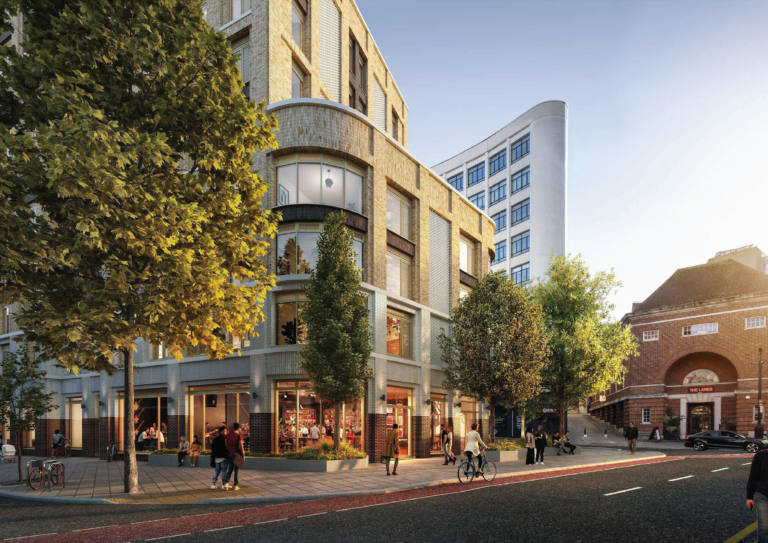 Figure 3: Active ground floor uses as part of wider PBSA development proposal in Bristol. Source: Downing (2025), Available at: https://downing.com/article/nelson-street-bristol-development/ (Accessed: 8 April 2026)
Whilst such interventions may not eliminate opposition, they can influence how different groups encounter one another and how belonging is negotiated. Ultimately, maybe the question is not whether student housing belongs, but how cities negotiate belonging itself?
References
Hubbard P. (2008) Regulating the social impacts of studentification: a Loughborough case study, Environment and Planning A, 40(2), pp. 323–341
Morgans, D. (2023) The case for student living in urban design. Available at: https://www.chapmantaylor.com/insights/the-case-for-student-living-in-urban-design (Accessed: 5 April 2026).
Munro, M. and Livingston, M. (2012) Student Impacts on Urban Neighbourhoods: Policy Approaches, Discourses and Dilemmas. Urban Studies, 49(8), pp. 1679–1694.
Revington, N. (2021) Post-studentification? Promises and pitfalls of a near-campus urban intensification strategy. Urban Studies.
Savills (2024) UK cities need much higher rates of student housing delivery. Available at: https://www.savills.co.uk/blog/article/358493/commercial-property/uk-cities-need-much-higher-rates-of-student-housing-delivery.aspx (Accessed: 8 April 2026).
Smith D. P. (2005) ‘Studentification’: the gentrification factory, in: Atkinson R., Bridges G. (Eds) Gentrification in a Global Context: The New Urban Colonialism, pp. 72–89. Abingdon: Routledge.



This is a compelling reflection on the ‘othering’ of students within the public realm. A feeling we all as students living in a new city have probably felt. Sense of belonging in place is a serious issue for students so I particularly appreciated your focus on the concept of belonging and how the ‘transience’ of students is often weaponised to justify their exclusion from a city’s identity. You mentioned from personal experience that often resistance to PBSA is less about architectural issues and more about a perceived threat to the way of life of an existing community through becoming social and cultural agents of change (Smith, 2005). This conversation of the physical vs the sociological has reinforced the significance of critical analysis for us as future urban designers and has inspired me to apply this lens to similar issues focused on sense of place and belonging.
To develop the discussion around spatial identity I recommend the article ‘Designing belonging: a spatial framework for understanding university campus experiences’ by Ahn and Dvis (2023). They argue that the gap in sense of belonging correlates to the difference in spatial layout between student accommodation and residential developments. This raises another question: if PBSA developments are designed as self-contained ‘real estate assets’ rather than local collective assets (Livingstone et al., 2023), can design choices alone ever truly bridge the gap between students and the existing community?
Overall, your post is a well-argued piece that pushes the PBSA debate from architectural planning complaints into the realm of social justice using personal experience as a base for the discussion. I really enjoyed reading your perspective.
References:
Ahn, M. Y. and Davis, H. H. (2023) ‘Designing belonging: a spatial framework for understanding university campus experiences’, Archnet-IJAR: International Journal of Architectural Research, 17(2), pp. 257–275. doi: 10.1108/ARCH-05-2023-0118.
Livingstone, N., Fiorentino, S. and Short, M. (2023) ‘Density, planning, and the emergent landscapes of purpose-built student accommodation in England’, Frontiers in Sustainable Cities, 5, p. 1119399. doi: 10.3389/frsc.2023.1119399.
Smith, D. P. (2005) ‘Studentification’: the gentrification factory, in Atkinson, R. and Bridges, G. (eds) Gentrification in a Global Context: The New Urban Colonialism. Abingdon: Routledge, pp. 72–89.